

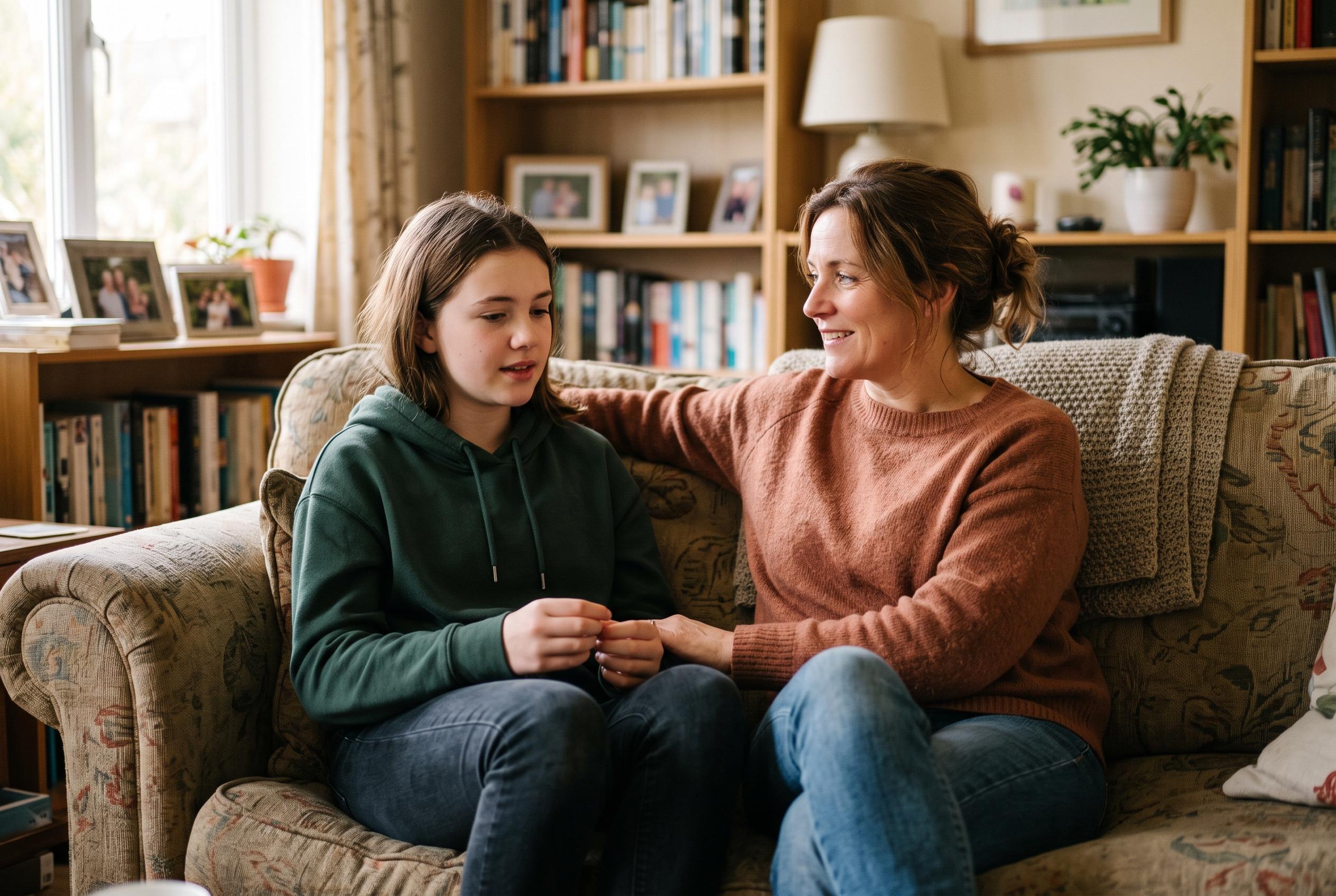

Many teenagers keep anxiety, low mood and other worries to themselves. Experts say ordinary moments, patient listening and admitting vulnerability can make it easier for them to speak.
Many teenagers keep worries to themselves, even when they are struggling with school pressure, anxiety, low mood or eating problems. According to the German family magazine Focus, internal figures from the counselling platform Krisenchat suggest that 65% of young people who contact the service for the first time have not previously spoken to anyone about their situation, including friends or parents.
That reluctance is not especially surprising, Juliane Pougin, who leads psychosocial counselling at the non-profit organisation, told Focus. She said adolescence is a stage in which parents are no longer automatically the first people young people turn to, and some teenagers also want to avoid advice they have not asked for. In her view, the push for independence, the search for other trusted adults and the pressures of family life can all make it harder for a teenager to find the right moment to open up.
Parents who want to start a conversation may find that the setting matters as much as the subject. The CDC advises mothers and fathers to choose relaxed, ordinary moments rather than staging a formal talk, while UNICEF similarly recommends using everyday situations to keep communication natural. Pougin told Focus that teenagers often talk more easily while doing something side by side, such as cooking, exercising or carrying out tasks around the home, because the conversation feels less intense than a sit-down meeting.
Sharing something personal can also lower the temperature. Pougin said that showing vulnerability and admitting that no one is perfect can help a young person feel safer about speaking honestly. The NHS makes a similar point in its guidance for parents, saying that teenagers are more likely to talk when they do not feel judged, cornered or assumed to be in the wrong. SAMHSA, the US behavioural health agency, also advises parents to speak openly about feelings and to watch for signs that a child or teenager may be struggling.
Once a teenager begins to talk, experts say restraint is often more helpful than interrogation. Pougin urged parents not to press for every detail at once, but to treat what their child shares as a sign of trust. She suggested responding with thanks and leaving room for a follow-up conversation later in the week. Her advice is that young people often test whether the other person is genuinely listening by revealing small pieces first, before offering the more difficult material later.
Parents do not need to have the perfect answer ready. Instead, Pougin recommends asking what kind of support the teenager wants: simple listening, an opinion or practical advice. She also suggests making the terms of the conversation clear, including whether writing things down might feel easier than speaking. Focus reported that she sees trust as something built long before a crisis begins, through everyday inclusion in family decisions and a pattern of communication that feels ordinary rather than forced.
If a direct parent-child conversation is not possible, the article notes that other support is available. Focus lists Krisenchat, U25 Deutschland, Nummer gegen Kummer, bke-Jugendberatung and TelefonSeelsorge as places young people can turn to for confidential help. Pougin also suggested that parents can leave behind the details of a counselling service on a note or flyer, along with a simple message that makes clear help is available even if they are not the right person to speak to at that moment.
Disclaimer: This content is for informational purposes only and is not intended to be a substitute for professional medical judgment, advice, diagnosis, or treatment.



