

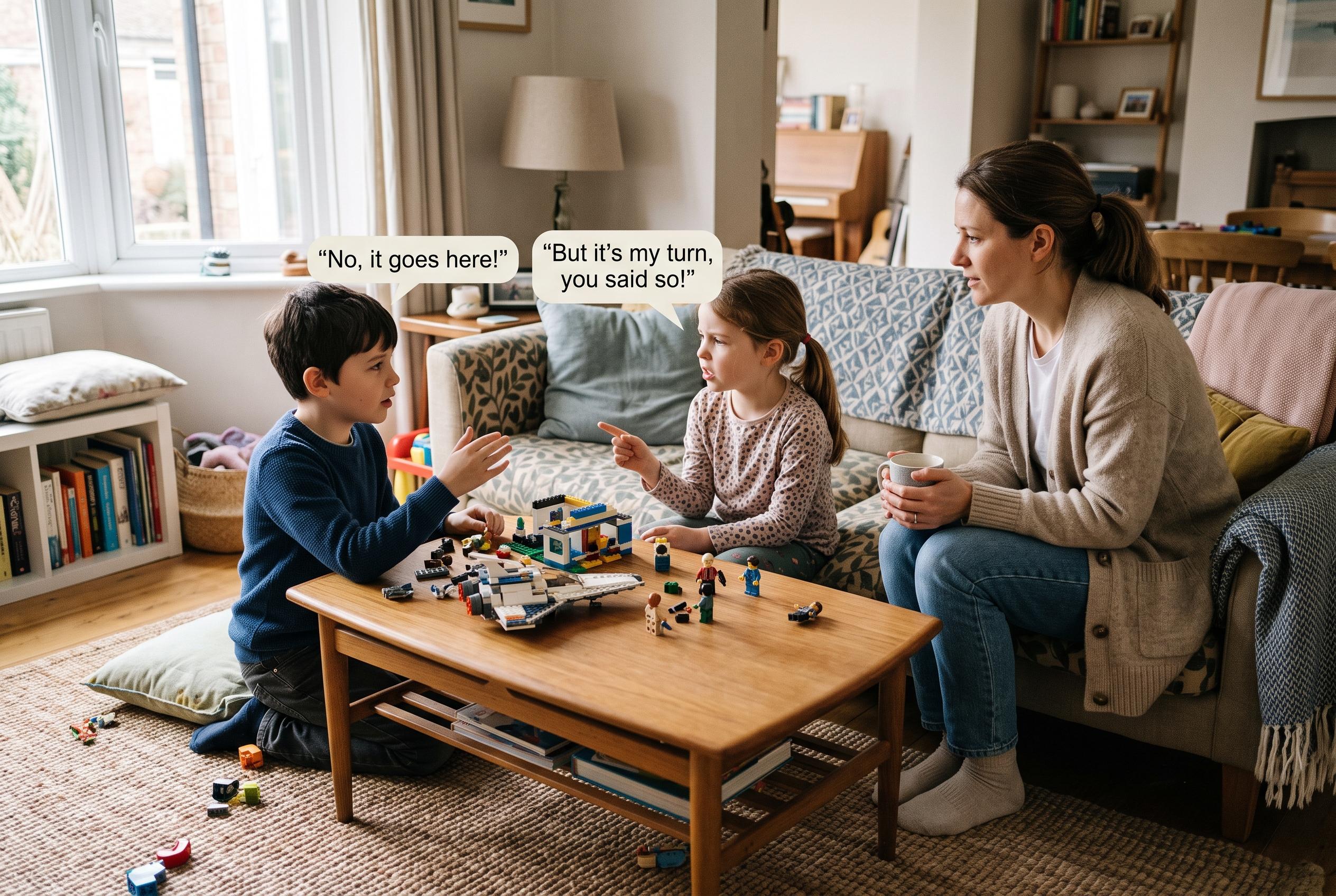

Family therapists say parents can reduce destructive sibling rivalry by coaching children through disagreements, avoiding comparisons and intervening firmly when conflict becomes harmful.
Sibling squabbling is a familiar part of family life, and most of the time it does not signal a deeper problem. Arguments over toys, seats or who gets the larger slice are common, but therapists say the way parents respond can shape whether those clashes fade quickly or turn into a pattern. The core message from family specialists is that parents matter most when they do not try to win every dispute.
One of the clearest recommendations is to avoid acting like a judge. When parents rush to decide who started the row, they often miss the fuller picture and may unintentionally reward whichever child argues most forcefully. According to guidance highlighted by Parentkin, a more effective response is to listen to both children, name the feelings involved and then move away from blame. Memorial Hermann makes a similar point, saying the issue is not conflict itself but the way adults manage it.
Experts also favour coaching children through disagreements rather than resolving every fight on their behalf. The idea is to teach them how to negotiate, share and repair rather than to deliver a verdict each time. Parentkin notes that children learn conflict resolution by practising it, while Memorial Hermann says parents should help siblings work through the problem instead of stepping in as permanent referees. That approach, advocates say, can build empathy and stronger sibling bonds over time.
Attention is another major source of tension. If one child feels overlooked, rivalry can intensify as brothers and sisters compete for notice, validation and time. Therapists commonly advise setting aside regular one-to-one time with each child, even if it is brief, so that attention is not only available when a row breaks out. The same logic applies to belongings and spaces: when children have some things that are clearly their own, there is less to fight over.
Parents are also warned against labels and comparisons. Calling one child the clever one and another the sporty one may seem harmless, but children can absorb those roles and feel pushed into competition. A better tactic is to focus on each child’s own effort and progress. That keeps praise specific without turning family life into a ranking system, and it reduces the sense that affection depends on outperforming a sibling.
Clear rules matter too. Families do best when expectations are simple and predictable: no hitting, no damaging belongings and a clear way to ask for space. Guidance from Them. You and RaiseBright both stress that parents should stop harm immediately, but they do not need to determine who is morally right in every disagreement. They also note that not every conflict looks the same; age, power, stress and past history all affect how a dispute unfolds.
It is also important to recognise when ordinary conflict has crossed a line. Research cited in the article from which these recommendations are drawn points to the harm caused by repeated physical or emotional aggression between siblings, and experts say that fear, injury or cruelty should never be brushed off as normal rivalry. In those cases, parents should intervene firmly, protect the child at risk and consider outside help if the pattern continues.
For many families, the broader goal is not to eliminate rivalry altogether. Some friction is part of growing up alongside another child, and it can teach sharing, patience and repair after disappointment. The more realistic aim is to create a home where conflict is handled calmly, fairness is visible and cooperation gets as much attention as the fighting.
Disclaimer: This content is for informational purposes only and is not intended to be a substitute for professional medical judgment, advice, diagnosis, or treatment.



