

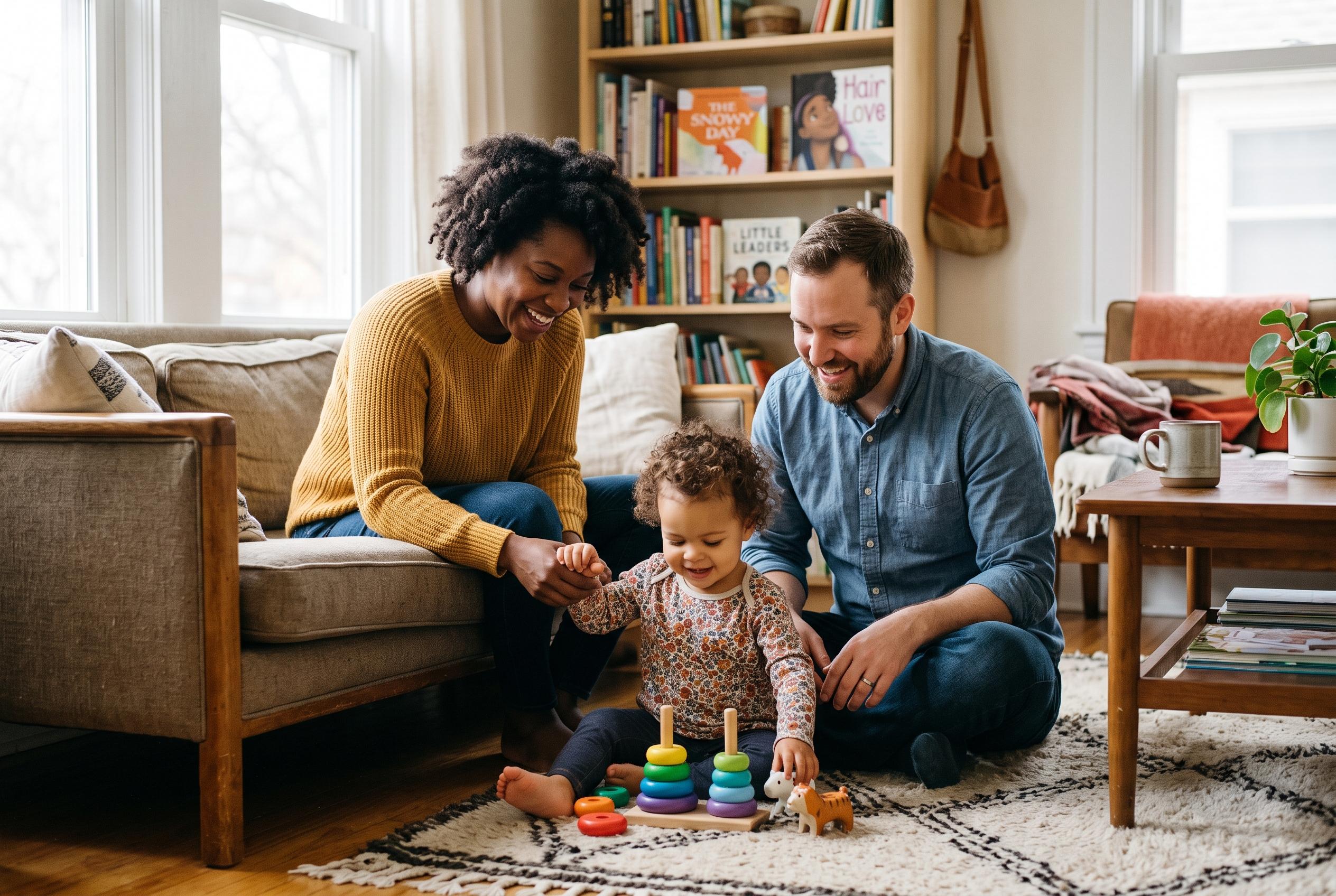

Experts say parents can build racial confidence and resilience from infancy through age-appropriate conversations, positive representation and honest discussions about prejudice.
Talking with children about race is one of the most important conversations a parent can have, and it begins far earlier than many families realise. As Successful Black Parenting Magazine argues, the aim is not simply to warn children about prejudice, but to help them build confidence, pride and a secure sense of identity from the start. Child development experts say babies notice differences in skin colour and appearance in the first year of life, which means parents can begin laying a foundation long before race becomes a formal topic. According to UNICEF, the American Academy of Pediatrics and PBS KIDS for Parents, those early conversations work best when they are simple, steady and age-appropriate, rather than postponed until a child asks a difficult question.
For infants and toddlers, the message is less about explanation than normalisation. Parents can treat skin tone, hair texture and other visible differences as ordinary parts of human diversity, just as they would eye colour or height. The guidance from UNICEF and CHOC Children’s Health Hub suggests that children this young benefit from seeing books, toys and everyday surroundings that reflect Black children and families in positive ways. That exposure matters because children absorb what they see repeated around them. If a home environment presents Blackness as beautiful and familiar, it helps shape how a child understands themselves before the wider world has a chance to define them.
Preschool years bring a new opportunity, because many young children become preoccupied with fairness. That makes it a useful stage for explaining, in plain language, that people should be treated equally even though they are not always treated that way. The American Academy of Pediatrics recommends keeping the discussion concrete and calm, helping children connect the idea of bias to situations they can recognise in stories, playground disputes or everyday life. This is also a good time to introduce Black history and achievement in ways that emphasise excellence rather than struggle alone. Stories about inventors, artists, scientists and community leaders can show children that they belong to a long tradition of creativity and resilience.
By the time children reach elementary school, they are more aware of what they see in books, television and online content. That is when parents can begin asking sharper questions about representation: Who gets to be the hero? Who is ignored? Which characters are flattened into stereotypes? Resources from PBS and the Kids Mental Health Foundation encourage caregivers to use these moments to build media literacy, so children learn not only to notice bias but to question it. At the same time, parents can keep reinforcing the message that racism exists, but it does not define a child’s worth or limit their future. The goal is to pair honesty with reassurance.
For teenagers, the conversation often becomes more direct and more practical. Older children may want to discuss school experiences, public incidents or broader systems of inequality, and parents can meet those questions with candour rather than silence. Successful Black Parenting Magazine frames this as preparation and empowerment, not fear. That approach aligns with advice from the American Academy of Pediatrics, which stresses the value of helping young people understand racial bias while also supporting their emotional well-being. Parents can encourage activism, critical thinking and self-advocacy, while making clear that their child’s dignity is not up for debate. In that sense, talking about race is not a single speech but an ongoing family practice: one that teaches truth, builds resilience and keeps Black joy at the centre of the conversation.
Disclaimer: This content is for informational purposes only and is not intended to be a substitute for professional medical judgment, advice, diagnosis, or treatment.



