

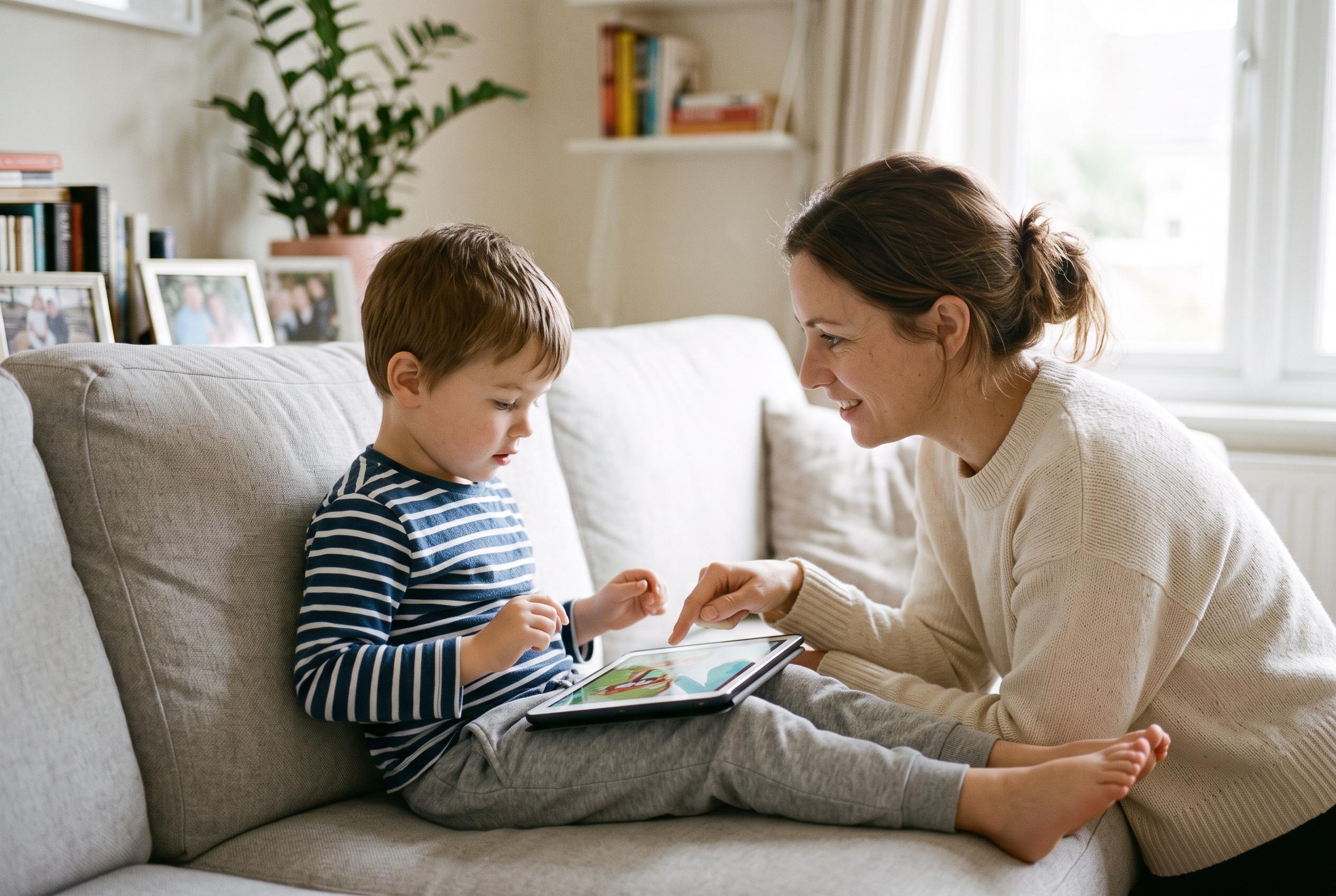

A review of 30 studies suggests that educational content and adult co-viewing can support young children’s learning, while heavy or unsupervised use may affect language, behaviour and sleep.
Screen time for young children is not simply a question of how many minutes they spend in front of a device, according to a review led by the University of Georgia. The paper, which examined 30 studies, suggests that the effects depend on what children are watching, how old they are and whether an adult is sharing the experience with them. Researchers say that co-viewing, or watching and discussing content together, can help children make sense of what they see and turn screen use into something more interactive and less passive.
The review found that some children’s programmes may support learning rather than detract from it. University of Georgia researcher Minal Manisha said shows such as “Daniel Tiger” were associated with social skills, while “Sesame Street”, “Between the Lions” and “SuperWhy!” were linked with stronger letter and sound recognition in some preschoolers. That fits with guidance from HealthyChildren.org, which says co-viewing can help parents reinforce positive behaviour, strengthen the parent-child bond and shape how children understand what they are seeing. Research published in ScienceDirect also found that adult co-viewing can increase children’s attention to educational media, although comprehension improved most when attention and vocabulary were already strong.
At the same time, the review warns that not all screen use is helpful. Heavy use can displace reading, outdoor play and time with family, and evening media use has been linked with sleep problems. Among infants and toddlers, the studies reviewed associated heavier screen exposure with weaker language development, smaller vocabularies and other learning concerns. Separate research from Florida Atlantic University and Aarhus University, reported this year, found that unsupervised screen time can worsen conduct problems in preschool children who already have limited language skills, reinforcing the idea that the home learning environment matters as much as the device itself.
Manisha said the advice should not be reduced to a single rule for every family, because age, routines, resources and childcare pressures all shape how media is used at home. The review focused in part on lower-income households, where children may spend more time with screens because of work schedules, limited access to childcare or fewer alternatives for play. The researchers argue that the better question is not whether children should have any screen time at all, but how parents can choose content carefully, keep use age-appropriate and stay involved enough to help children learn from it.
Disclaimer: This content is for informational purposes only and is not intended to be a substitute for professional medical judgment, advice, diagnosis, or treatment.



