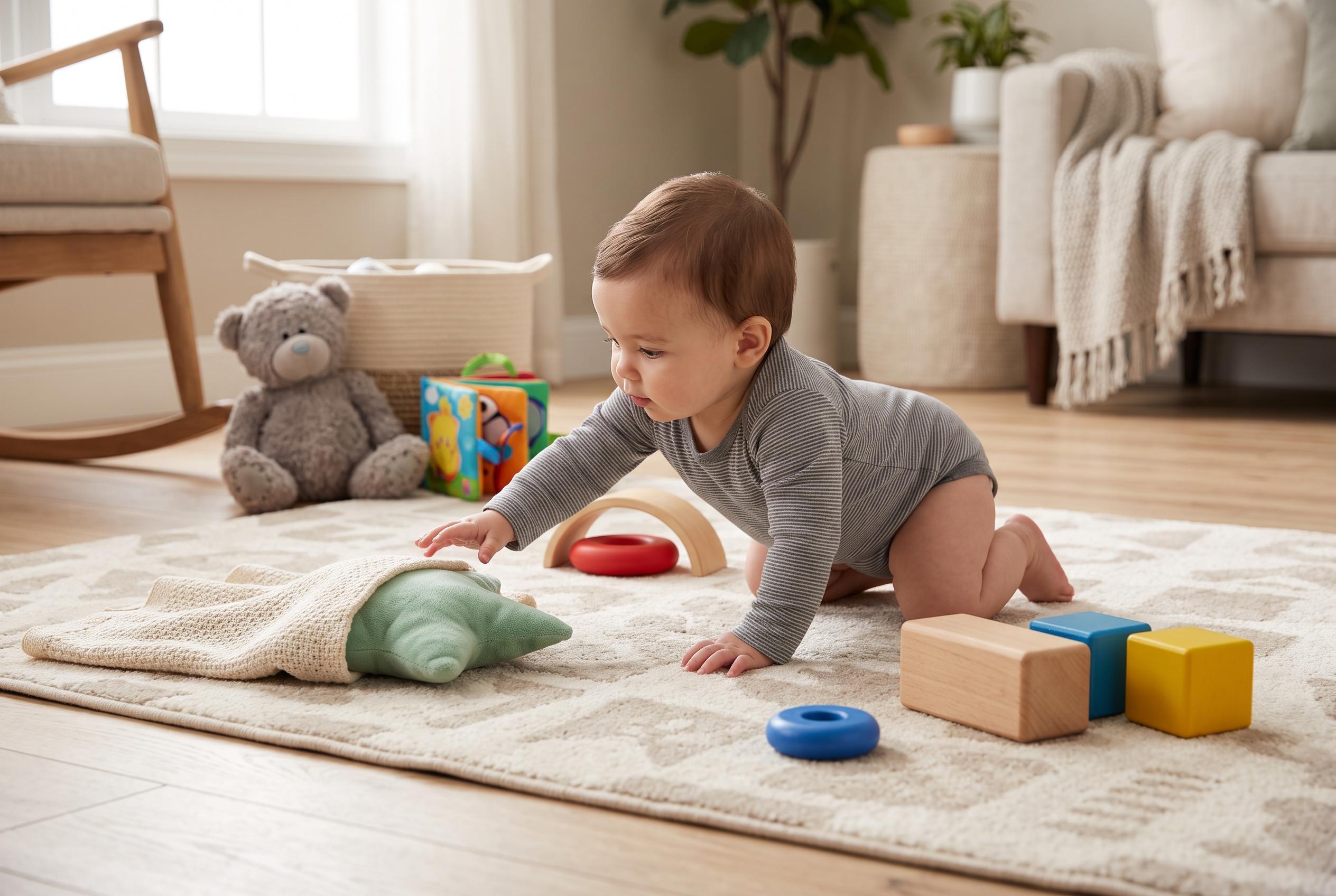

As babies grow, they demonstrate key emotional and fine motor milestones, with recent insights highlighting the importance of object permanence, stranger and separation anxiety, and advancing hand control during their first two years.
As babies move beyond the earliest gross motor milestones, emotional development begins to show in recognisable ways. One of the clearest signs is object permanence, the understanding that people and things still exist even when they cannot be seen. WebMD says this usually emerges between 4 and 7 months, while other child-development guides place the skill as fully established closer to 8 months. In practice, that is why games such as peek-a-boo become so effective: they reinforce the idea that an unseen parent has not disappeared at all, but is simply out of sight.
That developing sense of permanence also helps explain two common milestones: stranger anxiety and separation anxiety. According to the MSD Manual, stranger anxiety often appears at about 8 to 9 months, when babies begin to distinguish familiar faces from unfamiliar ones. Around the same time, separation anxiety can start to emerge, with babies becoming distressed when a primary caregiver leaves the room or goes out of view. The MSD Manual says this usually peaks between 10 and 18 months and tends to ease by around 2 years of age.
Cleveland Clinic notes that this clinginess is not a sign that anything is wrong; in many children, it is part of healthy attachment. In fact, separation anxiety often shows up as fussing, crying or following a parent from room to room, and it generally fades by age 2 or 3. That is why many paediatric specialists see it as reassuring rather than troubling when it is age-appropriate and temporary.
Fine motor development advances on a similar timetable. By about 4 months, babies can usually bring objects to their mouths and pass items from one hand to the other. Around 6 months, they may begin self-feeding and using a raking grasp, sweeping food or toys towards the palm with the fingers. By about 9 months, the pincer grasp appears, allowing the thumb and index finger to pick up small objects. Over the next year or so, those skills expand into scribbling, tipping containers to empty them and stacking blocks, all signs that hand control and coordination are steadily improving.
Disclaimer: This content is for informational purposes only and is not intended to be a substitute for professional medical judgment, advice, diagnosis, or treatment.