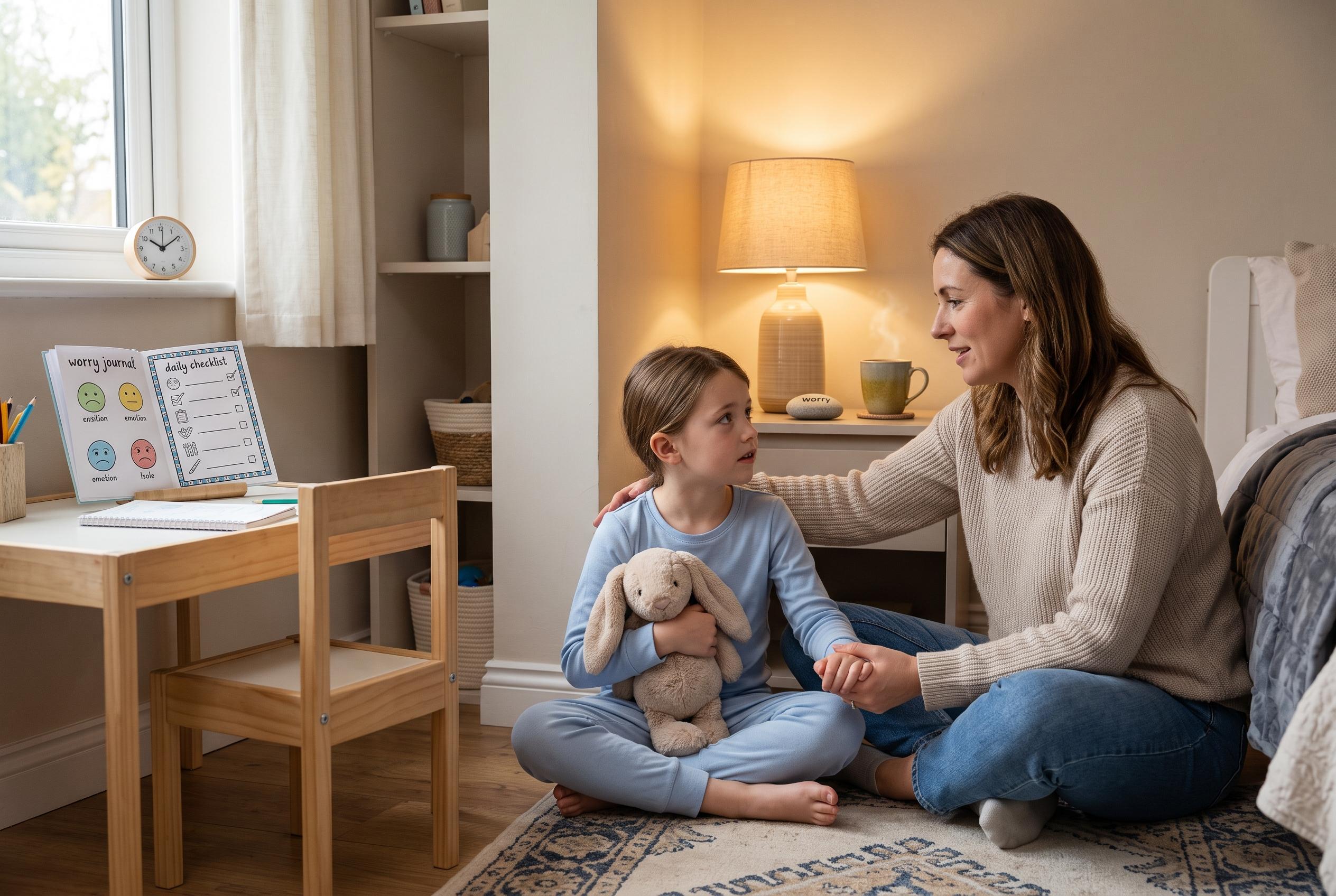

Child anxiety often manifests unpredictably throughout the day, but recognising recurring patterns can help parents manage their child’s worries more effectively. From morning routines to bedtime worries, understanding these cycles offers a pathway to calmer parenting and happier children.
Child anxiety can look random from one moment to the next, but a closer look often shows a pattern. According to child therapist Katie Hurley, the same worry may simply reappear in different forms as the day unfolds: at the school gate, after lessons, at homework time or when lights go out. What changes is the trigger, not necessarily the underlying fear. For parents, that shift matters because it turns a series of apparent meltdowns into one cycle that can be recognised and managed. The aim is not to eliminate anxiety in a single day, but to notice when it predictably flares and respond more usefully.
Mornings are often the hardest stretch. A child who seems calm at breakfast may suddenly stall, forget items, question the day ahead or fixate on small discomforts once it is time to leave. That is one reason routines can help: the Kids Mental Health Foundation says predictable wake-up and bedtime habits can create a sense of safety and reduce conflict, while visual schedules and child-friendly planning can make expectations easier to follow. For children who struggle with change, the day can be easier to handle when it is broken into smaller, clearer pieces, as Fraser Health recommends in its guidance on structured schedules.
The same pattern often shows up after school. Many children hold themselves together all day, then come apart once they are back in the car or at home. What looks like rudeness or silence may be exhaustion after a day of managing demands, noise and social pressure. Resources on supporting anxious transitions point out that the handover points of the day, including arrival home, activity changes and the move towards homework, are common flashpoints. In those moments, a snack, some quiet or simple movement may do more good than a stream of questions.
Bedtime can bring a different version of the same problem. Once distractions fade, worries about school, friendships and performance can grow louder, and reassurance-seeking can become its own loop. Sleep-focused guidance suggests a steady bedtime routine, a calm room and less screen time before sleep, which can help lower arousal before bed. Hurley’s advice points in the same direction: rather than feeding every anxious thought with more and more certainty, parents can help a child name the worry, park it for later and return to the routine of getting ready for sleep.
The bigger lesson is that anxiety does not always arrive as one obvious problem. It may show up as morning resistance, late-day irritability, perfectionism with homework or a racing mind at night. Parents who learn their child’s daily pressure points are better placed to respond early and consistently. That may mean building in sensory breaks, using visual timetables or simply changing the language used at tense moments. The point is not to chase every worry as if it were new, but to see the recurring shape beneath it.
Disclaimer: This content is for informational purposes only and is not intended to be a substitute for professional medical judgment, advice, diagnosis, or treatment.