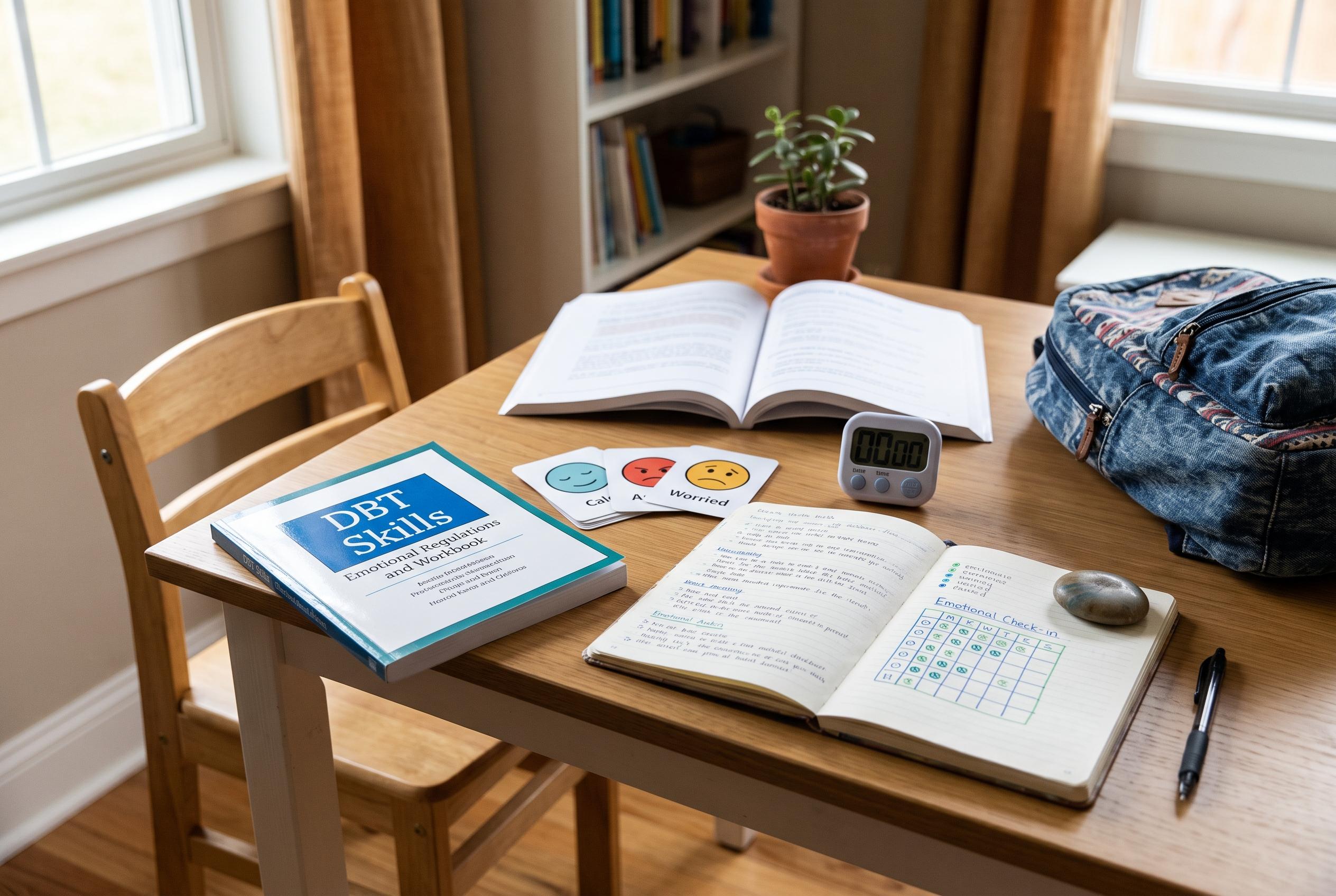

Research reveals that adolescents’ impulsive reactions stem from brain development delays, emphasising the importance of regulation over correction and practical tools like DBT techniques to manage outbursts effectively.
Teenagers who snap, slam doors or shut down are often not being deliberately defiant so much as reacting before they have the tools to slow themselves down. According to Manhattan Psychology Group, that pattern is rooted in adolescent brain development: the emotional system tends to mature earlier than the part of the brain responsible for judgement, planning and impulse control. Healthline and other educational sources make the same basic point, noting that this mismatch helps explain why teenagers can be highly reactive even when they know better.
That is why some of the most instinctive parental responses can backfire. Telling a teen to calm down may only deepen the sense that their feelings are being dismissed. Raising your voice or becoming defensive can turn one escalated person into two. And trying to teach a coping strategy in the middle of a blow-up rarely works, because a teenager in full emotional flood is unlikely to absorb a new skill at that moment.
The more effective approach starts with regulation, not correction. The parent or carer has to steady themselves first by lowering their voice, slowing their breathing and avoiding the urge to match the teen’s intensity. Once the moment has passed, a brief debrief can separate the feeling from the behaviour and focus on what happened, rather than treating the emotion itself as the problem.
Manhattan Psychology Group points to a set of distress-tolerance tools from dialectical behaviour therapy, or DBT, known as TIPP: temperature, intense exercise, paced breathing and progressive muscle relaxation. Other DBT resources describe the same method as a fast way to bring down emotional arousal by changing the body’s state. In practice, that can mean cold water on the face, a burst of jumping jacks, a counted breathing pattern or deliberately tensing and relaxing muscle groups.
The article also argues that these skills need rehearsal on ordinary days, not just during crises. That mirrors broader guidance around adolescent behaviour, which emphasises repetition and consistency over one-off lectures. In that sense, the goal is not simply to survive the next outburst but to build a routine that makes the next one less likely to spiral.
There are limits, of course. Some adolescent intensity is normal. But when the outbursts are frequent, physically unsafe, disruptive at school or home, or simply getting worse despite steady effort, outside help may be needed. Manhattan Psychology Group says parent training can be especially useful in those cases because it gives adults a structured way to reinforce the behaviour they want and reduce the behaviour they do not, without relying on guesswork in the heat of the moment.
Disclaimer: This content is for informational purposes only and is not intended to be a substitute for professional medical judgment, advice, diagnosis, or treatment.