

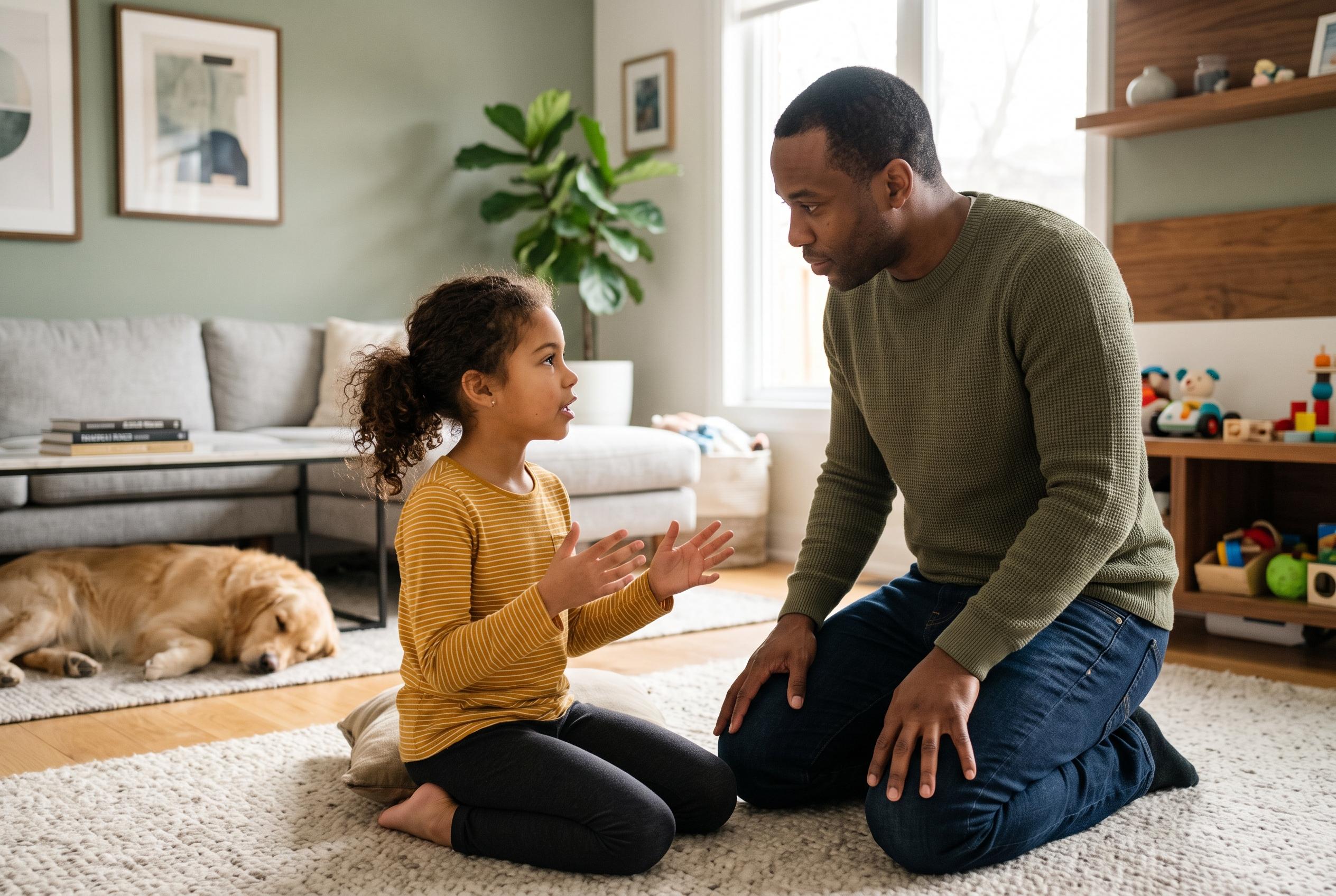

Conflicts with children are a natural part of family life, often driven by developmental needs and emotional dynamics. Experts suggest strategies for parents to handle disagreements constructively and recognise when outside help is necessary.
Conflicts with children are not a sign that a family is failing. They are part of daily life in any close relationship, and they often arise when a child’s need for autonomy collides with an adult’s need for safety, routine or cooperation. What can look like defiance is frequently exhaustion, frustration, developmental testing or a simple lack of words. The practical question for parents is less whether arguments will happen than how they are handled when they do.
Child development helps explain why certain rows keep repeating. Toddlers are still learning impulse control, preschool children are testing fairness and limits, and teenagers are working through identity, independence and peer pressure. That does not make the behaviour easier to live with, but it does make it more understandable. According to Cleveland Clinic and HealthyChildren.org, conflict is often intensified by inconsistent boundaries, attention-seeking and difficult situations, while calm supervision and clear family rules can reduce aggression and repetition.
Sibling arguments deserve particular attention because they are both common and formative. Cleveland Clinic and WebMD both note that rivalry is normal, but they also stress that parents should avoid turning every dispute into a courtroom judgement. A more useful approach is to stay calm, separate children when needed, listen to both sides and help them practise problem-solving rather than simply deciding who wins. Family meetings, private discipline and recognition of each child’s individuality can reduce the sense that one child is constantly being compared with another.
The same principles apply outside the home. PBS KIDS for Parents notes that young children often struggle to settle disagreements with friends because they are still learning how to name feelings, listen and negotiate. Helping a child say what they want, hear what the other child is saying and search for a solution together is more constructive than rushing to fix the problem for them. That process teaches a skill they will use far beyond childhood.
Parents also need to pay attention to their own behaviour, because children learn from the emotional climate around them. Healthline reports that occasional adult arguments are not inherently harmful, but frequent, intense conflict can unsettle children, especially when rows are held in front of them. The most effective de-escalation often starts with the adult: lowering the voice, pausing before reacting and returning to the issue only when everyone is calm. If an adult loses temper, a brief, sincere apology can repair more than a lecture ever will.
There are times, though, when family conflict needs outside help. Cleveland Clinic, HealthyChildren.org and the other parenting sources all advise seeking professional support if aggression persists, the household feels chronically overwhelmed, or the child’s wellbeing is starting to suffer. A family counselling service, paediatrician or child psychologist can help identify whether the problem is mainly developmental, relational or linked to something more serious. The aim is not to eliminate conflict altogether, but to keep it from becoming the family’s permanent way of relating.
Disclaimer: This content is for informational purposes only and is not intended to be a substitute for professional medical judgment, advice, diagnosis, or treatment.



