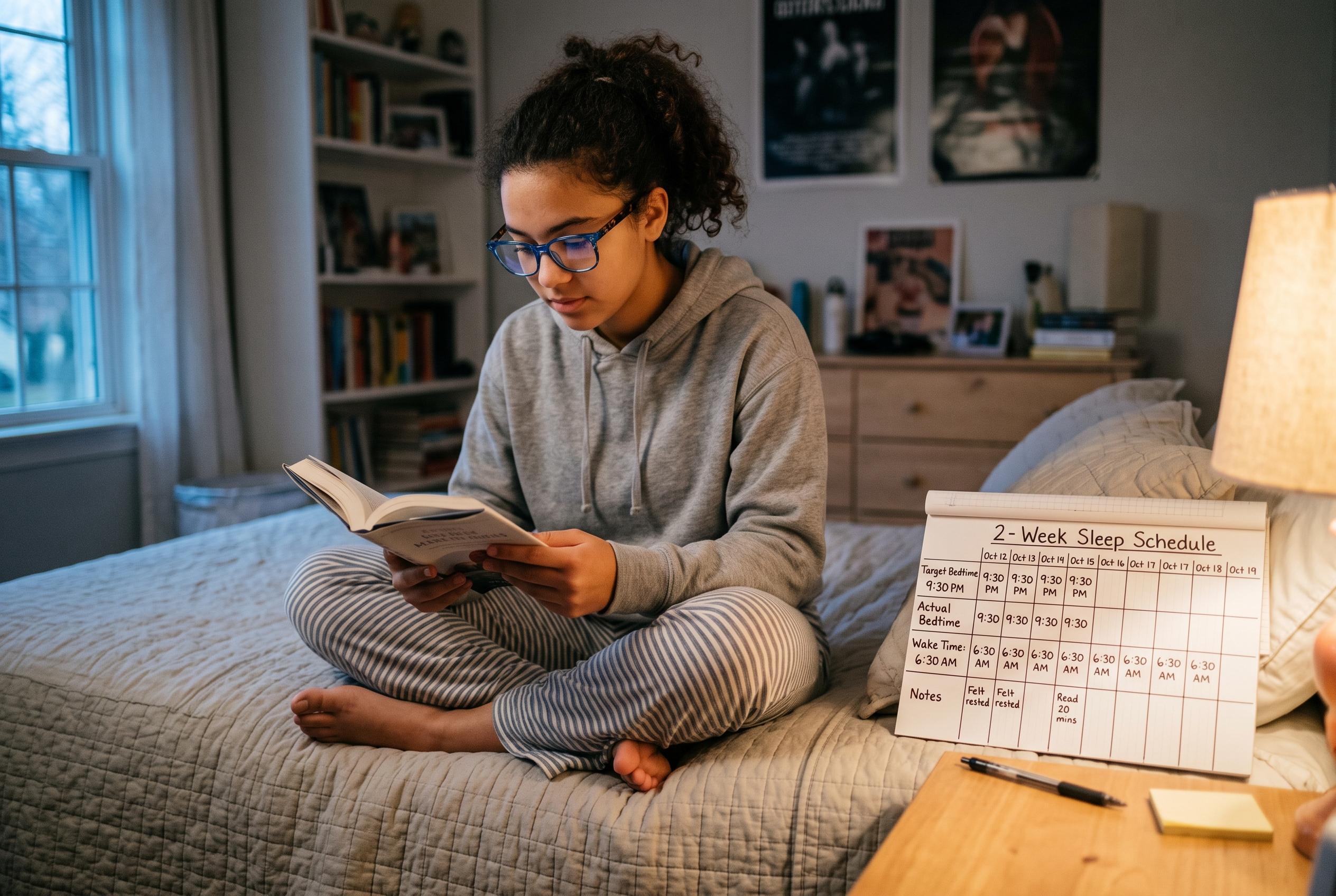

A recent clinical trial demonstrates that a simple two-week programme combining sleep scheduling with light and blue light-blocking glasses can help teenagers shift their internal clocks earlier and extend sleep duration, offering a non-pharmacological approach to combat sleep deprivation.
A brief, two-week intervention combining sleep scheduling, morning bright light and evening blue light-blocking glasses helped teenagers shift their internal clocks earlier and sleep longer on school nights, according to a randomised clinical trial published in JAMA Pediatrics. The findings add to growing evidence that relatively simple, non-drug approaches can improve adolescent sleep when they are designed around teenage routines rather than fighting them.
Researchers studied 80 students aged 16 to 19 who were described as late sleepers and attended conventional high schools. The group, which had a mean age of 17.5 years and was 60% female, was split evenly between the intervention and a control arm after baseline assessment. The trial ran during the school year between 2018 and 2024 at an academic medical centre, according to the study authors.
Those in the programme took part in a short problem-solving session before following an individualised sleep plan intended to move bedtime and wake time gradually earlier. They were also asked to wear morning bright-light glasses for 30 to 60 minutes after waking and blue light-blocking glasses for 2 hours before bed. The aim was to work with, rather than against, the adolescent circadian rhythm, which naturally tends to run later in the day.
The results were measurable. Using dim light melatonin onset, a standard marker of circadian timing, the intervention group advanced by 45 minutes compared with controls. Weeknight sleep, measured by actigraphy, increased by 47 minutes. A separate measure of sleep alignment improved more in the intervention group than in the control group, though that difference was not statistically significant. The authors said larger trials are needed to see whether the approach also improves daytime sleepiness, school performance, behaviour and broader wellbeing.
The findings fit with a wider body of research suggesting that sleep and circadian interventions can help young people. A previous JAMA trial found that light therapy combined with cognitive behavioural therapy advanced sleep onset by about 50 minutes and increased total nightly sleep. Other studies have reported benefits from transdiagnostic sleep and circadian programmes and from brief digital interventions, although those have not always improved mood or emotional regulation. Together, the evidence suggests that targeted, practical sleep support may offer a useful way to address chronic sleep loss in teenagers, especially when paired with wider school and family support.
Disclaimer: This content is for informational purposes only and is not intended to be a substitute for professional medical judgment, advice, diagnosis, or treatment.