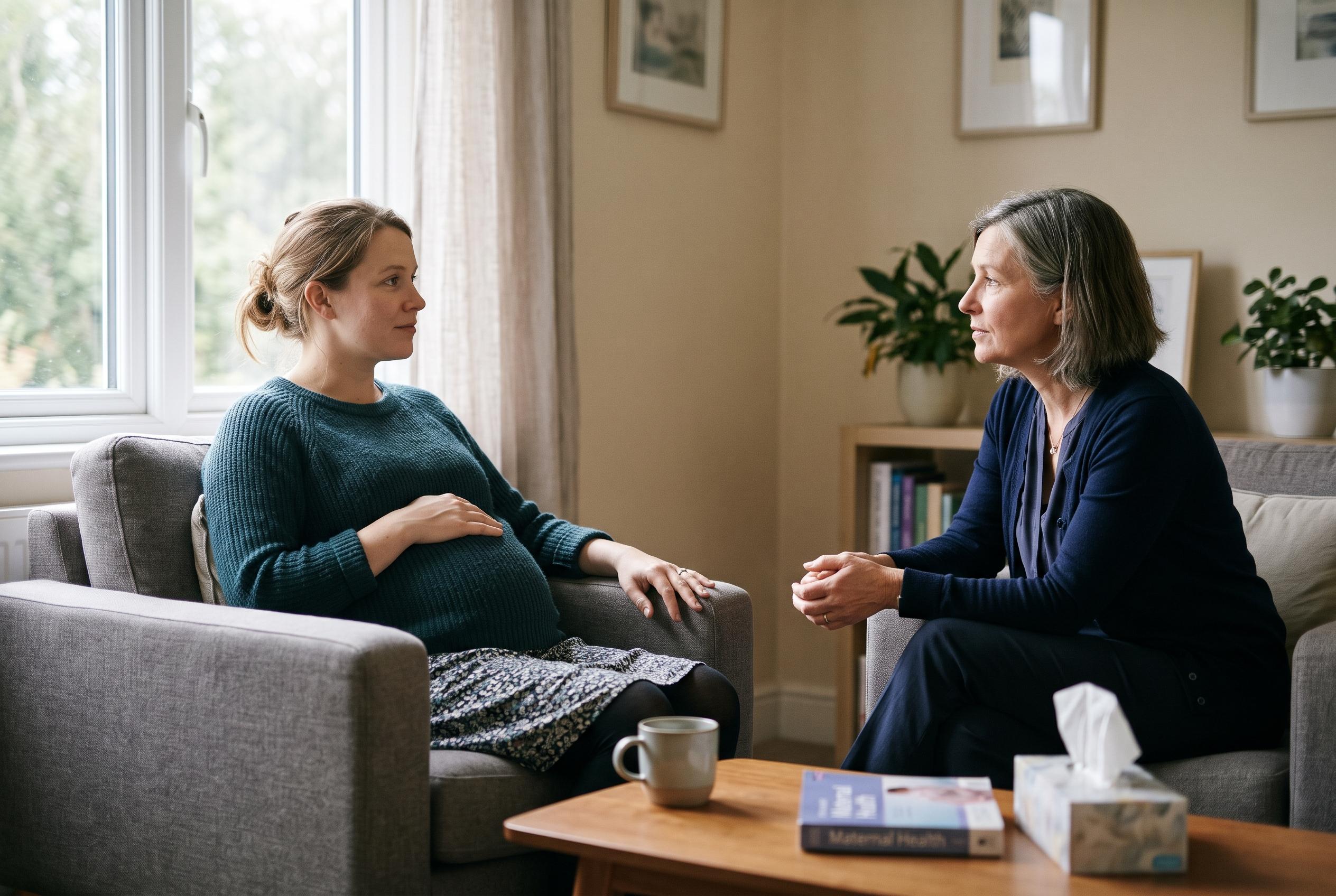

A five-year study found brief counselling reduced major depression during pregnancy and was linked with differences in infant brain development and lower negative emotionality at six months. Researchers caution that the early findings do not prove lasting effects.
A new study from the University of Denver suggests that treating depression during pregnancy may help not only mothers but also their babies. According to reporting from Cairo24 and the University of Colorado Anschutz, the research followed about 230 mothers and their children over five years, beginning in early pregnancy, and found that mental health support during this period was linked with better outcomes for both generations.
The work focused on brief interpersonal psychotherapy, a structured form of counselling used for pregnant women with depression. The trial compared that approach with enhanced usual care and found that symptoms of major depression fell sharply among women who received therapy. In the follow-up analysis, the proportion of women with major depressive disorder at the end of pregnancy was much lower in the treatment group than in the comparison group, and symptom improvements were associated with a greater chance of delivering at 39 weeks or later.
The benefits appeared to extend beyond maternal wellbeing. Research published through the University of Colorado Anschutz found differences in infant hippocampal development, a part of the brain involved in memory, learning and emotion. The follow-up paper reported that infants whose mothers received psychotherapy had, on average, a smaller right hippocampus, and that this finding was associated with lower negative emotionality at six months. The authors said the result points to a possible link between improved maternal mental health and early brain development, though they cautioned that the findings do not prove lasting effects.
The broader message, as the researchers and university reports make clear, is that perinatal depression is common and deserves earlier attention in routine prenatal care. Cairo24 said the mothers in the study also reported feeling more mentally present and more connected with their babies after their own wellbeing improved. Still, the evidence remains tied to a specific trial and early infant follow-up, so it should be seen as encouraging rather than definitive.
Disclaimer: This content is for informational purposes only and is not intended to be a substitute for professional medical judgment, advice, diagnosis, or treatment.