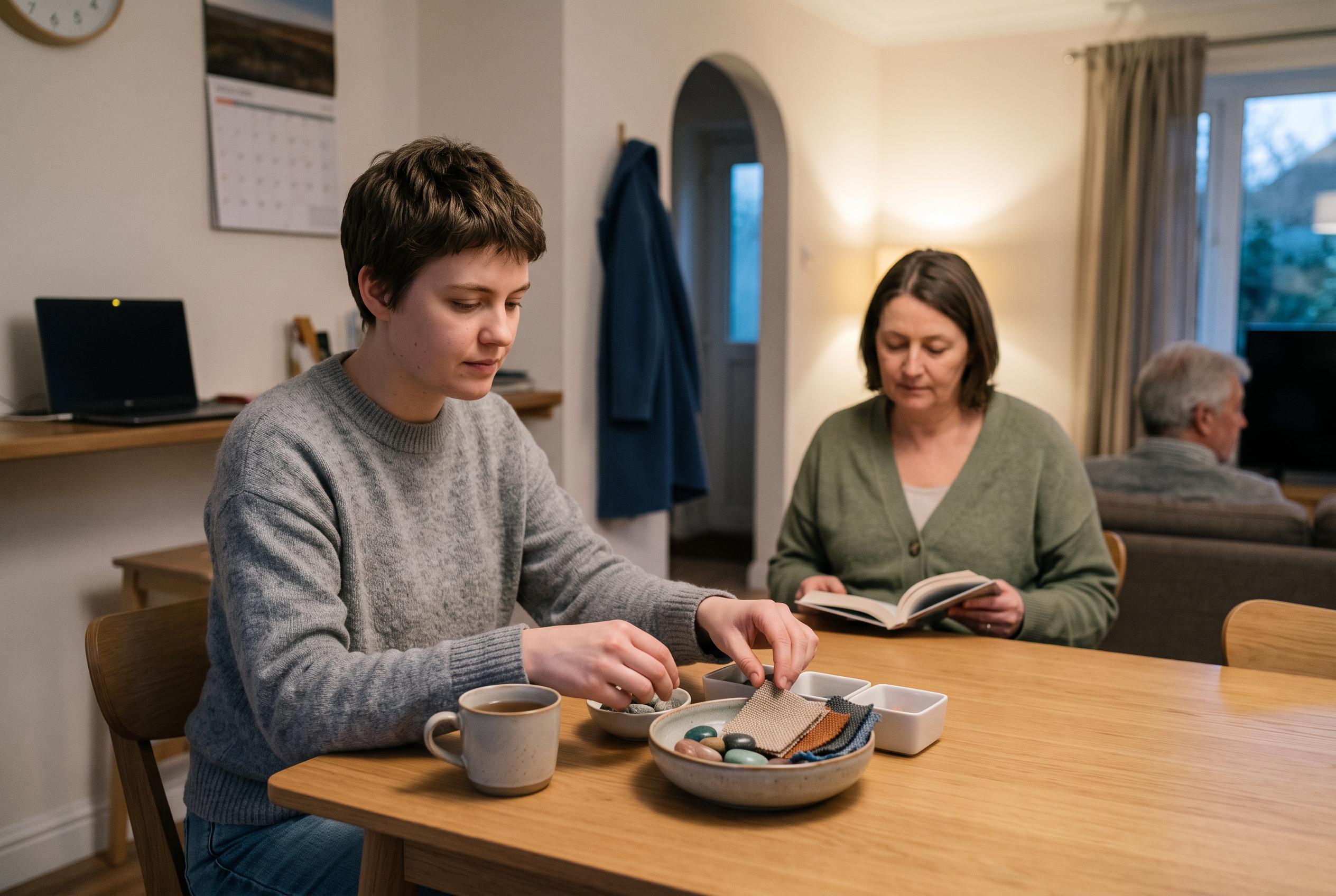

As children with autism transition into adulthood and old age, systemic gaps in support and continuity threaten to undermine their independence and well-being, highlighting the urgent need for reforms in lifelong care models.
At UCLA’s PEERS Clinic, I spent time coaching autistic teenagers through the social skills they would need as adults. Later, as a behavioural therapist, I worked with autistic people and their families in their homes. One mother, after a session, asked what would happen now that her daughter had turned 18.
Nothing about the young woman’s needs had suddenly altered. What changed was the system around her. For years, her school had known how she communicated, what support she needed and how to interpret the moments when she went quiet. Her mother had learned how to work within that structure, which meetings mattered and which forms to complete. Then, almost overnight, the framework shifted from entitlement-based school support to a patchwork of adult services that can be difficult to find, hard to qualify for and even harder to navigate.
That transition is often described as services ending at 18, but that framing is too neat. School-based support gives way to a fragmented adult landscape built around separate applications, separate agencies and separate eligibility rules. In practice, responsibility moves away from institutions and on to individuals and families, even though the underlying needs may be unchanged.
The scale of the gap is visible in Medicaid home- and community-based services, or HCBS, which help people live outside institutions and receive support at home or in their communities. The Kaiser Family Foundation reported that in 2025 more than 600,000 people were on waiting or interest lists across 41 states, with most having intellectual or developmental disabilities. It also found that autism-specific waivers can involve especially long waits, averaging 63 months, underlining how hard it can be to get timely support once school services end.
Research on autistic people after high-school exit points in the same direction. A longitudinal study following 204 autistic people over 14 years around the time they left school found that service use fell afterwards while unmet need increased, for those with and without intellectual disability. The authors linked that pattern to the loss of school entitlement and the limited availability of adult services. The problem is not that autistic adults suddenly become more difficult to support; it is that the support system becomes less coherent.
Working later with older adults, I saw a version of the same problem. The issue was rarely a lack of medical expertise. More often, it was everything that happened between appointments: understanding discharge instructions, tracking medicines, arranging follow-up care and noticing when something had changed. Through AgeWell, we heard repeatedly from older adults and caregivers about the strain of medication management, which led us to build multilingual reminders.
Caregivers often carry much of that invisible labour. More than 51 million Americans provide care to someone aged 50 or older, spending an average of 26 hours a week on it. They become schedulers, medication managers, drivers, advocates and interpreters of subtle change. None of that appears on an insurance card, but much of healthcare depends on it. Remove the caregiver, and the care plan can begin to unravel.
That reality becomes sharper when the caregiver is ageing too. Imagine an autistic man aged 55 whose parents are 80. For decades, they may have known which foods signal distress, which routines settle him, how he expresses pain, which clinicians listen and which forms must be renewed each year to preserve services. But that knowledge may live largely in two minds, and those same parents may now be facing their own health problems. The question is not theoretical: who carries forward 40 years of understanding when the people who hold it can no longer do so?
There is no good system for that handover because autism research has focused heavily on childhood. One review found that studies involving older autistic people made up only about 0.4% of autism research over the decade it examined. That leaves a major gap in knowledge about how lifelong communication differences, sensory sensitivities, dementia, polypharmacy and reduced mobility intersect later in life. An autistic person can therefore encounter the same fragmentation twice: first when leaving school, and again when ageing into more complex care needs.
What is missing is continuity. Schools stop being responsible. Paediatric teams hand off. Adult medicine often assumes someone else is managing the details. Families fill the gap until they cannot. A better model would treat continuity itself as a form of care: transition support that extends beyond graduation, stronger autism training for adult clinicians, and care coordination that recognises family support as central rather than incidental. That does not mean assuming autistic people need lifelong supervision. It means understanding that autonomy and support are not opposites. People can direct their own lives and still need help understanding a scan, reaching a clinic or having their choices heard.
The deeper lesson is simple. An autistic child does not become a different person when school ends. An older adult does not become a diagnosis because care becomes more complex. And an autistic adult does not stop being autistic when they grow old. What changes is the paperwork. The person remains.
Disclaimer: This content is for informational purposes only and is not intended to be a substitute for professional medical judgment, advice, diagnosis, or treatment.