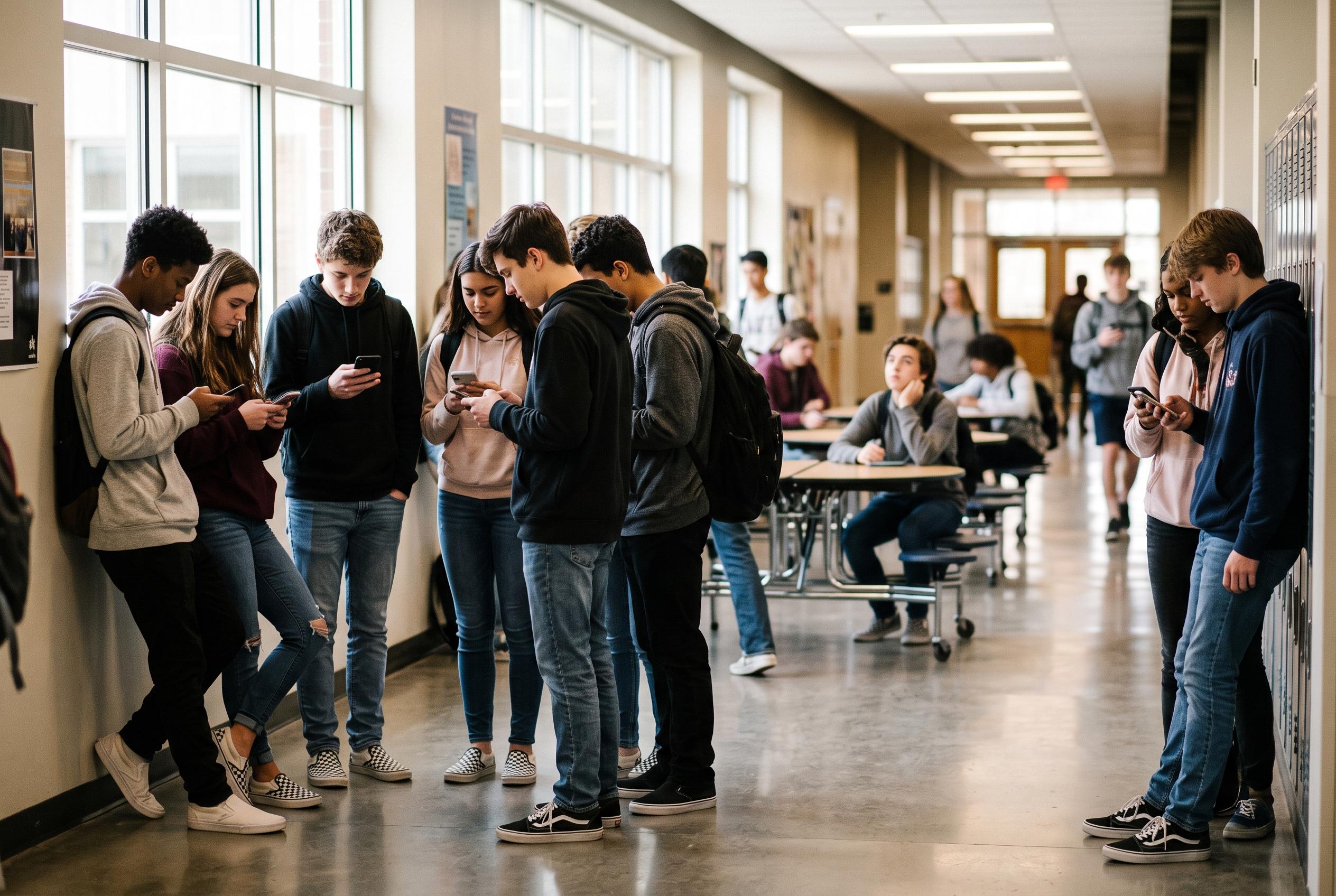

Sarah Miller’s research reveals that decades of anti-bullying efforts may have inadvertently shifted hostility into subtle, digital forms of exclusion, exposing inequalities among teenagers and challenging traditional prevention strategies.
After more than a decade of assemblies, posters and policies telling children to be kind, many teenagers have simply learnt how to make cruelty look polite. In The Tolerance Generation, Boston University sociologist Sarah Miller argues that the anti-bullying era has not so much stamped out hostility as taught pupils to perform civility while shifting exclusion into quieter, harder-to-police digital forms.
Miller’s book is built on two school years inside a rural north-eastern US high school she calls Township. Boston University’s account of the research says she observed classrooms, corridors, library spaces, car parks, sports fixtures and extracurricular activities, interviewed 100 students and 27 school officials, followed the social media activity of 75 students, and reviewed bullying reports, PTA minutes and prevention materials. An earlier National Academy of Education description of the same project put the interview total at 127 when parents and teachers were included, underscoring that the book grew out of a longer piece of dissertation-era research aimed partly at educators and policymakers.
What Miller found was not the obvious intimidation adults are usually trained to spot. Instead, students described conflict that moved sideways: subtweets, online conversations that excluded someone without naming them, ghosting, rumours and inside jokes. Those practices, she found, were especially harmful for young people whose place in school life was already more precarious, including LGBTQ+ students, gender-nonconforming pupils, racially minoritised teenagers, disabled students and those from poorer households.
That gap between adult definitions and teenage experience sits at the centre of her critique. In earlier Boston University profiles, Miller said school staff tended to treat bullying as a direct, targeted act, while students often lived it as something cumulative and atmospheric. She also argued that more privileged pupils, especially those who were white, middle or upper middle class, cisgender and heterosexual, were often best placed to use anti-bullying procedures to their own advantage when disputes flared. Students from less dominant groups were less likely to see those systems as a meaningful route to protection.
Yet her book is not another straightforward warning about the dangers of social media. Miller has repeatedly argued that online platforms were often “the one tool that kids had at their disposal” to prevent harm, respond to it constructively and exchange information about inequality when schools avoided those subjects. In one example highlighted by Boston University, a homophobic post spread overnight; by the next day, hundreds of students had replied with educational resources and public messages of solidarity, some changing their profile pictures to rainbow flags and others turning up at school wearing rainbow colours.
The wider backdrop matters to Miller’s argument. In an excerpt published by the University of Chicago Press, she places Township’s students in a generation shaped by Barack Obama’s election, the rapid expansion of LGBTQ visibility and rights, the killing of Michael Brown in Ferguson, the Obergefell ruling on same-sex marriage and the start of Donald Trump’s first presidential campaign. At the same time, they were growing up amid celebrity-led kindness campaigns, intense coverage of bullying-related suicides and repeated fears over school shootings. Her point is that institutions urged adolescents to be tolerant without giving them much help in talking openly about race, gender, sexuality and class.
That is also why she chose the language of tolerance. “tolerance isn’t the absence of hostility, it just makes hostility quiet,” Miller said in the Boston University release announcing the book. The University of Chicago Press synopsis sharpens the argument, describing school anti-bullying campaigns as a mismatch for social worlds in which harm travels back and forth between the classroom and the phone screen. The press says the 288-page book ranges beyond what is usually called cyberbullying to include sexting exposures, school shooting threats and viral cancel culture.
Academic readers are already treating it as a broader challenge to the anti-bullying playbook. On the press page, sociologist Matt Rafalow calls the study “an urgent critique of the anti-bullying industry”, while Lorena Garcia says it shows what is missed when schools fail to account for the inequalities young people confront in and out of class. Miller’s fellowship-era description for the National Academy of Education made much the same claim in plainer policy terms: anti-bullying initiatives may have benefits, but they can also reproduce the hierarchies they are meant to undo.
The practical implication is not that schools should give up on prevention, but that slogans about niceness and one-off lessons on bullying are unlikely to reach the pupils carrying the heaviest burden. Miller’s work suggests adults need to pay closer attention to atmosphere, status and silence, and to the ways students already use digital culture for education, conflict resolution and resistance. After all 50 states adopted anti-bullying legislation and schools invested heavily in prevention programmes, her argument is that listening more carefully to teenagers may matter more than asking them, once again, to be nice.
Disclaimer: This content is for informational purposes only and is not intended to be a substitute for professional medical judgment, advice, diagnosis, or treatment.