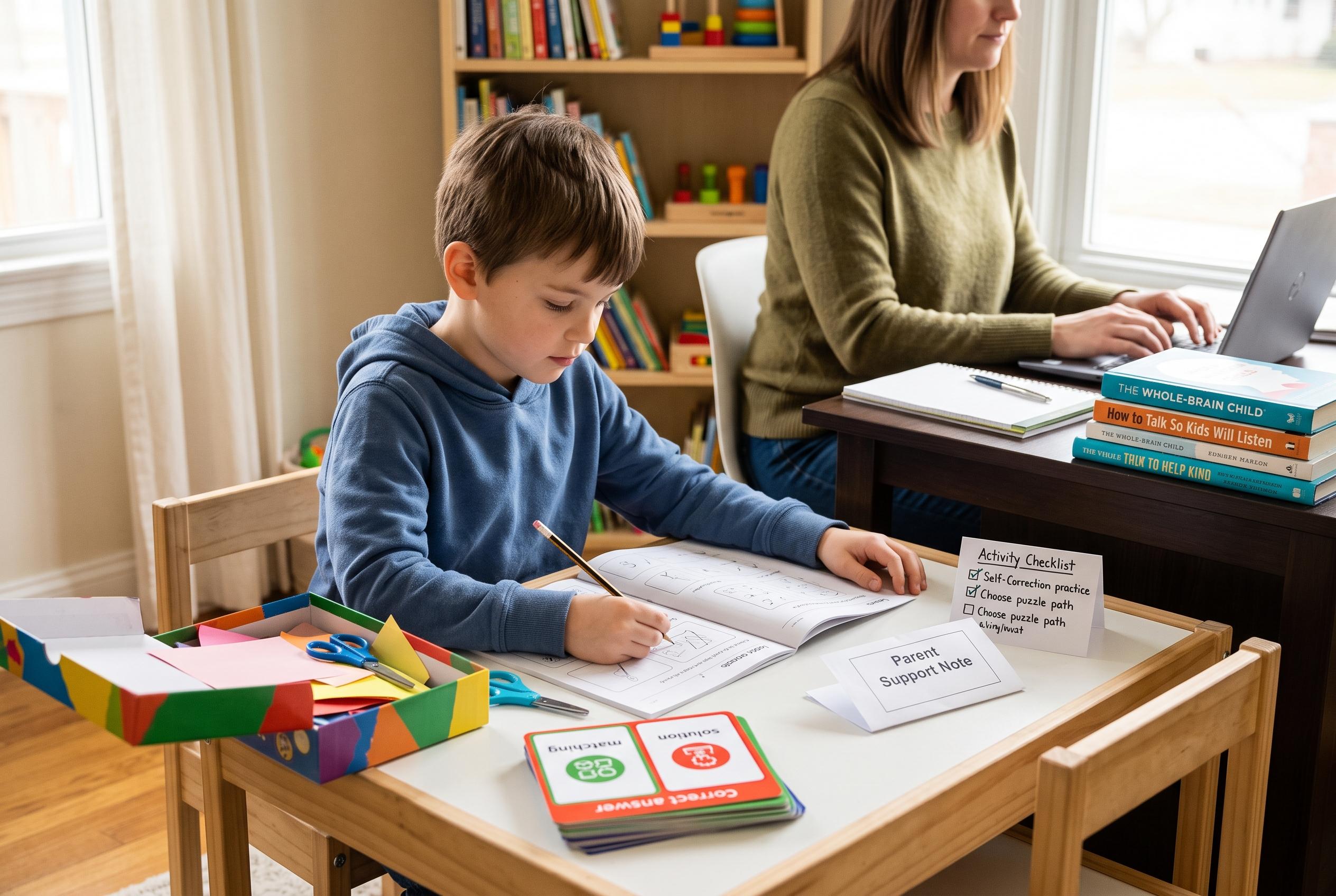

Many parents see their protective behaviours as caring, but research reveals that overcontrol can weaken a child’s confidence, motivation and autonomy, with subtle signs emerging in everyday moments. Recognising these habits offers a pathway to healthier parenting that fosters independence without sacrificing love.
Overparenting often hides in plain sight. Many mothers and fathers do not see themselves as intrusive; they see themselves as attentive, prepared and protective. Yet research on helicopter parenting and overcontrol suggests that when help begins to replace a child’s own effort, the effect can be less support than suppression of confidence, motivation and autonomy.
The clearest warning sign is not a single dramatic intervention but a habit of doing for children what they could begin themselves. That can mean finishing a homework task, speaking for them in a conversation or solving a problem before they have had the chance to try. Studies of homework involvement have found that excessive parental control can weaken the development of independent study skills, while newer research on everyday overparenting shows that the pattern often appears in ordinary moments rather than in obvious crises.
As children grow, the impulse to manage can spread into school, sport and social life. Parents may contact teachers, coaches or employers, steer friendships and fill every spare hour with structured activities. Research published in journals including Springer and Sage has linked overparenting to reduced autonomy, poorer coping and a greater sense of dependency in emerging adults. Other studies have found that overprotective parenting can be associated with internalising distress in adolescents, along with more aggression when young people feel cornered or controlled.
Location sharing, constant check-ins and minute-by-minute scheduling can also blur the line between care and surveillance. Those tools are not inherently harmful, but they become a problem when they replace trust and direct conversation. Researchers have repeatedly found that overinvolvement can send an unintended message: that the child is not capable of handling ordinary uncertainty. Over time, that can undermine decision-making and make young adults less ready for the responsibilities they eventually face alone.
One of the more subtle signs is the urge to cushion every failure. Forgotten homework is rescued, lost items are replaced and small disappointments are smoothed over before they can leave a mark. That may feel compassionate in the moment, but it can prevent children from learning how to recover from setbacks. Related research suggests that reframing these moments as learning opportunities may help parents reduce overinvolvement, because it shifts the focus from control to development.
The emotional roots are often understandable. Parental anxiety, fear and stress can all feed overparenting, and some parents come to measure their own worth through a child’s grades, friendships or achievements. Studies of emerging adulthood also point to the role of overcontrol in weakening motivation and attachment independence. The result is a cycle in which anxious parents intervene more, children rely more and everyone feels the pressure rise.
The encouraging part is that change does not require less love. It requires more room. Researchers and clinicians increasingly stress that healthy parenting is not about removing support but about leaving space for a child to practise speaking, choosing, failing and recovering. A parent who recognises these patterns is not failing; they are noticing a habit that can be adjusted before it hardens into a child’s way of seeing themselves.
Disclaimer: This content is for informational purposes only and is not intended to be a substitute for professional medical judgment, advice, diagnosis, or treatment.