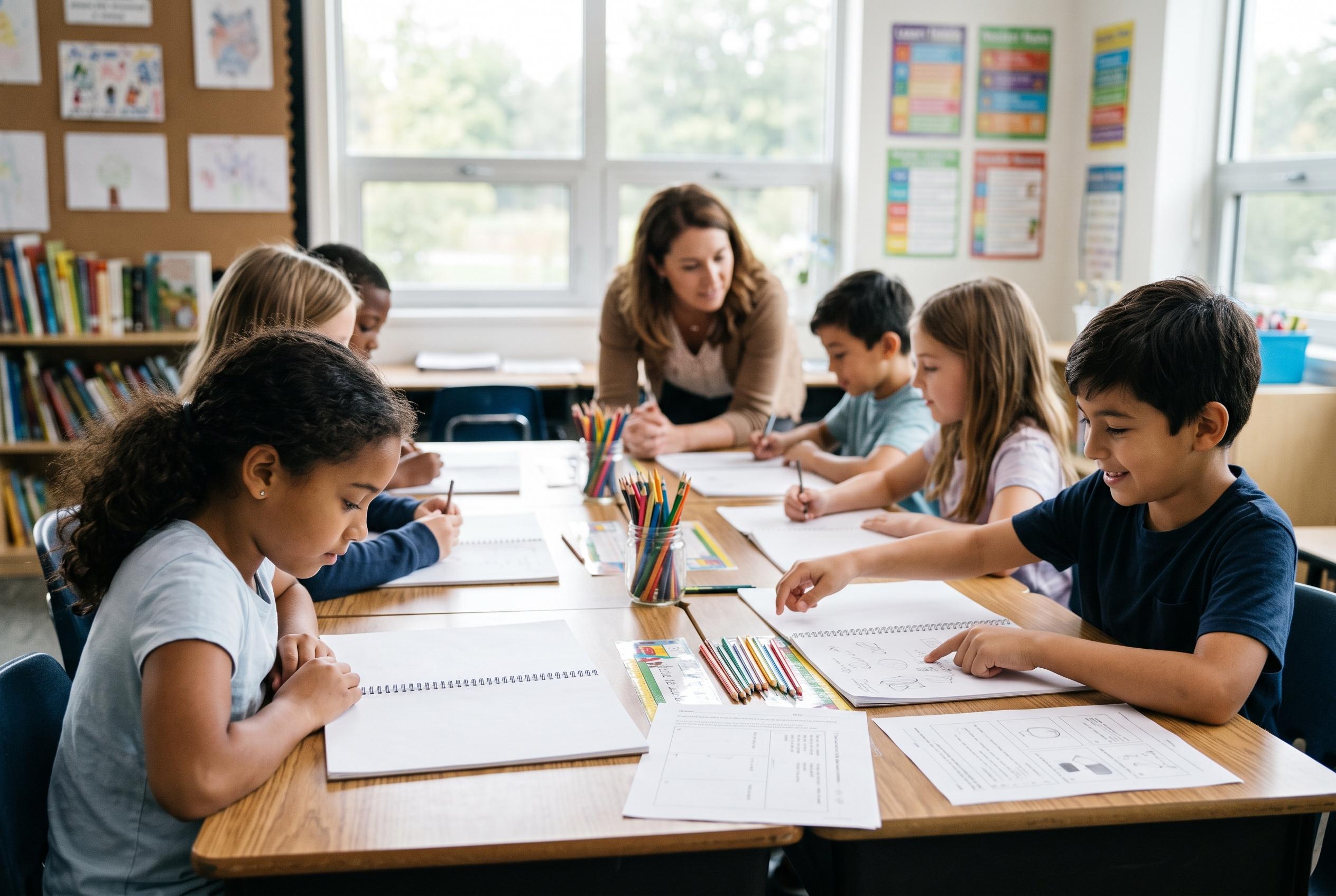

While placing children next to high-achievers may seem beneficial, psychological insights reveal that active engagement, motivation, and social modelling are key to fostering lasting academic habits and self-belief.
For generations, parents have repeated the same schoolyard wisdom: place a child next to the class topper and some of that success will rub off. The idea is appealingly simple, but psychology suggests the reality is more complicated. According to the Economic Times, children are not transformed by proximity alone; what matters is the kind of behaviour, motivation and interaction that unfolds around them.
That idea fits neatly with Albert Bandura’s social learning theory, which says children can pick up habits by watching others. Simply observing a more diligent classmate can make routines such as starting homework sooner, revising earlier or persisting with difficult work feel more normal and achievable. Simply Psychology notes that Bandura’s well-known Bobo doll research showed children can imitate behaviour they have seen, even without direct reward.
The same principle helps explain why peer effects can matter in classrooms. The Economic Times cites studies suggesting that students often do better when surrounded by higher-achieving classmates, including research that found gains in mathematics and English when middle-school pupils were placed with stronger performers. But the benefit appears to come through study habits, confidence and engagement, not through any mysterious transfer of intelligence.
There is, however, a catch. If children sit beside a top student without speaking, comparing notes or asking questions, little may change. The relationship has to be active enough to make good habits visible. Simply Psychology’s overview of observational learning says attention, memory, practice and motivation all play a role, which helps explain why passive seating arrangements alone are rarely enough.
There is also a risk in leaning too hard on comparison. A child who feels permanently outclassed may lose confidence rather than gain it. The most helpful version of the old advice is not to tell a child to “copy the topper”, but to place them in an environment where curiosity, effort and self-belief are modelled every day. In that sense, the real lesson is less about intelligence being contagious and more about learning being social.
Disclaimer: This content is for informational purposes only and is not intended to be a substitute for professional medical judgment, advice, diagnosis, or treatment.