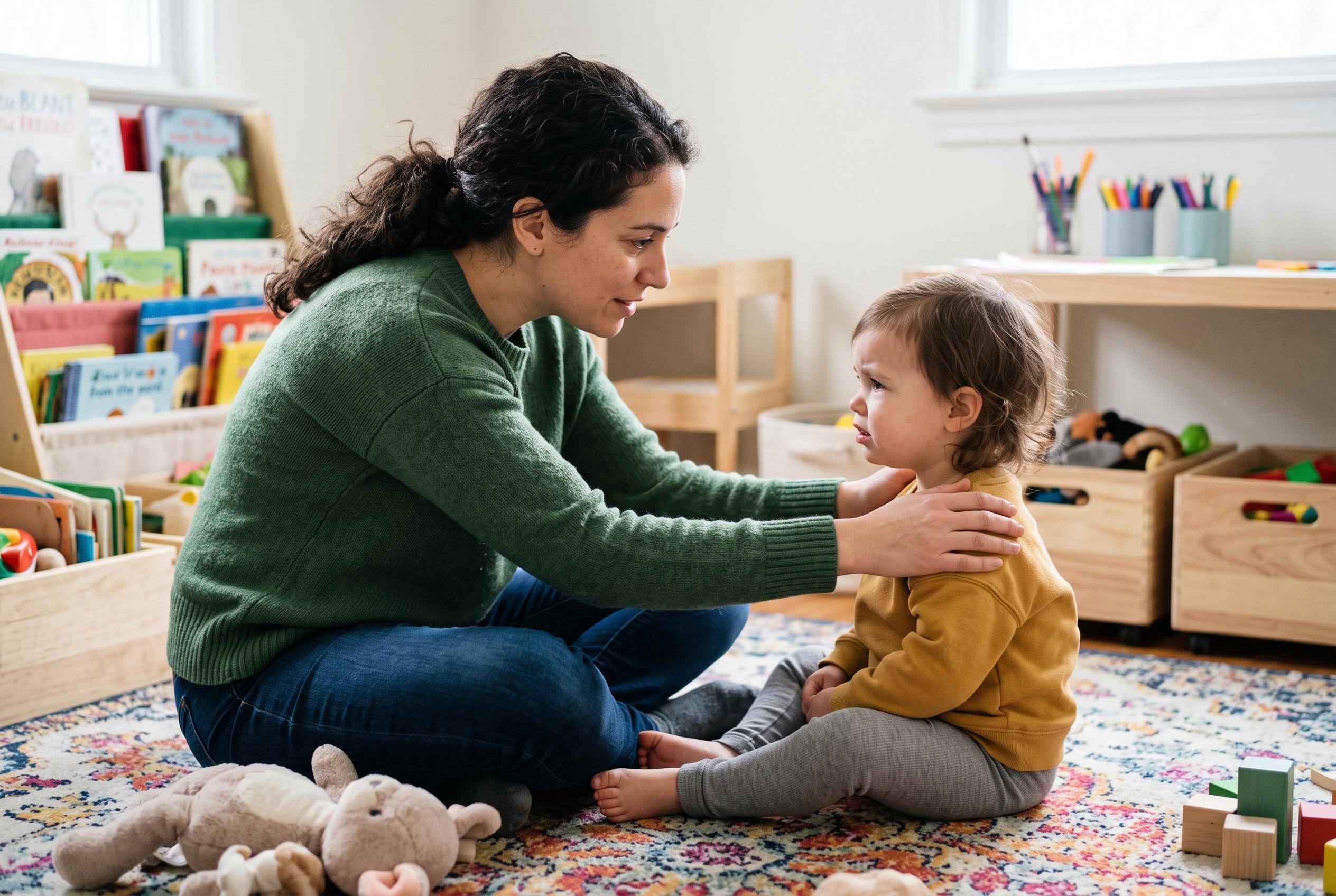

A recent incident involving a child’s anger and damaged property underscores the importance of emotional regulation in early childhood. Experts highlight the vital role of co-regulation and calm adult guidance in fostering resilience and healthy emotional growth.
A scratched car can feel like a small disaster, but for parents it can also be a clue. In the incident described here, a four-year-old’s anger began with a dead phone battery and quickly spilled into hitting, chasing and, finally, taking a stone to her mother’s vehicle. The child’s explanation was simple: “I was fighting with my sister and I was angry.” That is a reminder that big behaviour in young children is often the visible edge of feelings they do not yet know how to manage.
Child development specialists say that is exactly why emotional regulation matters. Dartmouth Health Children’s describes it as the ability to manage emotions in healthy, constructive ways, while Harvard Health notes that children usually learn it through co-regulation, the back-and-forth process in which a calm adult helps a distressed child settle. That means the parent’s role is not just to stop the behaviour, but to help the child recover, name what happened and practise a better response next time.
The response in this case reflects that approach: the anger was not excused, but it was contained. The child was told she could be angry, but not hit her sister or damage property, and she was given a logical consequence rather than a punishment aimed at humiliation. Experts quoted by Kids Included Together and the Parent Management Training Institute say children learn best when adults get down to their level, listen, model calm behaviour and explain what they should do instead of only what they must not do. Predictable routines, breathing breaks and movement can also help reset an overwhelmed nervous system.
Harvard Health says consistent co-regulation helps children build self-regulation over time, including attention, problem-solving and flexible thinking. The Kids Mental Health Foundation adds that these skills support resilience, school success and social development. Dartmouth Health Children’s also points to physical activity as a useful tool, because movement can improve mood, lower stress and give children practice handling both winning and losing. In the end, the car may be repaired quickly. The harder work is teaching a child to say, in effect, “I am angry, but I do not need to hurt anyone with it.”
Disclaimer: This content is for informational purposes only and is not intended to be a substitute for professional medical judgment, advice, diagnosis, or treatment.