

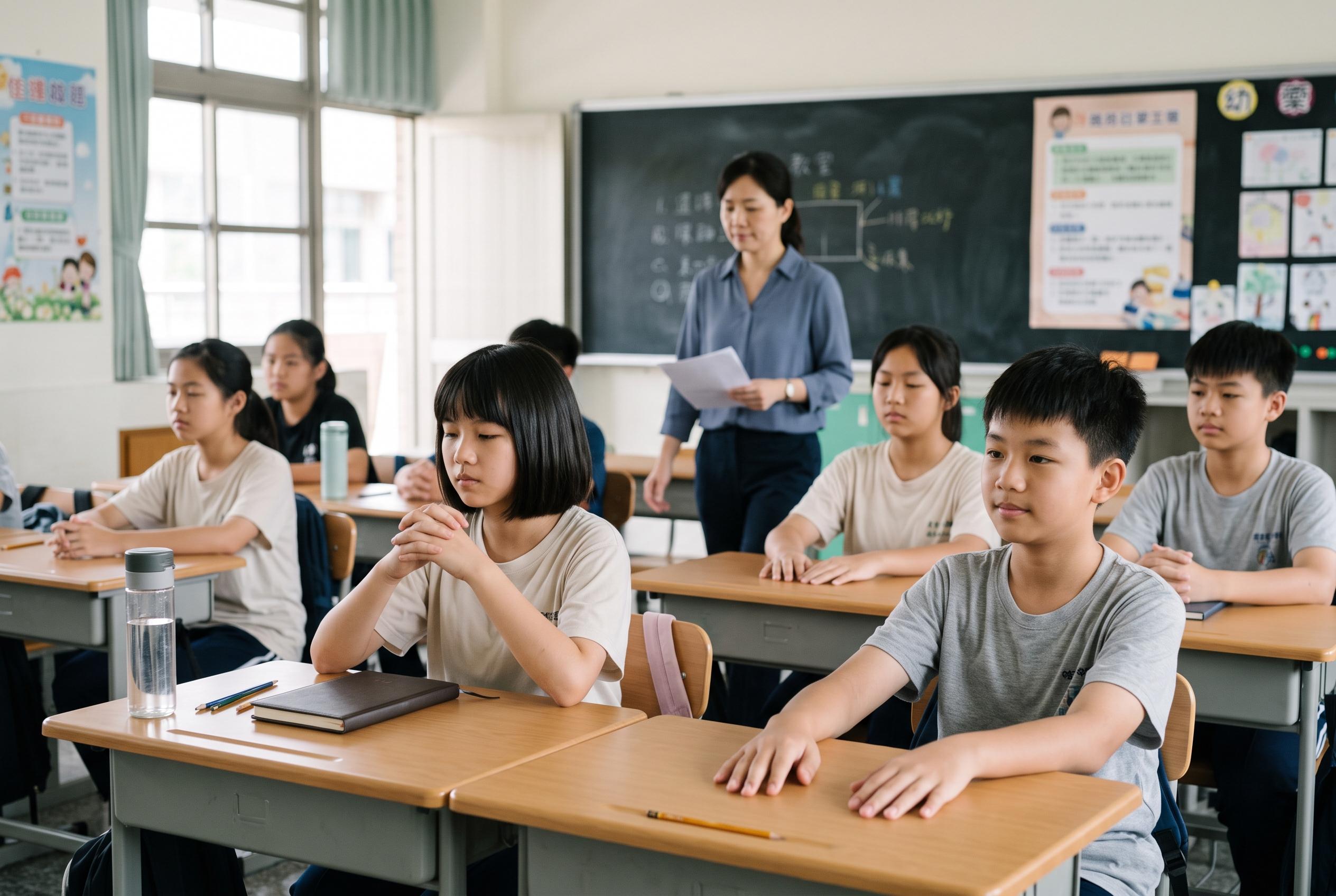

A new study in Taiwan finds that the PILOT programme, integrated into regular classroom teaching, modestly enhances inhibitory control and supports psychological well-being among seventh-graders, highlighting the potential of scalable psychosocial interventions.
A school-based life skills programme in Taiwan was linked to modest but measurable gains in adolescents’ inhibitory control, according to a new study of seventh-grade pupils that also found a small protective effect on one aspect of psychological well-being. The research tracked 678 students across two academic years and compared pupils who took part in the Positive Interpersonal and Life Orientation Training, or PILOT, programme with those who continued their usual lessons. Over roughly 12 months, students in the intervention group improved more on a counting Stroop task, a standard test of inhibition that asks participants to suppress an automatic response, than those in the control schools.
The trial was carried out in eight schools in Keelung City and Yunlin County, with entire schools assigned to either the programme or normal schooling rather than individual pupils. Four schools delivered PILOT, while four served as controls. The study was not randomised, but the groups were similar at the start on age, baseline well-being and several family and school measures, reducing the chance that the findings simply reflected pre-existing differences. The programme itself was built into ordinary classroom time and taught by class teachers after training, making it easier to deliver at scale than extra-curricular interventions.
PILOT covered eight modules, including social and communication skills, anger and anxiety management, decision-making, assertiveness, conflict resolution and resistance to peer pressure. The curriculum was designed not as a narrow cognitive exercise but as a broader life-skills package. Even so, the researchers argue that many of its core activities require students to pause, weigh options and resist impulse, which may explain why the intervention was associated with stronger performance on the Stroop task. Both groups improved over time, which is consistent with normal adolescent development, but the gains were larger in the PILOT schools.
The study found a more limited link between the programme and emotional functioning. Of six areas measured on a shortened Chinese version of Ryff’s Psychological Well-Being Scale, only self-acceptance differed between groups. That score fell in the control group over the year but remained stable among pupils in PILOT schools. Within the intervention group, better Stroop change scores were also associated with gains in autonomy, environmental mastery and self-acceptance, suggesting that cognitive control and personal adjustment may develop together during early adolescence. The authors say this supports the idea that inhibitory control may be a basic self-regulatory skill that helps young people manage school pressures, emotions and social demands.
The findings fit with a wider body of research suggesting that life-skills education can influence adolescent health, though effects are often stronger on skills and attitudes than on behaviour itself. Earlier work on the Botvin LifeSkills Training programme described it as an established prevention approach for adolescent drug use, yet a more recent evaluation of its high school version found meaningful shifts in targeted mechanisms but no clear behavioural effects. A systematic review of life-skills programmes in low- and middle-income countries, meanwhile, highlighted the importance of involving parents to improve trial outcomes. Other studies have pointed to benefits for emotional functioning and inhibition, including work on the Super Skills for Life programme, which reported improvements in inhibitory control and reduced emotional and behavioural problems in residential care settings, as well as a later review suggesting that the same programme can ease depression and anxiety symptoms in children and adolescents. Taken together, the new PILOT study adds to a growing picture: classroom-based life-skills teaching may help adolescents build the self-regulation that supports both learning and well-being, even if the effects are modest and not uniform across every outcome.
Disclaimer: This content is for informational purposes only and is not intended to be a substitute for professional medical judgment, advice, diagnosis, or treatment.



