
Despite evidence showing children with learning disabilities are significantly more likely to suffer from serious vision problems, thousands in Britain miss out on crucial sight tests, prompting calls for systemic change in eye care services for vulnerable pupils.
Thousands of neurodivergent children in Britain are still missing out on basic sight tests, despite evidence that pupils with learning disabilities are far more likely to have serious vision problems than their peers. SeeAbility, the charity behind a recent Guinness World Record event in London, says the issue is not marginal but systemic, with many children in special schools never having had an eye examination at all.
The charity used a live portrait installation at Potters Fields Park, near Tower Bridge, to draw attention to the scale of the problem. In May 2026, Guinness World Records confirmed the record for the “Most participants featured on a live portrait installation in 48 hours” after artists created 800 portraits, each standing for 1,000 of the 800,000 people with learning disabilities in the UK estimated to have sight problems. SeeAbility said the display was intended to highlight children and young people in special schools who are not getting the eye care they need.
The underlying numbers are stark. SeeAbility’s research says children with learning disabilities are 28 times more likely to have a serious sight problem, while its wider eye care pages say adults with learning disabilities are ten times more likely to be affected. The charity also says more than half of people with learning disabilities in the UK are not receiving the support they need for their sight, and that over half of children in special schools have never had their eyes tested.
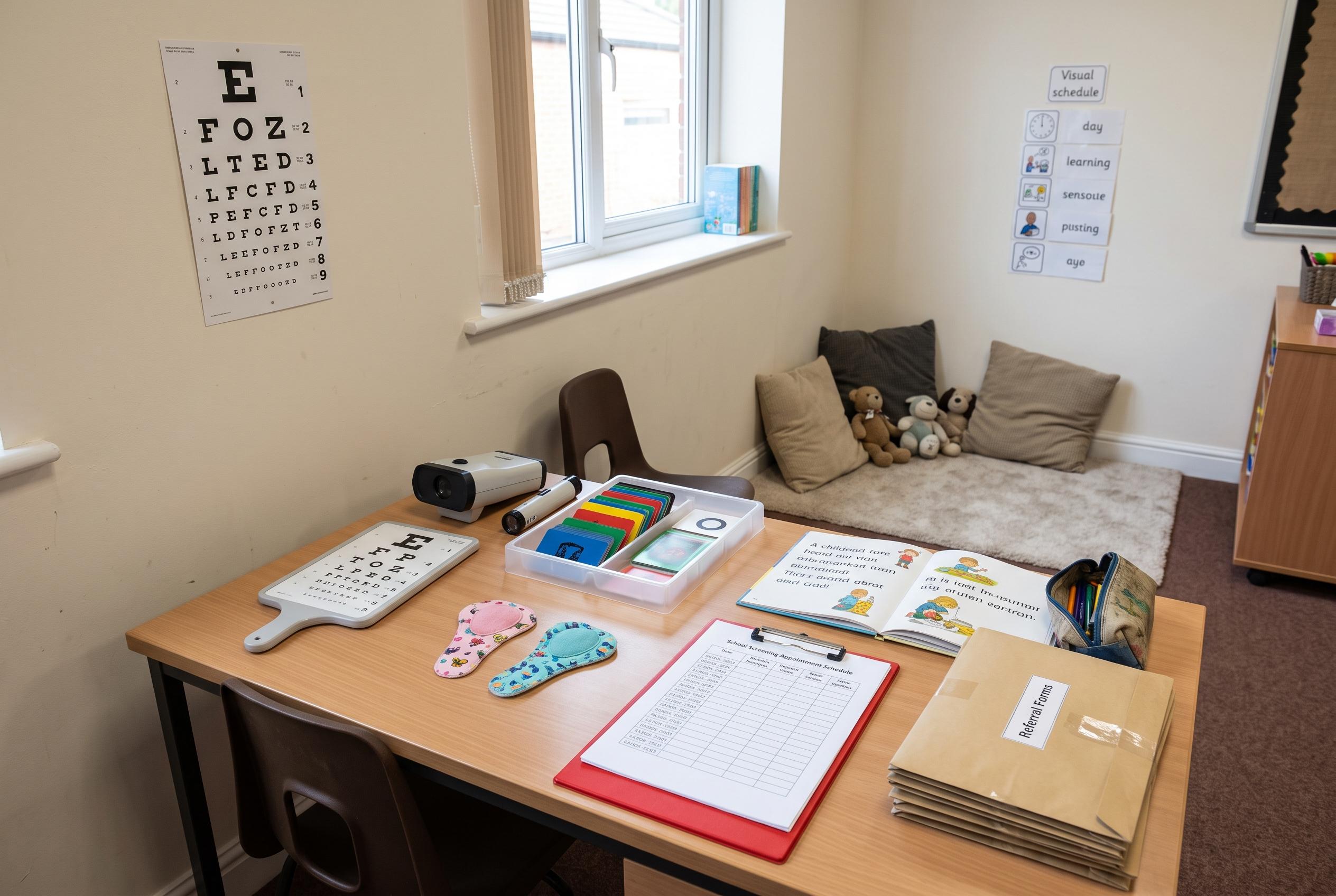
For many families, the barrier is not refusal but access. A conventional high street optician can be overwhelming for autistic children or those with profound learning difficulties, with bright lights, time pressure and testing methods that rely on reading letters or cooperating with unfamiliar equipment. SeeAbility says that is one reason so many children are overlooked, even though specialist optometrists and orthoptists can use objective tests that do not depend on speech or letter recognition.
The charity’s answer has been to bring care into schools. Since 2013, SeeAbility has been providing eye care and glasses in special schools, and it now supports more than 50 London schools. Its model, which the NHS Special School Eye Care Service has taken as a basis, offers annual assessments and free glasses where needed, with clinicians working in familiar surroundings and sharing reports that help teachers adjust seating, lighting and materials for each child.
SeeAbility says this approach is already showing results and has the potential to go further. The charity’s “From moments missed to moments that matter” campaign says it wants to extend services to 25,000 more children and young people in special schools over the next five years. For campaigners, the message is simple: if children cannot see properly, they cannot fully learn, play or take part in school life, and the system should stop treating that as an unavoidable part of disability.
Disclaimer: This content is for informational purposes only and is not intended to be a substitute for professional medical judgment, advice, diagnosis, or treatment.