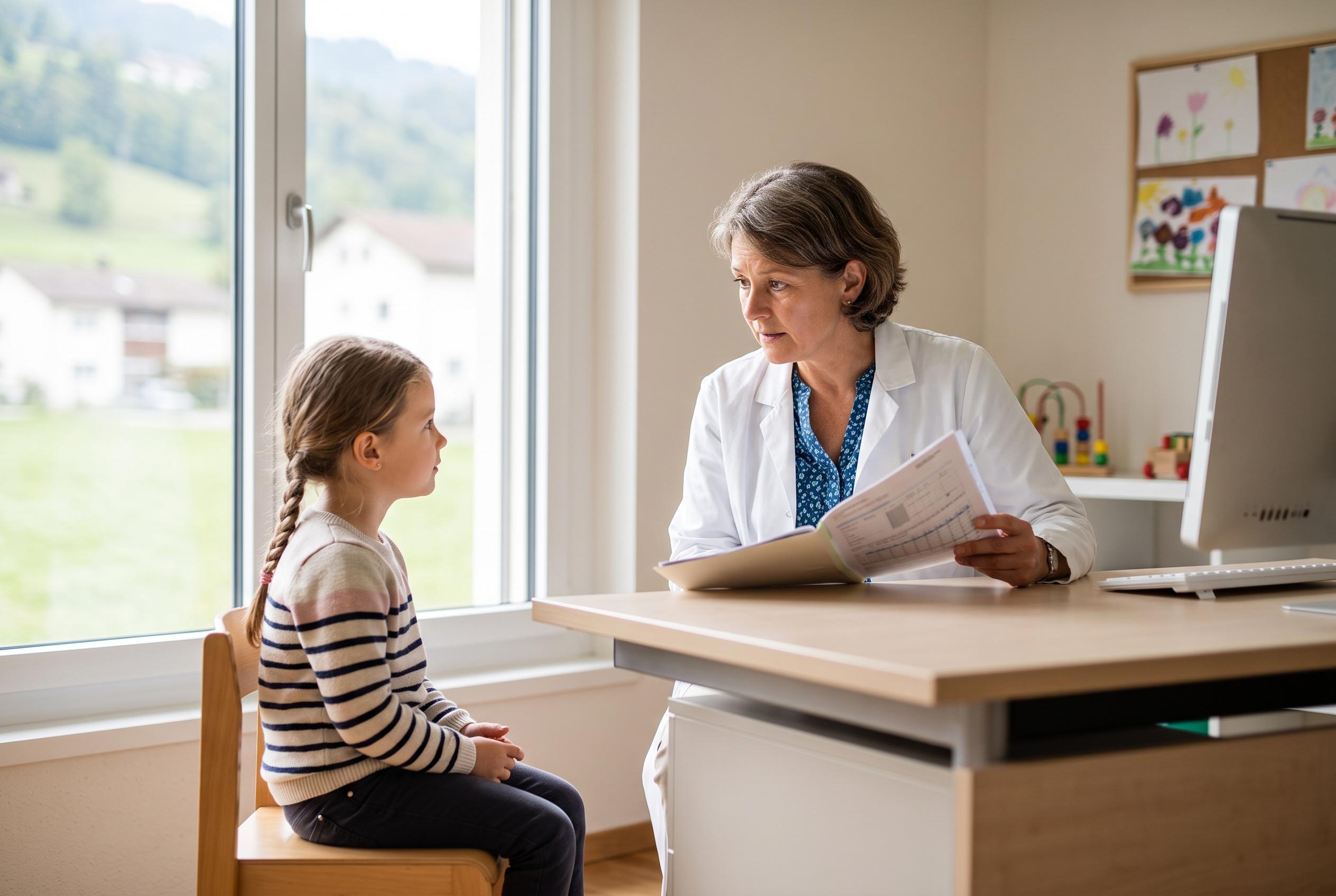

A new study reveals increasing school-related concerns among Swiss children are prompting more visits to paediatricians, highlighting the need for early educational support and preventative measures.
Swiss children’s school struggles are turning up increasingly in paediatric waiting rooms, according to a new study that suggests the real answer often lies less in medicine than in education. The survey, commissioned by Stiftung Mercator Schweiz and carried out by gfs.bern, points to a system in which classroom pressures, relationships and support gaps are pushing families to doctors for problems that are only partly medical.
The research, based on responses from 469 practising paediatricians and 17 specialist interviews, found that 44% of doctors deal with school-related concerns at least once a day. Among those treating such cases, 89% said the problem had become more common during their careers. Yet the study also stresses that school can be a source of stability, belonging and protection when the fit between a child, the demands placed on them and the surrounding relationships is right.
The symptoms change as children get older. Younger pupils are more likely to arrive with stomach aches, behavioural issues and concentration problems. By secondary school, the picture becomes more serious: paediatricians working with pupils in years seven to nine frequently reported depressive moods, eating disorders, self-harm and suicidal thoughts, alongside continuing attention difficulties.
The report argues that this is not simply a matter of children becoming unwell because of school. Instead, it points to a mix of bullying, social exclusion, an academic level that does not match the child’s abilities, and strained relationships with teachers. It also says that school-related difficulties can end up wearing a medical label because a diagnosis is often one of the few ways families can access help.
That creates a policy dilemma. The paediatricians surveyed generally believed some of these problems could be prevented more effectively through educational support than through treatment in a clinic. The report therefore calls for low-threshold help to be available before a formal diagnosis is required, so that extra support does not depend on turning a school problem into a medical one.
The recommendations are practical rather than dramatic. The study urges better use of early support already available through paediatric practices, special education services and parental counselling, but says those services are too weakly connected. It also favours teaching that is better adapted to children’s developmental stage, later grading and later academic selection where possible, and more stable classroom relationships, including options such as permanent team-teaching. The authors say schools, doctors and other specialists already work together, but usually too late and under too much pressure of time and money.
Disclaimer: This content is for informational purposes only and is not intended to be a substitute for professional medical judgment, advice, diagnosis, or treatment.