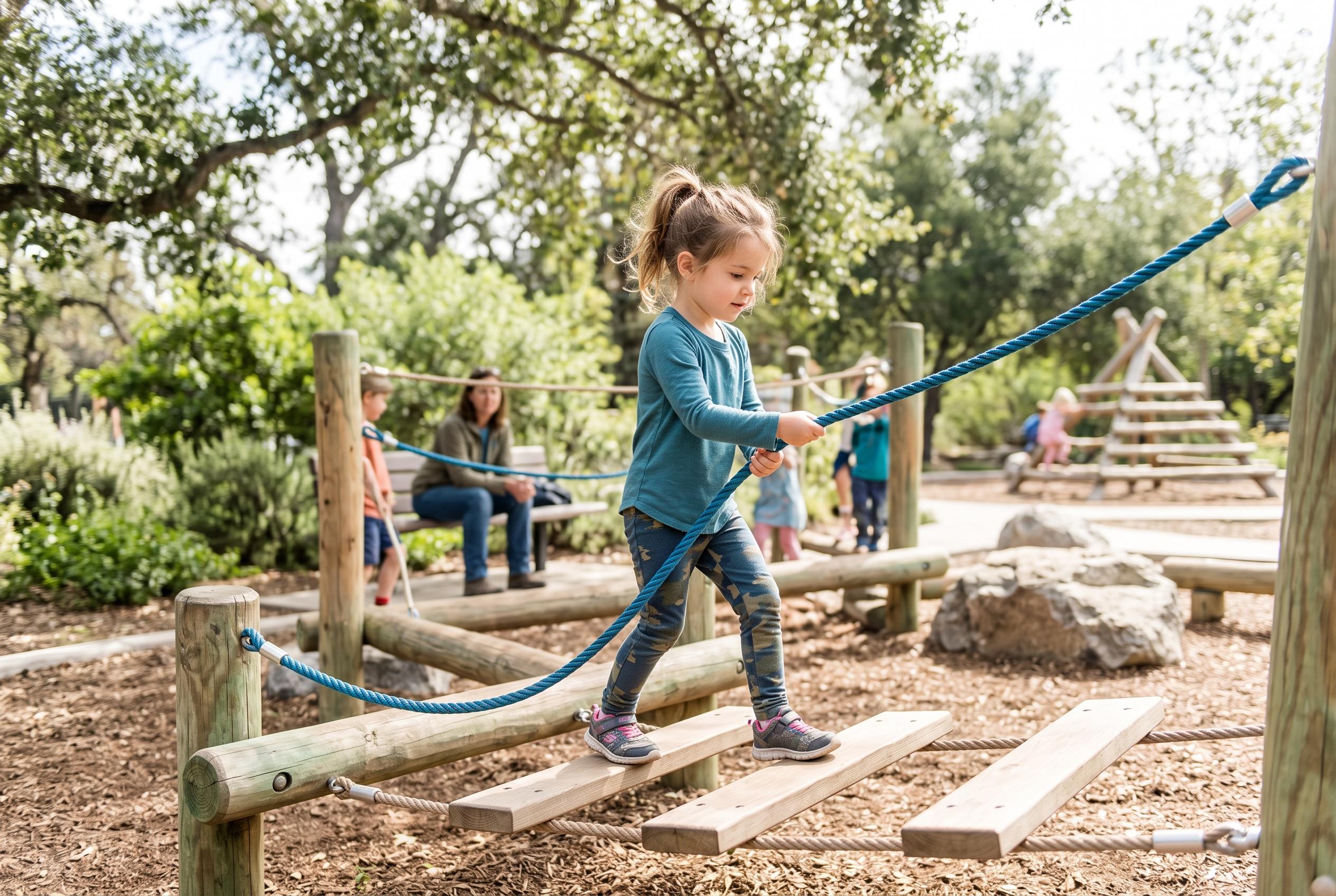

Research highlights the vital role of playful experiences involving movement and risk-taking in building emotional strength and social skills in young children, emphasising the importance of safe exploration for lifelong resilience.
Children do not build emotional strength by being told about it in the abstract. They build it through repeated experiences of moving, imagining, trying, failing and trying again. That is the central argument made by Parenta, which says imaginative play and physical movement give young children some of their earliest lessons in resilience, confidence and self-control.
The point is echoed by the American Academy of Pediatrics, which has long argued that play supports healthy brain development, creativity and emotional strength. In its guidance on play, the academy says children use play to work through fears, practise adult roles and develop skills such as cooperation and conflict resolution. Research on imaginative play has also linked pretend scenarios with social and emotional competence in the pre-school years, suggesting that make-believe is more than entertainment; it is a training ground for early development.
That idea is especially relevant when play includes uncertainty. A child crossing an uneven bridge in a game, creeping past a pretend tiger or deciding whether a tower will hold together is not just having fun. In those moments, children are learning how to manage risk, stay with a challenge and recover when things do not go to plan. Studies on adventurous play have found that such experiences may help build coping skills and reduce later mental health difficulties, while reviews of loose parts play suggest that open-ended materials can support social, emotional and physical development.
The lesson for parents and early years settings is not to remove difficulty from play, but to keep children safe enough to explore it. Supportive adults can offer reassurance without stepping in too quickly, allowing children to discover that setbacks are manageable and success can be earned. Parenta argues that these are the memories children carry forward: the joy of the game, the pride of mastering a task and the confidence that comes from believing they can find their way through the next challenge.
Disclaimer: This content is for informational purposes only and is not intended to be a substitute for professional medical judgment, advice, diagnosis, or treatment.