

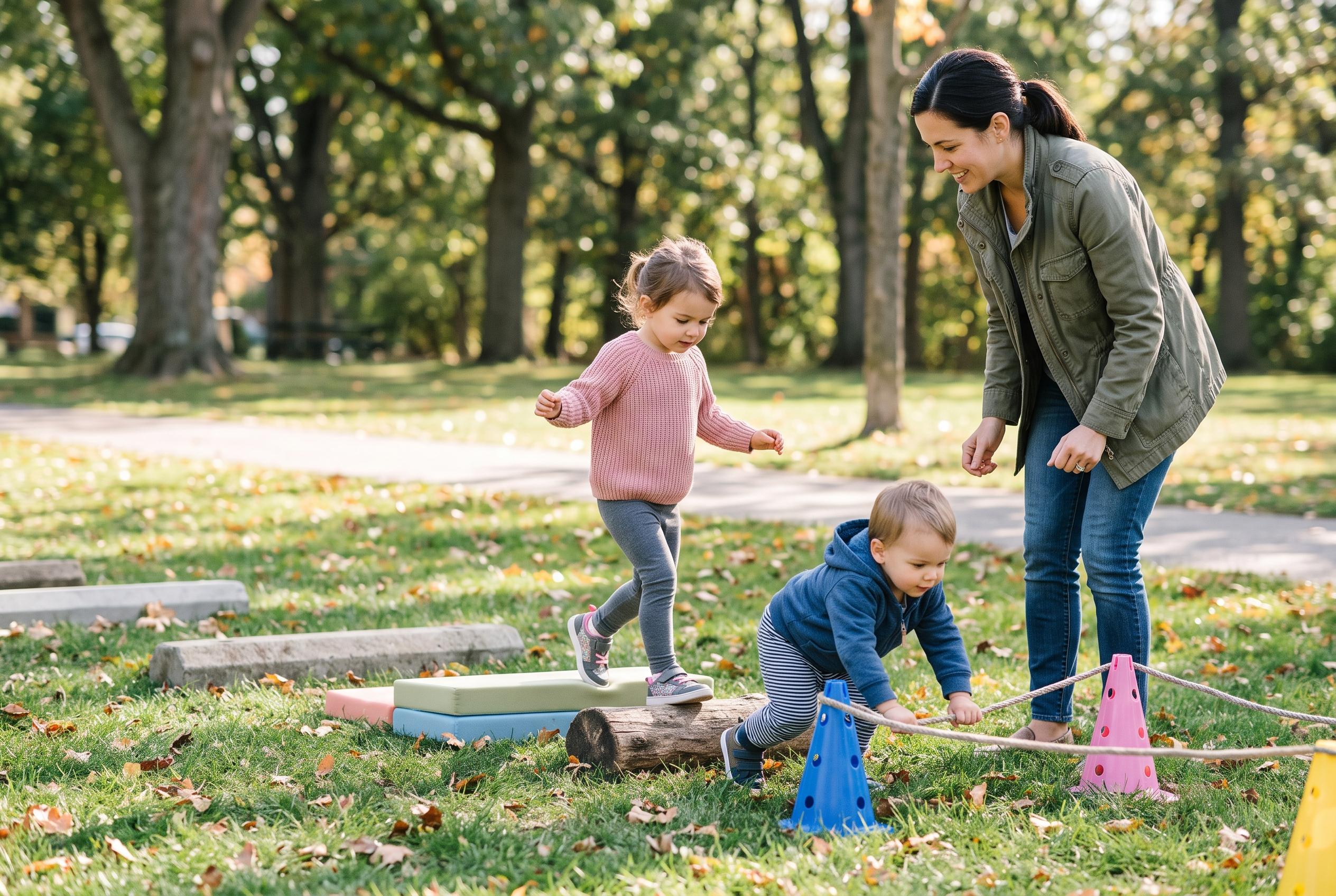

Simple, playful activities that integrate movement into daily routines can significantly enhance children’s gross motor skills, with outdoor play and obstacle courses proving especially effective for building strength, coordination, and confidence.
Helping children build gross motor skills is less about formal training than about giving them frequent chances to move. Cleveland Clinic defines gross motor skills as the large-body movements children use for actions such as walking, climbing and keeping their balance, while Help Me Grow Minnesota notes that these abilities develop rapidly in the early years as muscles, bones and coordination mature. In practice, that means everyday play matters. According to Healthline, many of the best activities require little more than open space, a ball, cushions or a simple mat.
One of the easiest ways to support progress is to fold movement into the day rather than treating it as a separate task. Family activity does not need to be elaborate to be effective. Short bursts of marching, crawling, hopping or copying animal movements can all help children practise control and strength. The key, therapists say, is to make activity feel playful and routine so that children associate movement with fun rather than pressure.
Outdoor play can add a useful layer of challenge. Children usually have more room to run, climb and change direction outside, and natural surfaces can help them adapt their balance in different ways. Walking on grass, climbing low structures or moving across uneven ground asks the body to make constant small adjustments. Reviewed has pointed to biking, running, jumping and playground play as straightforward ways to support this kind of development, especially when children can repeat an activity until they feel comfortable.
Simple obstacle courses can also turn motor practice into an engaging game. Household objects such as cushions, tunnels, chairs and tape on the floor can create a path that asks children to step, crawl, duck and balance. MidSouth Therapy Group recommends obstacle-style activities such as animal walks, stepping stones and line walking for building strength, coordination and balance. The advantage of this approach is flexibility: the course can be made easier or harder depending on the child’s age and confidence.
Balance work is especially useful because it supports many everyday movements, from walking steadily to climbing stairs. A strip of tape on the floor can become a pretend bridge, while standing on one foot can become a quick game rather than a drill. Therapists commonly recommend this kind of play because it strengthens body awareness without requiring special equipment. Low beams, stepping platforms and other age-appropriate playground features can offer similar benefits.
Ball games are another practical option because they combine movement with hand-eye coordination. Healthline lists rolling, throwing, catching, kicking and carrying among the core gross motor actions children use as they grow. Starting with a large, soft ball often makes success more likely, especially for younger children who are still learning to judge distance and timing. Even when a child misses the catch or misjudges a kick, the attempt itself helps build coordination and persistence.
Ride-on toys and climbing activities can broaden those skills further, as long as the equipment suits the child’s size and stage of development. A stable ride-on car or trike can help children practise steering, leg strength and spatial awareness, while climbing encourages planning, balance and careful movement. The most important point, child development specialists say, is to follow the child’s pace. Short, positive experiences, plenty of encouragement and safe supervision usually do more to build confidence than pushing for quick progress.
Disclaimer: This content is for informational purposes only and is not intended to be a substitute for professional medical judgment, advice, diagnosis, or treatment.



