

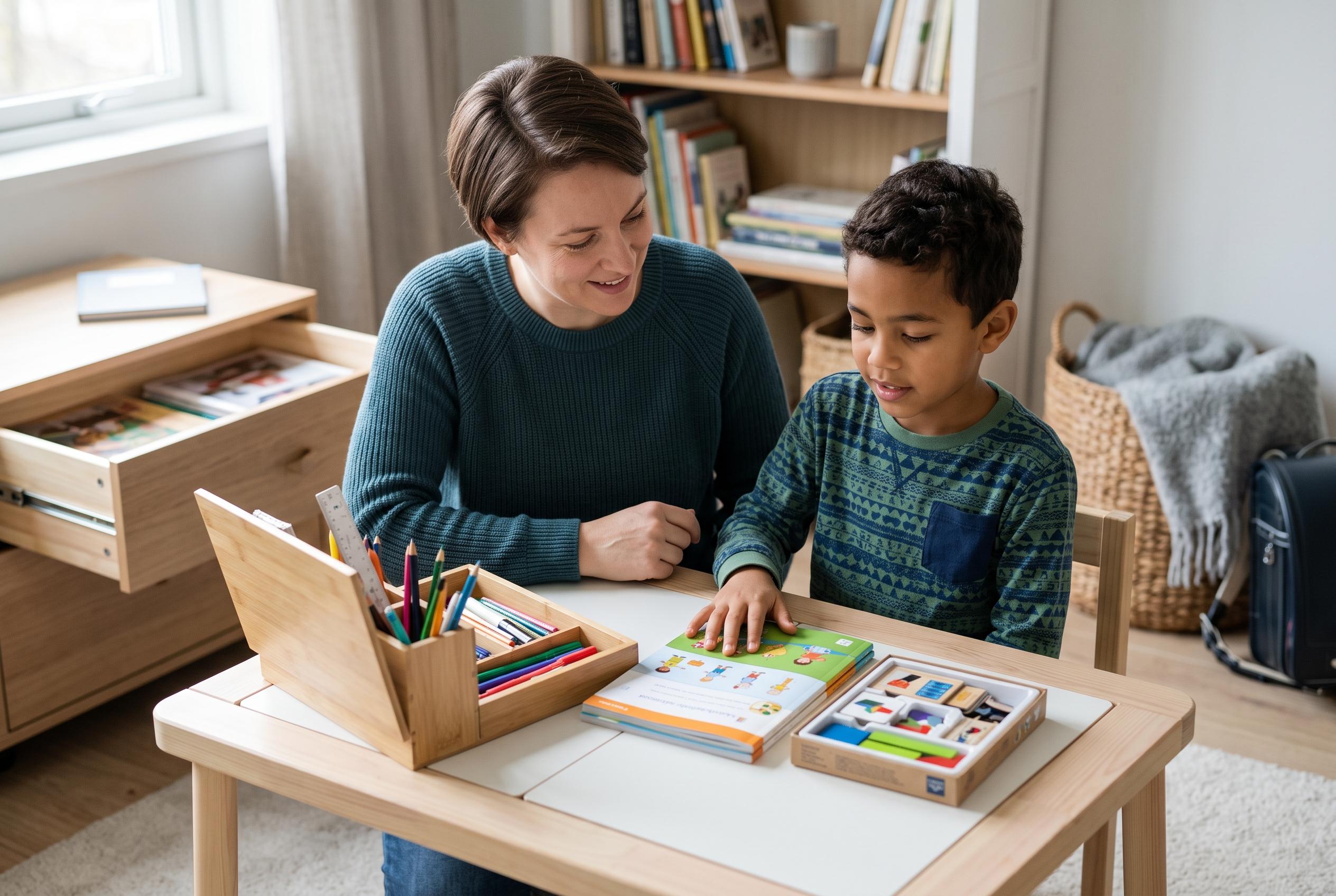

Research shows that allowing children age-appropriate choices in their learning can enhance motivation, self-regulation, and academic achievement, fostering habits that prepare them for future decisions and challenges.
Children do not learn only from lessons, worksheets and tests. They also learn from the small, everyday choices they are allowed to make. Deciding which story to read, how to begin homework or how to tackle a class project may seem ordinary, but these moments can shape how children think, work and respond to challenge. Research on autonomy-supportive learning environments suggests that when adults give children age-appropriate room to choose, it can strengthen motivation, engagement, self-regulation and academic performance.
The key is balance. Age-appropriate decision-making is not the same as leaving children to fend for themselves. Younger children may choose between two books or two simple activities, while older pupils can help plan revision, organise materials or decide how to approach an assignment. The learning value comes from the process: weighing options, considering consequences, following through and reviewing what happened afterwards. Studies have linked this kind of autonomy support with stronger intrinsic motivation and better outcomes in school subjects, including science and mathematics.
One clear benefit is that children begin to build independent learning habits. Pupils who are always told exactly what to do have fewer chances to practise making their own academic decisions. By contrast, children who are gradually given responsibility learn that success depends partly on their own effort and organisation. The Education Endowment Foundation describes self-regulated learners as pupils who set goals, monitor progress and reflect on their work, which is precisely the sort of habit that grows when adults allow controlled choice.
Choice also supports thinking skills. When children compare options, they practise judging what matters, anticipating what might happen next and explaining why they made a particular decision. That kind of reasoning is useful across the curriculum. In mathematics, a child may decide whether to draw a diagram or write a number sentence. In reading, a pupil may select a text from a suitable range and say why it appeals to them. Research has consistently found that autonomy-supportive teaching is associated with stronger engagement and more effective learning.
Motivation often rises when children feel their voice has been heard. A pupil is more likely to invest effort in a task when they have some say in how it is completed, provided the academic goal remains clear. That might mean choosing between a written explanation, a labelled diagram or a short presentation to show understanding. Meta-analytic evidence has found that autonomy support from parents and teachers is linked with higher autonomous motivation and greater engagement, both of which matter for sustained learning.
These decisions also give children practice in planning and time management. School work is not only about knowing the subject; it also requires organising books, breaking tasks into steps and deciding what to do first. A younger child may pack a school bag using a checklist, while an older pupil may map out a revision timetable. The Education Endowment Foundation says planning, monitoring and evaluating are central to metacognition and self-regulation, and those skills tend to improve when they are taught explicitly and reinforced over time.
Mistakes are part of the learning process, and choice helps children learn from them. If a pupil chooses to revise by re-reading notes and then does poorly in a quiz, that can open a useful conversation about more effective methods, such as self-testing or retrieving information from memory. The point is not to shame the child for a poor decision, but to help them notice the gap between intention and result and adjust next time. Research has shown that autonomy-supportive instruction can improve students’ intrinsic motivation, making them more willing to stay involved when work becomes difficult.
Decision-making can also build confidence. Children who are allowed to make supported choices and then see themselves succeed begin to trust their own judgement. Finishing a book they chose, completing a study goal they helped set or solving a problem after trying a new approach can help a child see themselves as capable. At the same time, confidence should not be confused with independence at all costs. Knowing when to ask for help from a parent, teacher or classmate is also an important academic skill.
There is another long-term benefit: children become better prepared for the larger decisions school will eventually require. Choosing subjects, managing several deadlines, planning revision and thinking about future education all demand judgement. Everyday choices help children rehearse the basic mental steps involved , identifying options, asking questions, checking requirements and seeking advice when needed. In the classroom, autonomy-supportive approaches have been associated with stronger achievement in science and mathematics, suggesting that this kind of preparation can have real academic value.
For parents and teachers, the practical lesson is straightforward. Offer a small number of sensible options, keep boundaries clear and match the level of choice to the child’s age and maturity. Adults should still handle safety, attendance and essential expectations, but children can be invited to take part in decisions that affect how they learn. When a choice does not work, the answer is not to remove choice altogether, but to help the child think through what happened and what might be done differently next time. That combination of structure and freedom is what turns small decisions into useful learning.
Disclaimer: This content is for informational purposes only and is not intended to be a substitute for professional medical judgment, advice, diagnosis, or treatment.



