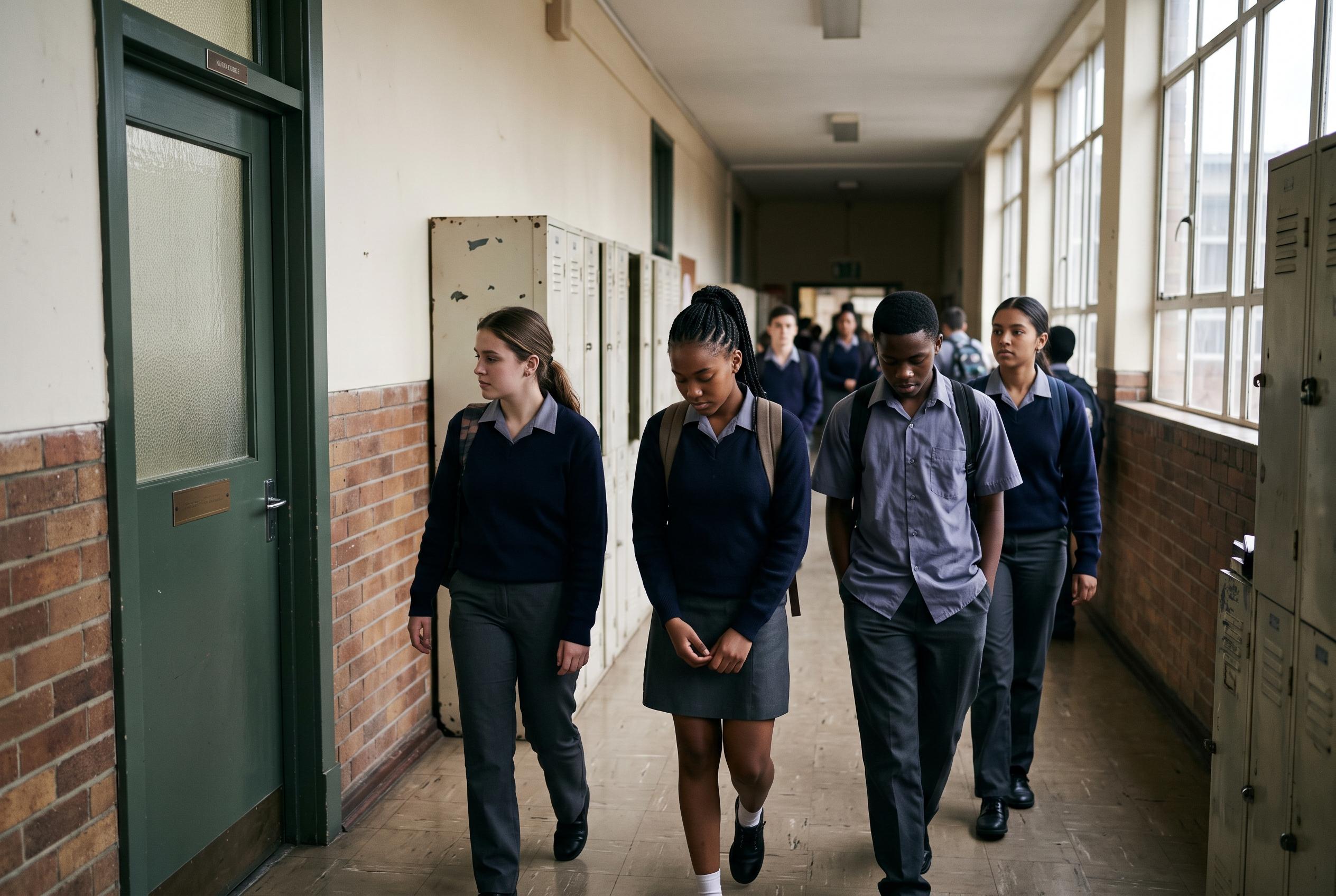

Research from England highlights that a school’s disciplinary climate and social context play a crucial role in pupil suspensions, surpassing individual misconduct or disadvantage, and calls for systemic change to reduce exclusions.
A pupil’s chances of being suspended appear to depend not only on poverty, special educational needs or recent behaviour, but also on the disciplinary climate of the school they attend, according to a large study from England that argues exclusion is shaped by overlapping pressures rather than by misconduct alone.
The research, published online in the British Educational Research Journal, analysed linked #BeeWell survey responses and school records for 19,064 pupils aged 12 to 15 in 69 secondary schools across Hampshire and Southampton. The authors say it is the first study in England to test structural disadvantage, peer and staff relationships, health behaviours, wellbeing and school-level influences together in one ecological model, while also separating the risk of a first suspension from the risk of repeated suspensions. In the sample, 1,127 pupils – 5.9% – had been suspended at least once during the 2023/24 school year.
The clearest risks were familiar ones, but the paper sets them out with unusual breadth. Pupils eligible for free school meals were nearly two and a half times as likely to be suspended as classmates who were not. Those receiving SEN support, or with an Education, Health and Care Plan, also faced more than double the odds. Living in a more deprived area added to the likelihood, and recent substance use stood out sharply: pupils who said they had used a substance in the previous 30 days were almost three times as likely to be suspended. Higher levels of bullying victimisation and peer pressure were also linked to exclusion. The University of Manchester said those patterns point to disadvantage and social context, not simply poor conduct in the moment.
The protective factors were largely relational. Pupils who felt they belonged at school, were more satisfied with their attainment, reported better relationships with staff and showed stronger emotion regulation were less likely to be suspended. Yet the journal paper also produced two more surprising results: higher perceived school pressure and greater emotional difficulties were associated with lower odds of suspension. In a plain-language summary, the #BeeWell programme said that may be because distress sometimes shows up as withdrawal or disengagement rather than disruptive behaviour, making some struggling pupils less visible to reactive disciplinary systems.
Perhaps the most telling finding was at school level. The authors found that a school’s overall suspension rate predicted an individual pupil’s risk even after accounting for that pupil’s own characteristics, suggesting that local culture and practice matter in their own right. The same school-level pattern, along with free school meal eligibility, also helped predict repeated suspensions. That matters against a national backdrop the paper describes as worsening: in state-funded secondary schools, England recorded a 12% year-on-year rise in suspensions in spring 2023/24, while persistent disruptive behaviour accounted for just over half of all suspensions. Even so, the Hampshire and Southampton sample was slightly below national averages, with a 5.9% suspension rate against 7.1% nationally and a lower share of pupils eligible for free school meals.
One of the more uncomfortable results concerned support itself. Receipt of school-based mental health support was linked to higher suspension risk even after other factors were taken into account. The researchers do not argue that support causes exclusion; instead, they suggest it may be acting as a marker for deeper vulnerability, or reflect a disconnect between pastoral help and behaviour systems inside schools. The paper also found no statistically significant differences by ethnic group after adjustment, but the authors warn against reading too much into that. Their regional sample required broad ethnic categories, and some groups known nationally to face high exclusion risks were under-represented.
Stephanie Cahill, the lead author, said the findings should change how schools and policymakers think about exclusion. “Our findings show that suspension is not simply about what happens in an individual classroom or about a young person’s behaviour in isolation,” she said. “This suggests that if we want to reduce suspensions, we need to look beyond disciplinary responses and consider what support young people may need to remain engaged with school.” Neil Humphrey, one of the paper’s authors, said schools could not do that work alone. “We recognize that the current climate within education has meant that many teachers are working under very challenging conditions and that often ‘blanket’ approaches are taken due to limited capacity,” he said, adding that “there needs to be increased support for schools from the government.”
The study sits within the wider #BeeWell programme, led by the University of Manchester with Anna Freud and the Gregson Family Foundation, which links young people’s survey responses to administrative records to examine wellbeing, attendance and school experience together. The programme began in Greater Manchester and expanded into Hampshire, the Isle of Wight, Portsmouth and Southampton in autumn 2023. On the programme’s research pages, the suspension study appears alongside related work on attendance and school belonging, reinforcing the idea that exclusion is one part of a broader pattern of disengagement. Manchester’s research repository shows the paper was first submitted as a preprint in 2025 by Cahill, Roberto Vagnetti, Christopher Knowles, Emma Thornton, Qiqi Cheng and Humphrey before its journal publication this year.
Disclaimer: This content is for informational purposes only and is not intended to be a substitute for professional medical judgment, advice, diagnosis, or treatment.