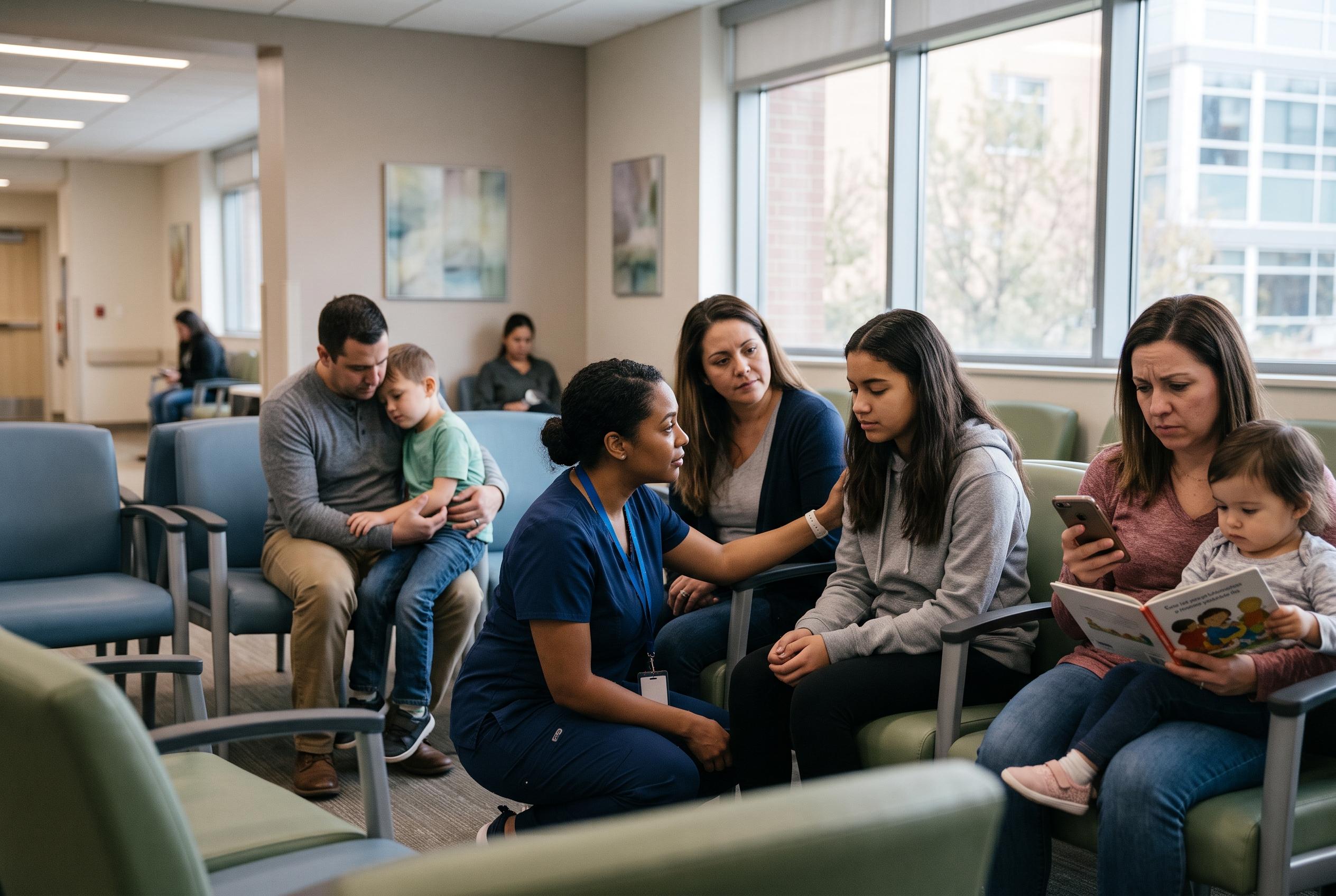

Research highlights that nearly half of children experiencing suicide-related crises in US emergency departments are treated in smaller hospitals, underscoring urgent calls for system-wide improvements in paediatric mental health services amid a 74% increase in visits since 2016.
Nearly half of the US emergency visits made by children in suicide-related crisis between 2016 and 2022 ended up at hospitals that treat relatively small numbers of young patients, even as the national total for those visits climbed by 74 per cent, according to research published on 3 September in Annals of Emergency Medicine.
The study, by researchers at Northwestern University and Ann & Robert H. Lurie Children’s Hospital of Chicago, examined more than 5 million mental-health emergency department visits involving children aged 5 to 17. Using the Nationwide Emergency Department Sample, the authors found that about half of suicide-related visits, and about half of paediatric mental-health visits overall, took place in emergency departments seeing fewer than 10,000 children a year.
That matters because lower-volume hospitals were much more likely to have to send children elsewhere for definitive treatment. At the least busy departments, close to 30 per cent of children seen for mental-health conditions were transferred to another hospital. Jennifer Hoffmann, a paediatric emergency physician at Lurie Children’s and a senior author on the paper, said those transfers can leave children waiting in the emergency department for days while families try to manage a crisis in a setting not designed for prolonged psychiatric care.
The increase was broader than suicide-related crises alone, but that category rose fastest. Across the six years studied, all paediatric mental-health emergency visits increased by 24 per cent. Suicide or self-injury was the largest diagnosis group, accounting for 24 per cent of visits, while depressive disorders made up 23 per cent, according to the study findings highlighted by Newswise, MedicalXpress and Becker’s.
The paper also points to disparities in where children receive emergency care. Northwestern’s account of the research, echoed in other reports, said Indigenous children were more likely to present to lower-volume emergency departments, as were young people with substance-use concerns. That raises an equity problem as well as a capacity one, because smaller hospitals are less likely to have paediatric behavioural-health specialists immediately available.
Audrey Brewer, the study’s corresponding author, said the solution cannot be to rely on large children’s hospitals alone. “Our findings underscore the need to equip every ED , not only large pediatric centers , with tools and resources to provide evidence-based mental health care,” she said. Brewer said that means more staff training, access to paediatric mental-health professionals either in person or through telehealth, routine suicide screening, and a clear safety plan for families when a child is well enough to go home.
Hospitals do not have to build those systems from nothing. Hoffmann pointed to the New England Regional Behavioral Health Toolkit and the National Pediatric Readiness Project as resources emergency departments can use to improve care for children with mental-health needs. Becker’s and MedicalXpress reported that the authors also called for stronger links to follow-up services after discharge, reflecting a wider concern that emergency departments are increasingly acting as the fallback option when outpatient care is unavailable or delayed.
The figures also have limits that matter. As iMedic noted in its review of the study, the database records visits rather than individual children, so one child may be counted more than once, and a rise in emergency presentations is not the same thing as a rise in suicide deaths. The study was observational, which means it cannot determine whether the increase was driven by the Covid-19 period, worsening mental health, changes in recognition and documentation, or longstanding shortages in community care. What it does show, the authors argue, is that children in acute distress are arriving across the hospital system, not just at specialist centres, and the system has not caught up. The research was funded by the National Institute of Mental Health.
Disclaimer: This content is for informational purposes only and is not intended to be a substitute for professional medical judgment, advice, diagnosis, or treatment.