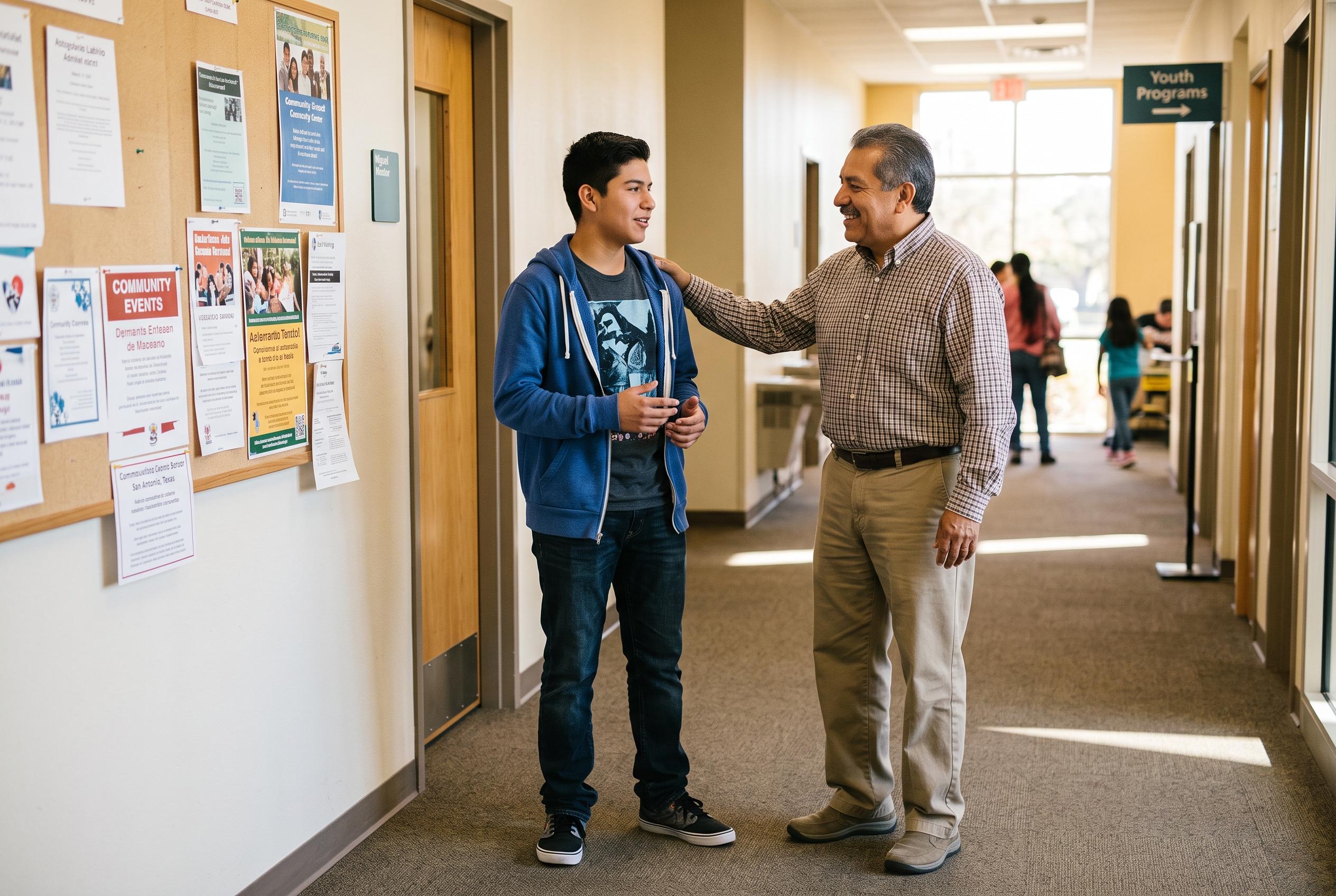

Research reveals that the quality of informal mentorships plays a crucial role in helping Latino adolescents cope with discrimination, with benefits varying by gender and the strength of the relationship.
A new study suggests that informal mentors can ease some of the strain discrimination places on Latino adolescents and young adults, but the benefit depends less on simply having a trusted adult and more on how strong that relationship is. Researchers following 544 Latino youth in the Atlanta area over seven years found that discrimination was linked with both emotional distress and risky behaviour, yet a close mentoring bond could soften parts of that impact, especially for girls. The findings appear in Behavioral Sciences and were highlighted by Evidence Based Mentoring.
The research tracked participants from middle school into early adulthood through 11 survey waves. The team measured internalising problems, such as anxiety and depression, as well as externalising problems, including rule-breaking and aggression. When discrimination was assessed later in adolescence, the researchers also asked whether young people had an informal mentor and how meaningful that relationship felt. Their analysis indicates that mentoring may work in two ways: by directly reducing distress and by buffering the effects of discrimination.
For girls, having a mentor was associated with lower levels of emotional symptoms overall, while a strong mentoring relationship was linked to a decline in anxiety and depression over time, even among those facing heavier discrimination. For boys, a strong mentoring tie was tied to fewer emotional symptoms at the start of the later-adolescent period, though it did not clearly change the longer-term pattern. Across both sexes, mentoring seemed to weaken the link between discrimination and aggressive or rule-breaking behaviour, although that protection was strongest when discrimination was moderate rather than severe.
The broader message is that mentoring quality matters as much as access. Related research on natural and informal mentoring has long suggested that these relationships can support ethnic identity, academic engagement, and resilience among Latino youth. This study adds that a caring adult outside the family may help, but it is not a complete shield against chronic or intense discrimination. For mentoring programmes, the implication is practical: matching a young person with any adult is not enough if the relationship lacks consistency, closeness and trust.
Disclaimer: This content is for informational purposes only and is not intended to be a substitute for professional medical judgment, advice, diagnosis, or treatment.