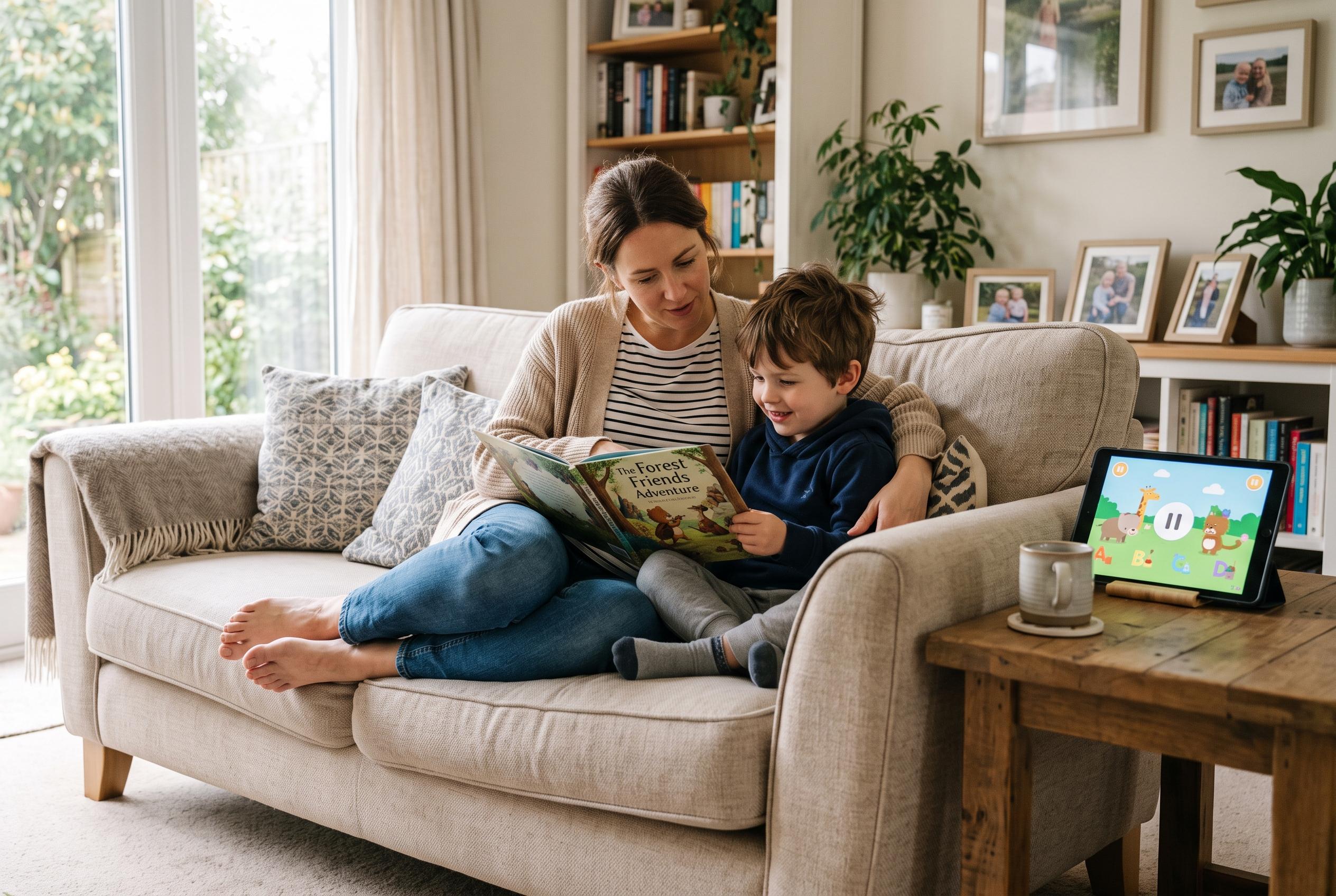

Research from Florida International University reveals that parental stress impacts how families manage children’s screen time, highlighting the importance of support and content-focused approaches in digital media use.
Florida International University researchers say parents who are under pressure are more likely to lean on screens to get through the day, but the bigger issue may not be how long children are online so much as what they are doing there. The study, published in Family Relations, found that caregivers facing higher stress were less likely to keep screen-time rules consistent and more likely to use digital media to settle or distract children during difficult moments.
The findings come from surveys of 822 caregivers in the United States with children aged 4 to 8. Enid Moreira, the study’s lead author and a doctoral student in psychology at FIU, said caregivers’ own stress played a major role in shaping how screen media was used at home. She said the results show the need to support parents as well as children.
The research adds to a growing body of work suggesting that screen-time debates are too often framed as a simple question of limits. A recent scoping review published by Springer noted a gap in research on the specific pressures parents face when managing children’s screen use, while a separate study found that parental stress and coping patterns can shape children’s screen-time and physical activity. Another paper published this year also pointed to the importance of children’s views of parents’ own digital habits in understanding family relationships in the digital age. Together, those findings suggest that the home media environment is influenced by far more than rules alone.
Rather than treating every screen moment as a problem, the FIU researchers argue that families should pay closer attention to content, context and routine. Their advice closely matches guidance from the American Academy of Pediatrics, which encourages parents to consider whether media is age-appropriate, emotionally calming and not crowding out sleep, exercise or family time. Shayl Griffith, the study’s senior author, said caregivers should not be reluctant to seek help, arguing that parents with more support are better able to set consistent boundaries and foster healthy development.
Disclaimer: This content is for informational purposes only and is not intended to be a substitute for professional medical judgment, advice, diagnosis, or treatment.