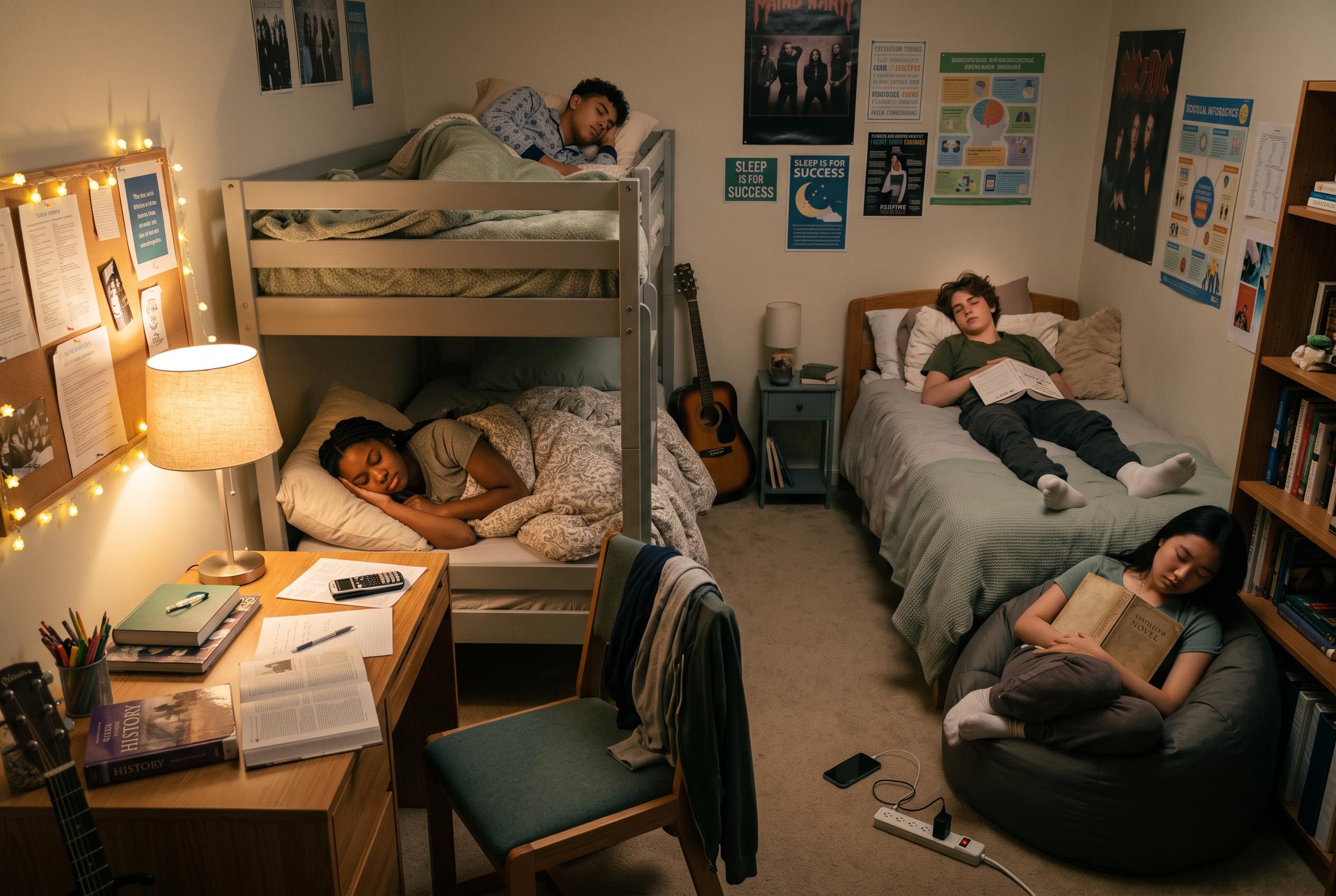

A new study highlights sleep as a key factor influencing adolescents’ academic performance and social lives, particularly for those with mental health challenges, surpassing the impact of screen time, exercise or diet.
A new study suggests that sleep may influence teenagers’ grades and social lives more strongly than screen time, exercise or diet, particularly for those struggling with anxiety, depression or other mental health concerns. Researchers said the finding underlines how central rest is to adolescent development, with poor sleep linked to daytime fatigue, weaker attention and reduced executive function, the mental skills needed for planning, focus and self-control.
Jason Smucny, the study’s lead author at the University of California, Davis, said the team expected sleep to matter but was struck by how far it stood out compared with other lifestyle factors, especially time spent on screens. According to the research, which drew on data from more than 6,000 young people for academic performance and more than 7,000 for social functioning, children and teenagers with symptoms of depression, anxiety or psychosis-like experiences were more likely to do less well at school and in their relationships.
The study’s authors said sleep problems can make adolescents more irritable and withdrawn, which can complicate friendships and family life. Tara Niendam, the senior author, said healthy sleep routines are one practical area where parents and families can help, even if better sleep alone will not resolve every mental health difficulty.
The findings fit with wider public health guidance. The US Centers for Disease Control and Prevention says insufficient sleep raises the risk of obesity, type 2 diabetes and mental health problems, and can undermine concentration and school performance. The Sleep Foundation says most teenagers aged 13 to 18 need around 8 to 10 hours of sleep a night, while the Centre for the Developing Adolescent at UCLA says roughly 9 hours is associated with peak mental health and that both too little and too much sleep can be linked with poorer mood.
Disclaimer: This content is for informational purposes only and is not intended to be a substitute for professional medical judgment, advice, diagnosis, or treatment.