

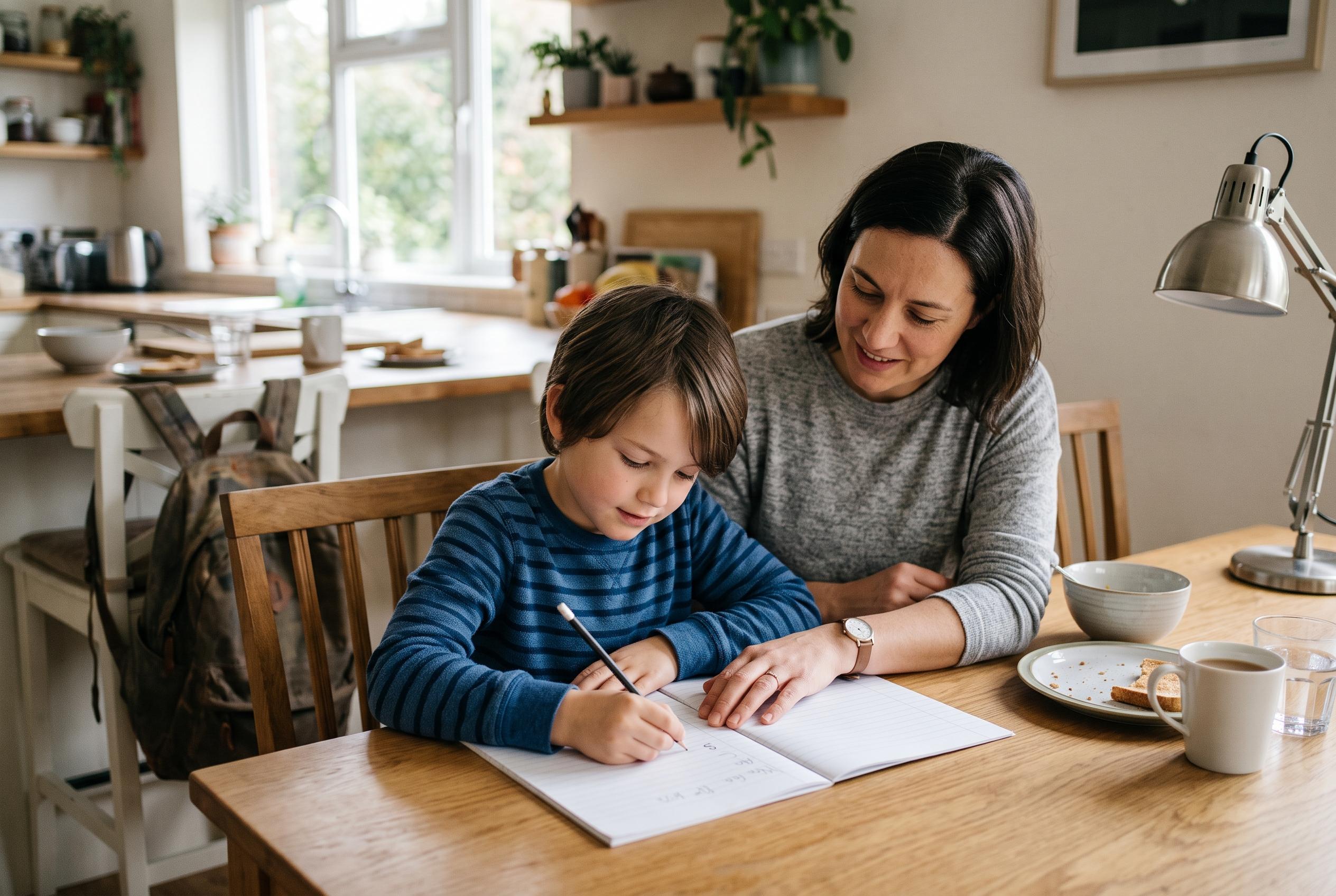

Consistent, low-pressure writing practices integrated into daily life can significantly enhance children’s writing abilities, according to educators and parenting experts. Simple routines, real-life purposes, and adult modelling foster confidence and habit formation without stress.
Helping children become better writers at home rarely depends on grand lessons or long assignments. More often, it comes down to steady, low-pressure practice that makes writing feel ordinary and useful. The idea is not to turn every moment into schoolwork, but to give children repeated chances to put thoughts on paper in ways that matter to them. Parents can do that through short routines, everyday tasks and calm support that encourages children to keep going. That approach is echoed by GreatSchools, PBS KIDS and other parent guides that stress consistency, accessibility and modelling writing in daily life.
One of the simplest ways to build momentum is to make writing part of a regular routine. A short, predictable time each day works better for many children than an occasional longer session, especially when they are tired or easily distracted. A quiet place with basic supplies nearby can remove some of the friction that makes starting hard. GreatSchools recommends a well-stocked writing area, while West Hartford Public Schools also advises parents to encourage frequent writing without making it feel forced.
It also helps when children have a clear reason to write. A note to a grandparent, a shopping list, a label for a drawing or a set of rules for a made-up game can all show that writing has a real purpose beyond homework. PBS KIDS urges parents to model this by writing lists, notes and other everyday messages so children see adults using writing to organise life and communicate. West Hartford Public Schools makes a similar point, suggesting that children benefit from writing letters, notes and other practical pieces rather than treating writing as an isolated exercise.
Parents can also make writing feel less intimidating by separating idea generation from correction. When children are writing a first draft, the priority should be getting the thought down rather than stopping to fix every spelling error or comma. Supportive prompts such as asking what happens next or what a scene looks like can keep ideas moving. Younglabs, a parent-focused learning guide, argues that children tend to benefit more from short, regular writing rhythms and encouragement than from heavy criticism.
Reading together can strengthen writing too. When adults notice how an author starts a story, chooses vivid words or writes dialogue, children begin to see that those choices can be tried in their own work. GreatSchools notes that reading widely can expose children to different writing styles, while the National Council of Teachers of English, as cited in many family literacy guides, encourages conversation and storytelling as useful bridges into writing. That kind of talk makes the blank page feel less daunting.
Specific praise matters more than broad praise. Telling a child that a description is clear or that a first sentence makes the reader want to continue gives them something concrete to repeat next time. Families can also help children learn a simple draft-check-fix routine: read it through, see whether the message is clear, then correct a few items at a time. For older children using digital tools, that can include spell-checkers or grammar aids, but West Hartford Public Schools and other education guides caution that adults should still talk through the writing process rather than relying on a score alone.
Choice is another powerful motivator. Not every child wants to write stories, and that is not a problem. Some children prefer comic strips, jokes, facts, recipes or instructions, and those forms still build sentence structure, planning and editing skills. Dancina’s learning guide encourages parents to offer choices such as drawing, labelling, copying or composing, then gradually extend the task as interest grows. That flexibility can keep children engaged long enough to build confidence.
Just as important, children learn from watching adults write. A grocery list, a thank-you note or even a quick email shows that writing is part of ordinary life, not only a school assignment. PBS KIDS and West Hartford Public Schools both say that when parents write in front of children, they help normalise the habit and show that words on a page can solve practical problems, capture ideas and keep a family organised.
The broader lesson from educators and parent resources is straightforward: better writing habits grow through repetition, usefulness and encouragement. Children do not need every session to feel like a lesson, and they do not need perfection to make progress. What they need is a home environment where writing shows up often enough to feel familiar, and where adults treat their efforts as something worth building on.
Disclaimer: This content is for informational purposes only and is not intended to be a substitute for professional medical judgment, advice, diagnosis, or treatment.



