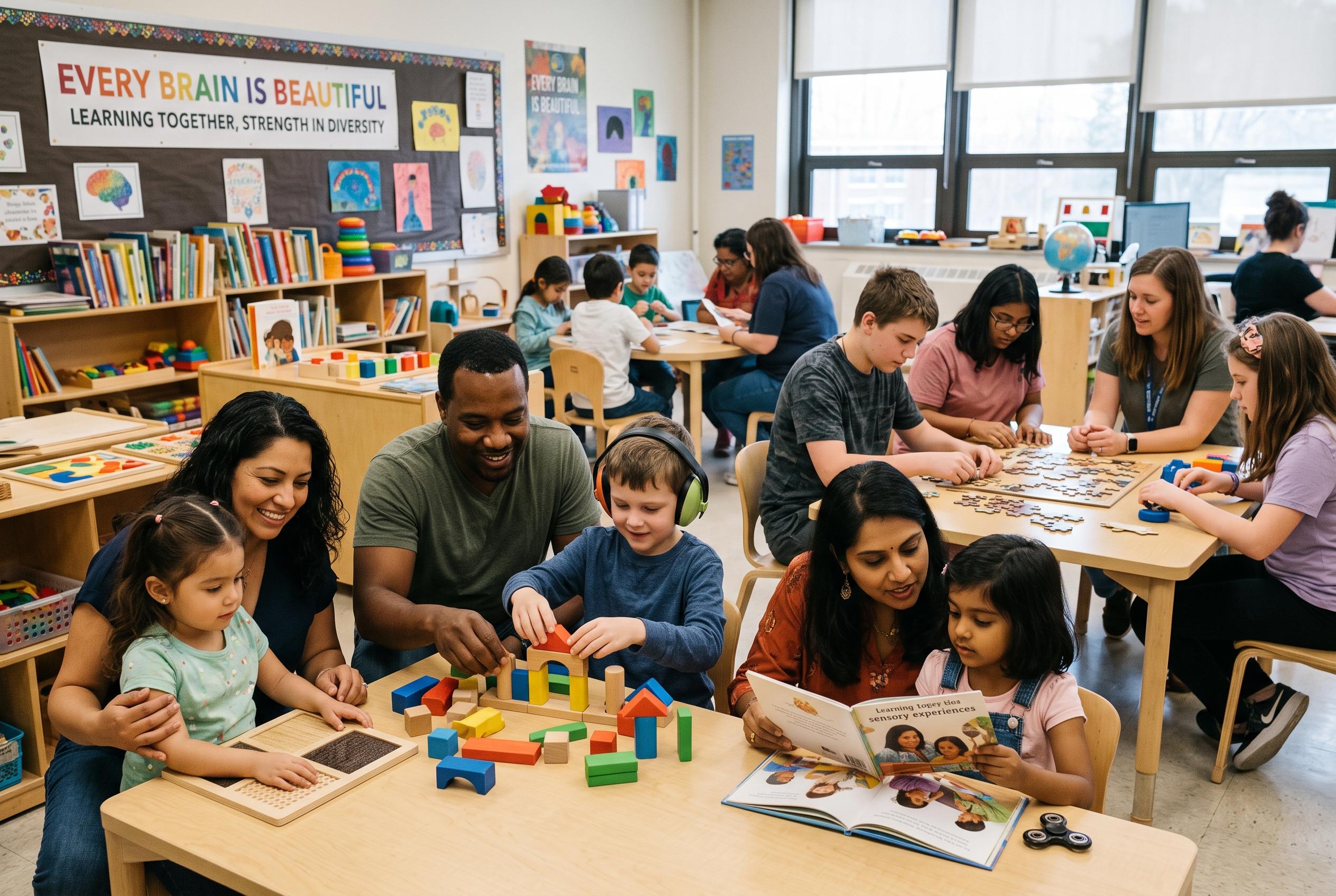

A growing understanding sees neurodiversity not as a flaw but as natural human variation, prompting changes in education, workplace support, and societal attitudes to foster acceptance and strength-based approaches.
Neurodiversity is best understood as a fact of human variation, not a flaw to be corrected. NAMI Cook County North Suburban says there is no single “right” way for a brain to work, while Harvard Health notes that the concept gained wider recognition in the 1990s as an effort to promote acceptance and inclusion rather than deficit-based thinking. In practice, the term is often used as an umbrella for a range of differences, including autism, ADHD, dyslexia and other learning or developmental conditions.
Autism spectrum disorder sits at the centre of many neurodiversity discussions because it can affect communication, sensory processing and behaviour in different ways from one person to another. NAMI says common signs may include repetitive movements, sensitivity to sound or smell and different patterns of eye contact or communication. It also notes that many autistic people have notable strengths, including in visual thinking, academic work and music, with a substantial share showing above-average intellectual ability.
The broader point, according to Harvard Health, the Royal College of Nursing and Boston Medical Center, is that neurodivergent people may think, learn and behave differently, but those differences are not automatically deficits. Some people need support at school, at work or in daily life, yet that does not erase the strengths they bring. WebMD makes a similar point, saying neurodivergent traits can coexist with challenges such as time management while still being associated with creativity, drive and intense focus.
That perspective has practical implications. NAMI argues that accessibility should be understood as a mental health issue as much as a physical one, pointing to tools such as weighted blankets, fidgets, noise-cancelling headphones, clear digital design and quiet spaces. In education, it highlights the value of Individualised Education Programmes under U.S. law, which can provide tailored goals, therapy and classroom adjustments. At work, the Americans with Disabilities Act can support reasonable accommodations, and NAMI says people are not required to disclose a diagnosis in an interview. The message running through the guidance is simple: inclusion begins with language, support and a willingness to design environments in which more people can thrive.
Disclaimer: This content is for informational purposes only and is not intended to be a substitute for professional medical judgment, advice, diagnosis, or treatment.