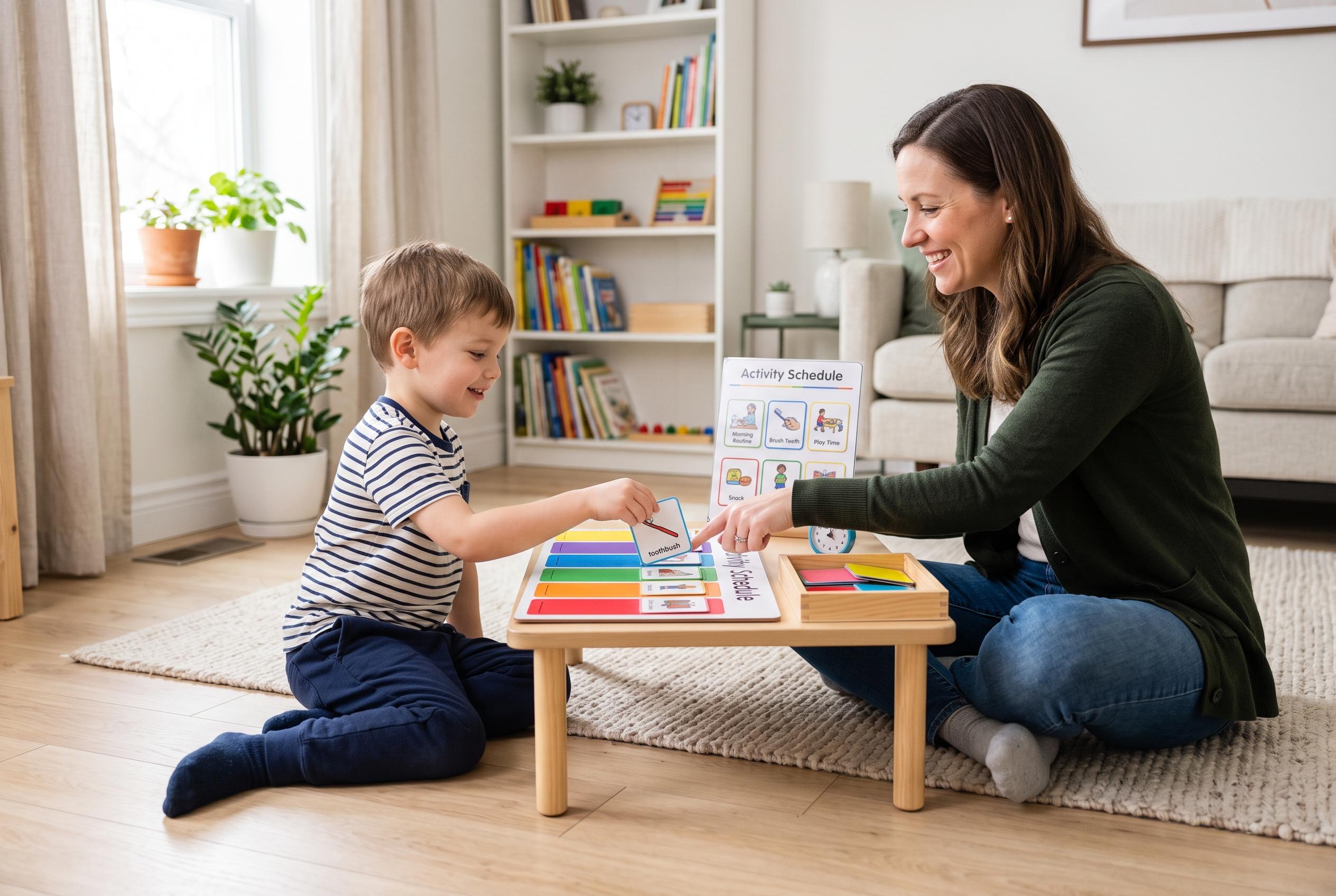

Alyssa Ciarrocchi advocates for a collaborative model in applied behaviour analysis, emphasising active parent participation to enhance support for children with behavioural challenges and integrate strategies into everyday family life.
Alyssa Ciarrocchi, a board-certified behaviour analyst based in Hammonton, New Jersey, is making a broader case for a more collaborative model of support for families of children with behavioural challenges. In a recent company-led announcement, she argued that many parents are not seeking more instruction alone, but a genuine partnership that helps them feel informed, supported and able to use practical strategies at home.
The emphasis on family-centred care reflects a wider shift in applied behaviour analysis, where providers are increasingly framing parents as active participants rather than passive recipients of advice. The Parent’s Village, which offers parent coaching for children from birth to 14, says its approach is built around routines, reducing daily friction and giving families clear explanations for each plan. Onward, which provides home-based behaviour services and online learning, similarly describes parent training and collaboration as central to effective support.
Ciarrocchi’s message also speaks to a common pressure point for families: navigating school systems, therapy schedules and day-to-day behaviour concerns while trying to stay consistent. Access Newswire said she is focused on accessible, compassionate guidance and on turning behavioural strategies into simple, repeatable steps that can fit into ordinary family life. Summit Behavioural Consulting takes a comparable view, describing parents as experts on their own children and placing caregiver training at the centre of its programmes.
The broader theme across these services is that progress is more likely when families are treated as partners in the process. Ororah Bell, a behaviour specialist who advises parents of children with learning differences, also stresses the value of person-centred support and practical help in school settings. In that context, Ciarrocchi’s argument is less about adding another layer of professional oversight and more about building a model in which parents feel equipped, listened to and part of the plan from the outset.
Disclaimer: This content is for informational purposes only and is not intended to be a substitute for professional medical judgment, advice, diagnosis, or treatment.