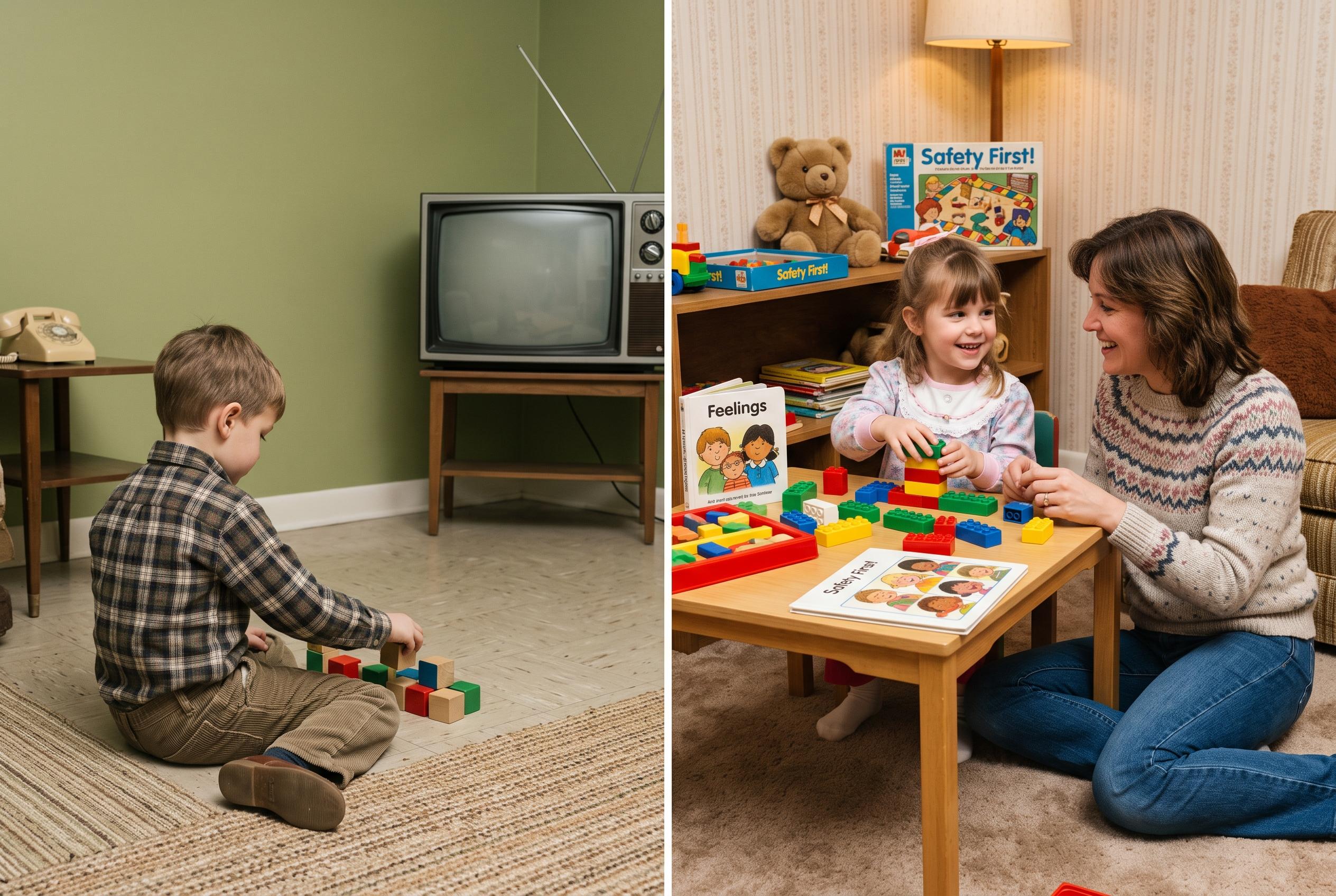

A new perspective on parenting reveals significant changes from the 1960s to the 1980s, highlighting a move away from independence towards increased supervision, emotional support, and safety, with lasting impacts on child development.
Parents in the 1960s through the 1980s often raised children with far less hovering than is common today, and many of the everyday phrases heard in homes then would now sound harsh, careless or simply unsafe. In an article for Yourtango, relationship expert Zaida Slabekcorn says the shift reflects a broader change in attitudes: modern parenting tends to place far more weight on supervision, emotional support and child safety than the hands-off approach many families once accepted.
One of the clearest examples is the old expectation that a child could fend for themselves at mealtimes, while the instruction to finish everything on the plate was once treated as ordinary household discipline. Parenting and health writers now question that mindset, saying it could encourage guilt around food and teach children to ignore hunger and fullness cues. In place of that pressure, current advice is more likely to favour letting children listen to their own bodies and learn healthier eating habits over time.
The same change is visible in how families think about freedom and risk. Unsupervised play until the streetlights came on was once common, and some children were even allowed to ride in the open back of a truck, a practice now viewed as plainly dangerous and, in many places, illegal. Other writers looking back on 1960s and 1980s parenting note that physical punishment, emotional suppression and the idea that children should be seen and not heard were also far more normal than they are today. Experts quoted in those pieces say modern research has pushed parenting away from fear and towards consistency, safety and emotional attunement.
Slabekcorn also points to a more damaging category of language: phrases such as “I’ll give you something to cry about” or “You brought this on yourself”. Psychologist Stuart Ablon has argued that fear-based discipline can weaken trust between parent and child and heighten anxiety, while blaming a child for their distress can leave lasting emotional damage. The broader lesson, according to the related commentary, is not that children should be shielded from every disappointment, but that independence works best when it is paired with reassurance, accountability and clear adult responsibility.
Disclaimer: This content is for informational purposes only and is not intended to be a substitute for professional medical judgment, advice, diagnosis, or treatment.