

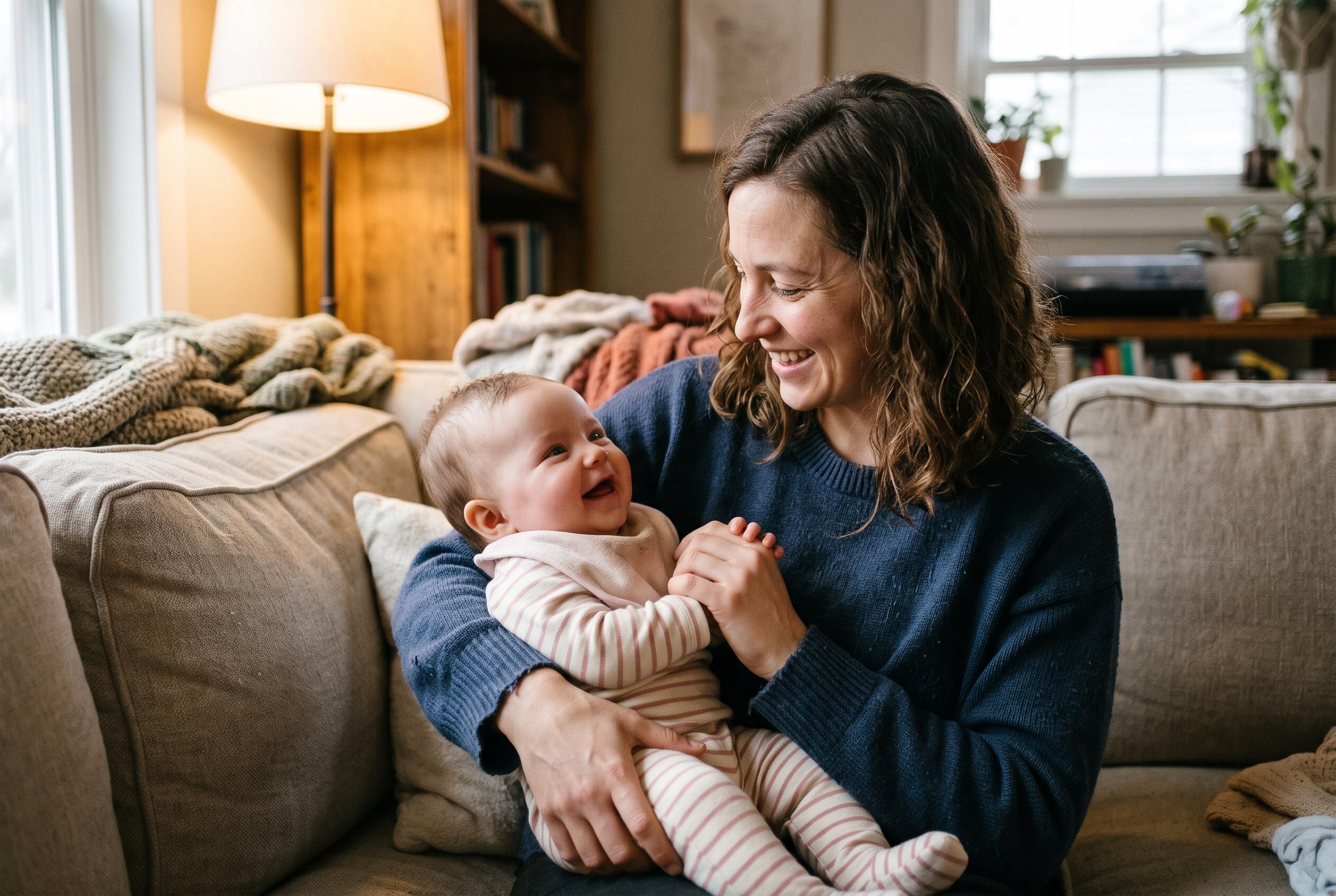

Research suggests that synchronised positive exchanges between babies and their mothers are linked to changes in heart-rate variability, while infant smiling becomes more interactive during the first year.
Positive exchanges with babies may do more than delight parents. They may also help shape the biological systems that support emotional regulation, according to research led by the University of Miami and published in Philosophical Transactions of the Royal Society B.
In a study of nearly 1,000 four-month-old infants, researchers monitored heart-rate changes while the babies interacted with their mothers. The team found that heart-rate variability rose when mother and baby were both positively engaged at the same time, suggesting that shared smiling, laughter and other upbeat exchanges may help support early emotional development. Daniel Messinger, a University of Miami psychology professor and senior author of the paper, said the findings show that play is not simply entertainment: it appears to affect the baby’s physiology.
The researchers measured respiratory sinus arrhythmia, a form of heart-rate variability linked to breathing and commonly used as an indicator of emotion regulation and flexibility in changing environments. Trained observers recorded whether each mother-baby pair was positive, neutral or negative from moment to moment. The change in heart rate appeared only when both partners were positive together, not when only the infant smiled or only the mother did. The analysis also accounted for prenatal drug exposure and social adversity, reflecting the broader national study in which the work was embedded.
A second study from the same journal issue looked at how smiling itself develops over the first year of life. In observations of 58 infants at four and eight months, researchers found that adults were more likely than babies to begin and sustain smiling exchanges, but infants were more likely to bring those exchanges to an end, a pattern that may point to early efforts to moderate excitement. By eight months, babies were more likely both to start smiling on their own and to return an adult’s smile than they had been at four months, showing that smiling becomes more interactive with age.
The effect was strongest with mothers. Babies at both ages were more likely to smile back at their mothers than at fathers or strangers, even though unfamiliar adults were often the most active in initiating and maintaining smiles. Taken together, the studies suggest that emotional growth in infancy is not a one-way process driven by the child alone. Instead, it emerges through back-and-forth exchanges in which adult warmth and infant response reinforce one another over time.
Disclaimer: This content is for informational purposes only and is not intended to be a substitute for professional medical judgment, advice, diagnosis, or treatment.



