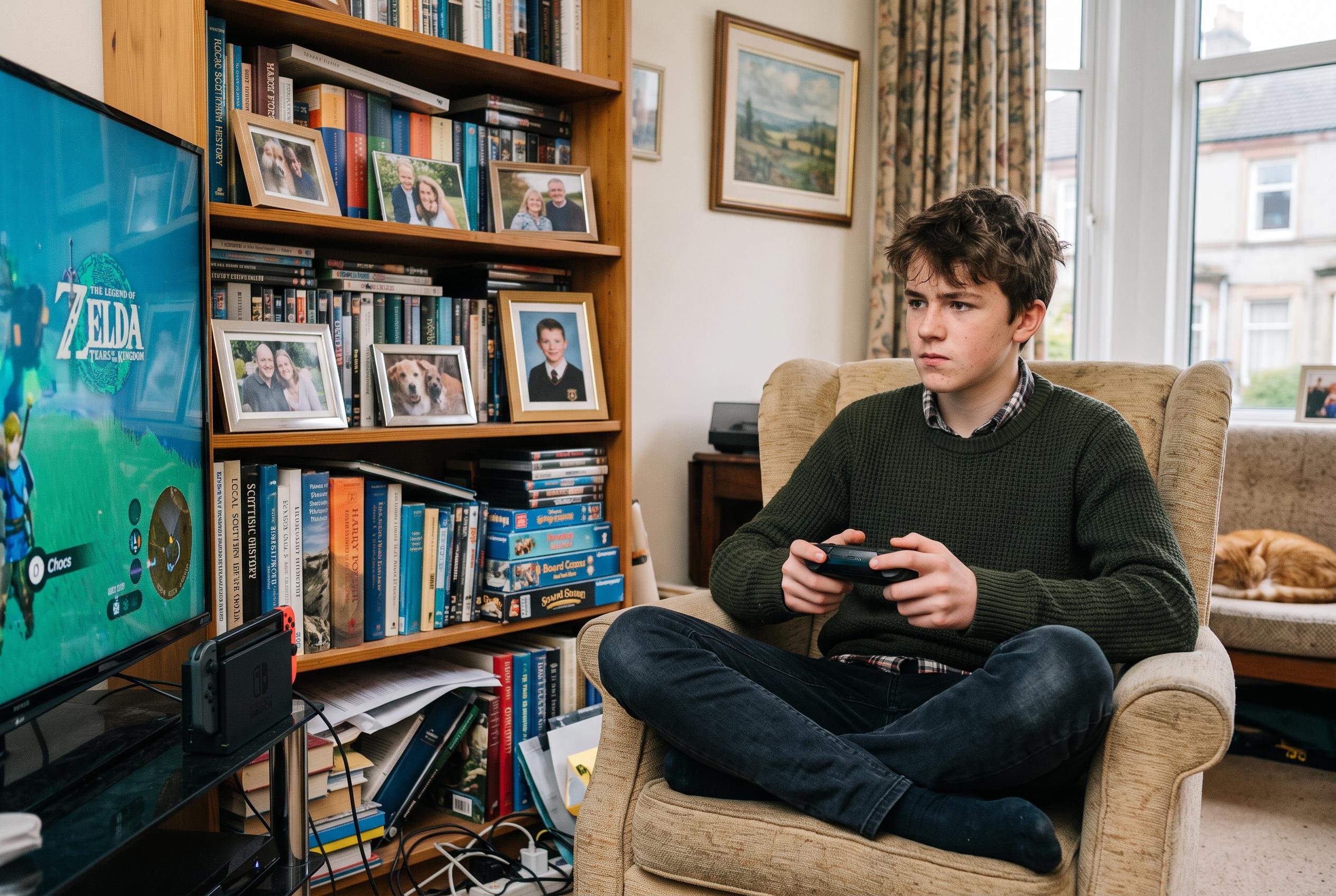

A new Scottish study suggests that the relationship between children’s screen use and their development is more nuanced than simply counting hours, highlighting the significance of content and context, especially at age 15 where heavy gaming emerges as a potential risk marker.
A new Scottish study suggests the long-running debate over children’s screen use may be too blunt when framed purely as a question of hours spent looking at a device. Researchers following children in the Growing Up in Scotland cohort found that screen duration on its own was not consistently tied to poorer emotional, behavioural or social development, although very heavy gaming at age 15 did stand out as a possible risk marker.
The analysis, published in JAMA Network Open, drew on a 15-year birth cohort and examined screen habits at ages 5, 10 and 15. At the younger ages, total daily screen use was not linked to above-average difficulties scores, which measure emotional problems, conduct, hyperactivity and peer issues. By age 15, however, 5 or more hours a day of electronic gaming was associated with higher odds of an above-average difficulties score, while some levels of social media or messaging use appeared to track with lower odds. The researchers cautioned that this does not mean social media is protective, only that the relationship is more complicated than a simple time limit suggests.
That nuance fits with earlier research. A meta-analysis published by JAMA found only a small negative association between screen exposure and social-emotional competence, alongside a small increase in problem behaviours. A separate review in JAMA Pediatrics found that context mattered: programme viewing, background television, age-inappropriate content and caregiver screen use were linked to poorer outcomes in early childhood, suggesting that what children watch and who they are with may matter as much as how long they are online.
Other studies have pointed in the same direction. Research indexed in PubMed has linked higher screen time in early childhood with attention, hyperactivity and internalising symptoms, with maternal stress and depression appearing to strengthen those associations. Another longitudinal study in Ireland found that physical activity could soften some of the negative links between screen time and psychosocial development. Together, these findings reinforce the idea that screen use should be assessed alongside sleep, activity, family stress and the type of content children are consuming.
The Scottish researchers said their results should not be read as a green light for unlimited device use. They pointed to well-established risks in digital environments, including sedentary behaviour, online bullying, harmful content and online child sexual exploitation. They also noted limits in the data: screen use was reported by parents at younger ages and by adolescents themselves at 15, the sample was mostly White, and the cohort may not fully reflect today’s fast-changing digital landscape. The broader message, though, is clear: guidance focused only on screen time may be too narrow to capture how children actually experience digital life.
Disclaimer: This content is for informational purposes only and is not intended to be a substitute for professional medical judgment, advice, diagnosis, or treatment.