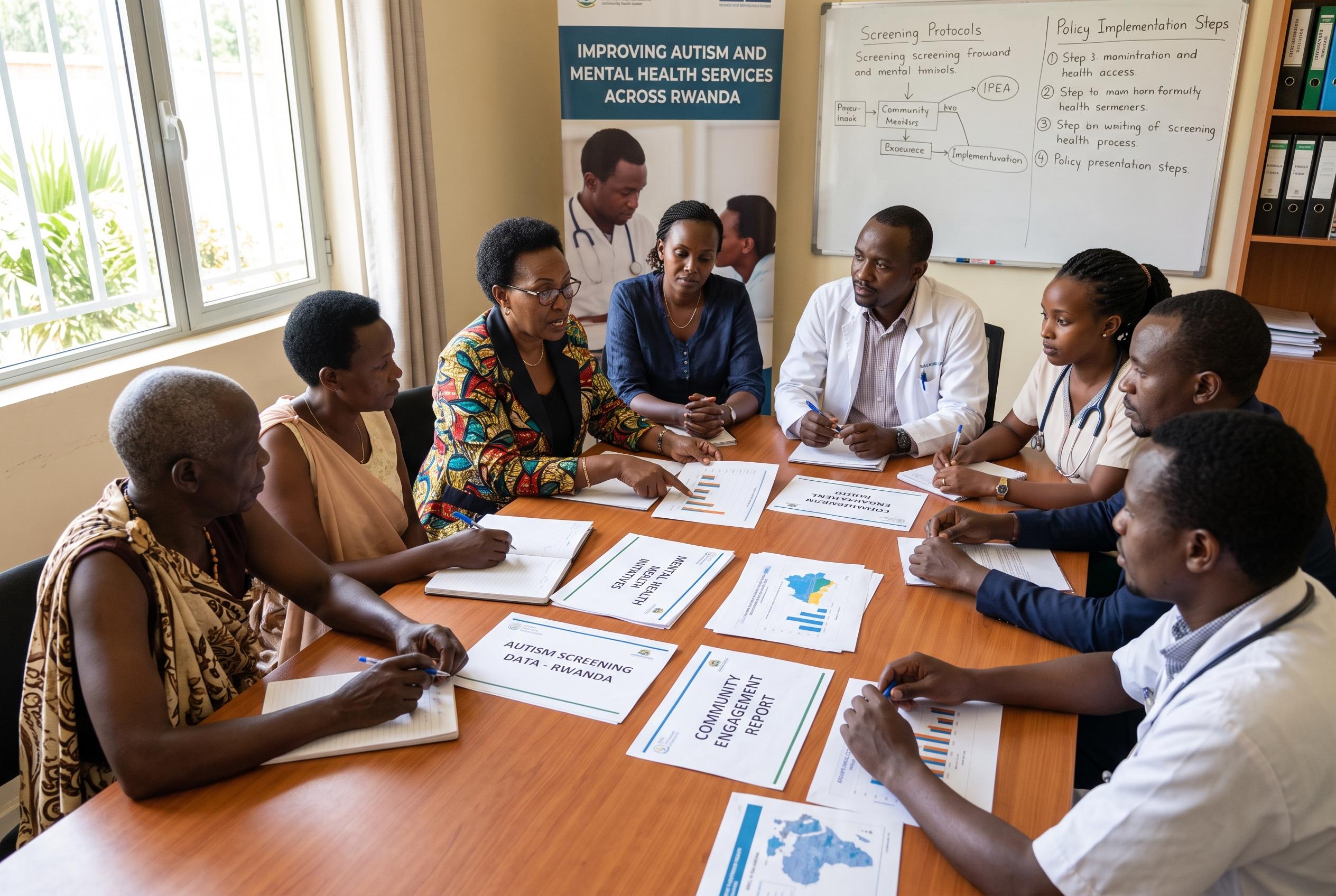

Experts warn that Rwanda must treat autism and mental health as urgent public health issues, amid limited data, resources, and support systems for affected individuals, highlighting the need for comprehensive screening, training, and policy action.
Rwanda is being urged to treat autism and mental health as urgent public health issues, not fringe concerns, as experts warn that many children and adults still go uncounted, undiagnosed and unsupported. The World Health Organization says about 1 in 100 children worldwide has autism and nearly 1 billion people live with a mental health disorder, figures that underscore how large the need can be even before local data are fully measured.
In Rwanda, the scale is difficult to pin down because routine screening, diagnostic pathways and surveillance remain limited. With a population of roughly 14 million, a 1% autism prevalence would imply more than 140,000 people could be living with autism spectrum disorder, although that remains an estimate rather than a confirmed national count. Public health commentators say the absence of reliable data makes it harder to plan services in schools, clinics and communities.
Research on autism in sub-Saharan Africa has repeatedly pointed to a thin evidence base, with most published work concentrated in South Africa and Nigeria. Studies reviewed in the region also describe a shortage of specialists, weak access to assessment and treatment, and a pattern in which children are identified late, if at all. That delay can mean missed opportunities for early intervention, which is widely regarded as critical for communication, learning and social development.
The barriers are not only medical. Across Africa, stigma, cultural misunderstanding and misinformation often leave families isolated, while limited therapy services and inclusive education can deepen exclusion. Rwanda has expanded community-based mental health care in recent years, but the broader support system for developmental conditions still needs greater investment if families are to receive practical help rather than just a diagnosis.
Public health specialists argue that the response should begin with routine developmental screening, stronger training for health workers and teachers, and better links between primary care and specialist services. They also call for more research, clearer national policy and support programmes for families. The central argument is simple: autism and mental illness are not only clinical issues, but also questions of education, equity and human dignity.
Disclaimer: This content is for informational purposes only and is not intended to be a substitute for professional medical judgment, advice, diagnosis, or treatment.