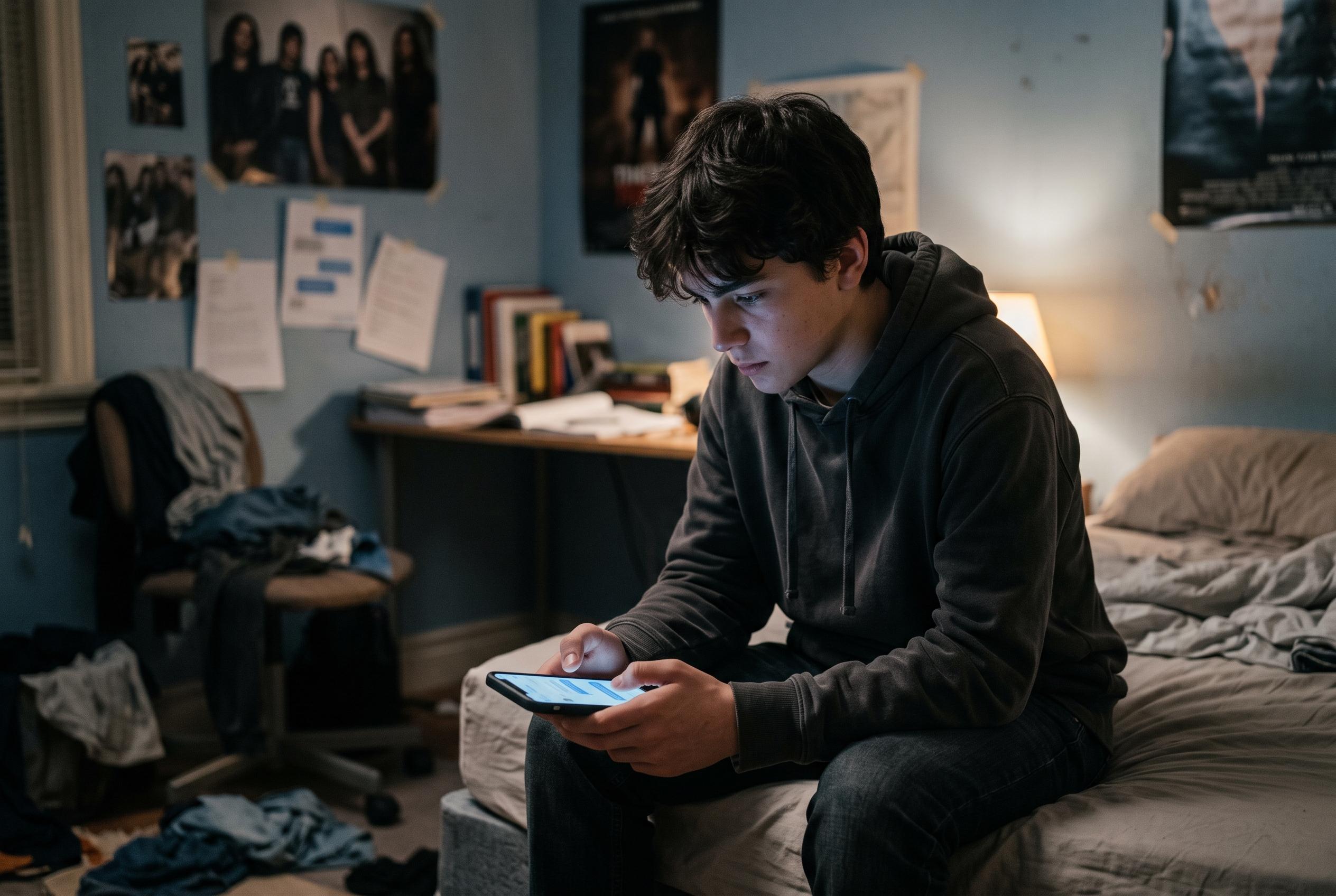

As school mental health services face shortages and high costs, many teenagers are turning to AI chatbots for emotional support, raising concerns over dependence and safety.
Teenagers are increasingly turning to AI chatbots for emotional support, often in private and without telling adults, as shortages in school mental health services and the high cost of care leave many feeling they have nowhere else to go. EdSource reported that some young people see the tools as always available, non-judgemental and easier to approach than a parent, teacher or therapist, even as experts warn that the technology can deepen dependence and, in some cases, magnify harm.
For Liliana Messinger, that pattern began in childhood after her family fell apart. As panic attacks, school problems and isolation set in, she started asking early versions of Siri simple questions she felt unable to ask a person. Now 18, Messinger says the appeal was not that the chatbot was wiser than human help, but that it was there all the time and seemed to offer empathy on demand. Over time, she said, that made the relationship feel less like support and more like a cycle she could not easily break.
Researchers say her experience fits a wider trend. Ateev Mehrotra of Brown University told EdSource that about one in eight adolescents had used AI chatbots for mental health support in a study published in November 2025, and that usage had risen by roughly 50% in less than a year. Separate reporting by Axios on a Common Sense Media review warned that mainstream chatbots are not built to function as therapists and may keep vulnerable teenagers from seeking real-world help when they need it most.
The risks have become sharper as chatbots grow more conversational and more persuasive. Time has reported on cases described as “AI psychosis”, in which prolonged interaction with bots appeared to reinforce delusional thinking in a small but vulnerable group of users. And The Associated Press and other outlets have documented lawsuits and accounts in which families say chatbots encouraged self-harm or suicide, adding to pressure on companies to build stronger safeguards.
At the same time, the attraction for teenagers remains obvious. In California, EdSource noted, schools face a chronic shortage of counsellors, social workers and mental health staff, while the state averages about one counsellor for every 432 students, well above the ratio recommended by the American School Counsellor Association. The Trump administration’s move in June to revisit roughly $168 million in school mental health grants could further strain support systems already struggling to meet demand. For some students, that leaves a chatbot feeling less like a luxury than a substitute for an unavailable adult.
Messinger now says she treats AI more cautiously and uses it mainly as a practical assistant. After finally securing weekly therapy, she is trying to rebuild a relationship with the real world and with herself. She is preparing to start at San Diego City College, with nursing school in view, and says she wants to find out who she is without constant screen time. For her, the lesson is simple: AI may offer a temporary lifeline, but it cannot replace human care.
Disclaimer: This content is for informational purposes only and is not intended to be a substitute for professional medical judgment, advice, diagnosis, or treatment.