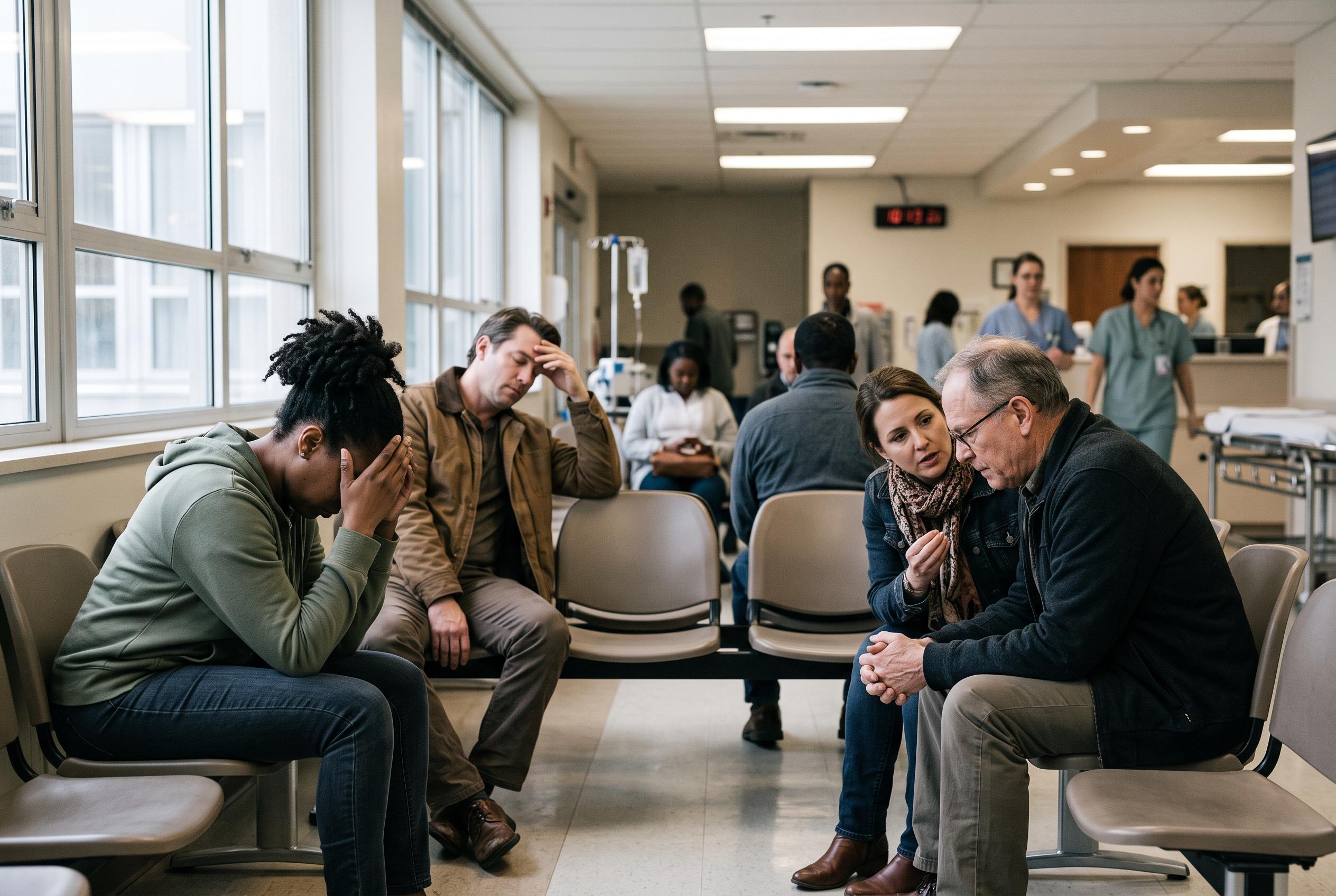

A dramatic 74% increase in emergency visits for suicide-related crises among children in the US highlights urgent need for system-wide mental health preparedness across all emergency settings, not just specialised hospitals.
Children arriving in US emergency departments with suicide-related crises are doing so in sharply rising numbers, and the burden is not falling mainly on specialist children’s hospitals. A study published this week found that such visits increased by 74% between 2016 and 2022, with about half taking place in hospitals seeing fewer than 10,000 paediatric patients a year, settings that often lack dedicated child mental-health resources. (news.northwestern.edu)
The analysis, by Audrey Brewer, Kenneth Michelson, Erick Masias, Taylor Walter, Kayla Robinson and Jennifer Hoffmann, examined more than 5 million mental-health-related emergency visits by children aged 5 to 17 using the Nationwide Emergency Department Sample. Across that period, all paediatric mental-health emergency visits rose by 24%, while the largest diagnosis groups were suicide or self-injury, accounting for 24% of visits, and depressive disorders, at 23%. The paper is titled Childhood Mental Health-Related Visits and Emergency Department Pediatric Volume in the United States, 2016 to 2022 and appeared in Annals of Emergency Medicine. (news.northwestern.edu)
What appears to worry the authors most is where many of those children first turn up. In the lowest-volume emergency departments, close to 30% of children seen for mental-health conditions were transferred elsewhere for definitive care. Hoffmann said transfer to another hospital for paediatric mental-health care “often means a prolonged wait in the ED, sometimes lasting days”. Brewer argued that every emergency department should be ready to screen children for suicide risk, connect families with follow-up care and give them a practical safety plan for home, with specialist support available on site or through telehealth where needed. (newswise.com)
The study also points to uneven access. Indigenous children were more likely than others to present to lower-volume emergency departments, and young people with substance-use concerns were also seen more often in those settings. Brewer said a child in crisis may reach any emergency department, not just a major children’s centre, and she argued that culturally responsive, evidence-based help in community and outpatient settings could reduce dependence on casualty departments and narrow disparities in outcomes. (newswise.com)
Federal surveillance suggests the pattern sits inside a broader and still active strain on emergency care. The US Centers for Disease Control and Prevention says its Mental Health Data Channel is updated monthly and draws on information that can be obtained close to real time, making emergency department data one of the fastest ways to spot shifts in mental-health need. The agency says the proportion of mental-health-related emergency visits was higher during the Covid-19 pandemic in 2020 and 2021 than in the periods before and after, and that youth mental and behavioural health visits tend to rise during the autumn and spring school terms. (cdc.gov)
Earlier research had already shown suicidality worsening before the new study’s 2022 endpoint. A 2016-2021 analysis of commercially insured US children and adolescents aged 10 to 18 found a mean annual incidence of emergency visits and hospitalisations for suicidality of 964 per 100,000, rising from 760 per 100,000 in 2016 to 1,006 in 2019, dipping in 2020 and then climbing to 1,160 in 2021. That study found rates were about twice as high among females as males, with the typical event occurring at a mean age of 15.4, and it identified spring and autumn peaks that were disrupted during the first phase of the pandemic. (pmc.ncbi.nlm.nih.gov)
Longer-term CDC data point in the same direction. In a national report covering 2018 to 2021, the agency found mental-health-related emergency visit rates of 30.7 per 1,000 among adolescents aged 12 to 17, compared with 5.3 per 1,000 among children under 12. Rates were also higher among girls than boys, and higher among Black non-Hispanic children and adolescents than among Hispanic or White non-Hispanic peers. That report also cited earlier evidence showing suicide-related emergency visits among children and adolescents rose by 250% between 2011 and 2015, while self-harm-related visits increased by 329% between 2007 and 2016. (cdc.gov)
For the authors of the new paper, the practical conclusion is that preparedness can no longer be treated as a niche issue for a handful of large paediatric centres. They say emergency departments nationwide need staff training, access to paediatric mental-health expertise, universal suicide screening and simple tools that can be used while children wait for placement or transfer. Northwestern said the work was funded by the National Institute of Mental Health, underscoring how far the issue has moved from an isolated hospital challenge to a national public-health concern. (news.northwestern.edu)
Disclaimer: This content is for informational purposes only and is not intended to be a substitute for professional medical judgment, advice, diagnosis, or treatment.