


A parenting approach centred on listening and modelling gratitude may be more effective than quick corrections, as experts reveal the crucial role of timing and behaviour in fostering thankfulness in children.
Parents often worry that the best way to teach gratitude is to correct children the moment they complain. But as the article argues through the example of Dovid, that instinct can backfire. A child who feels disappointed is usually not ready for a lesson in perspective; he is first looking for someone who understands why he is upset. When adults respond too quickly with a lecture about appreciation, the child is more likely to feel dismissed than guided.
That point is reinforced by the article’s comparison between a child’s frustration and an adult’s hurt feelings. The same message, when delivered to a spouse in the middle of an upsetting moment, would likely sound insensitive rather than wise. The lesson is not that gratitude lacks value, but that timing matters. Before a child can absorb a broader truth, he often needs to feel that his smaller truth has been heard.
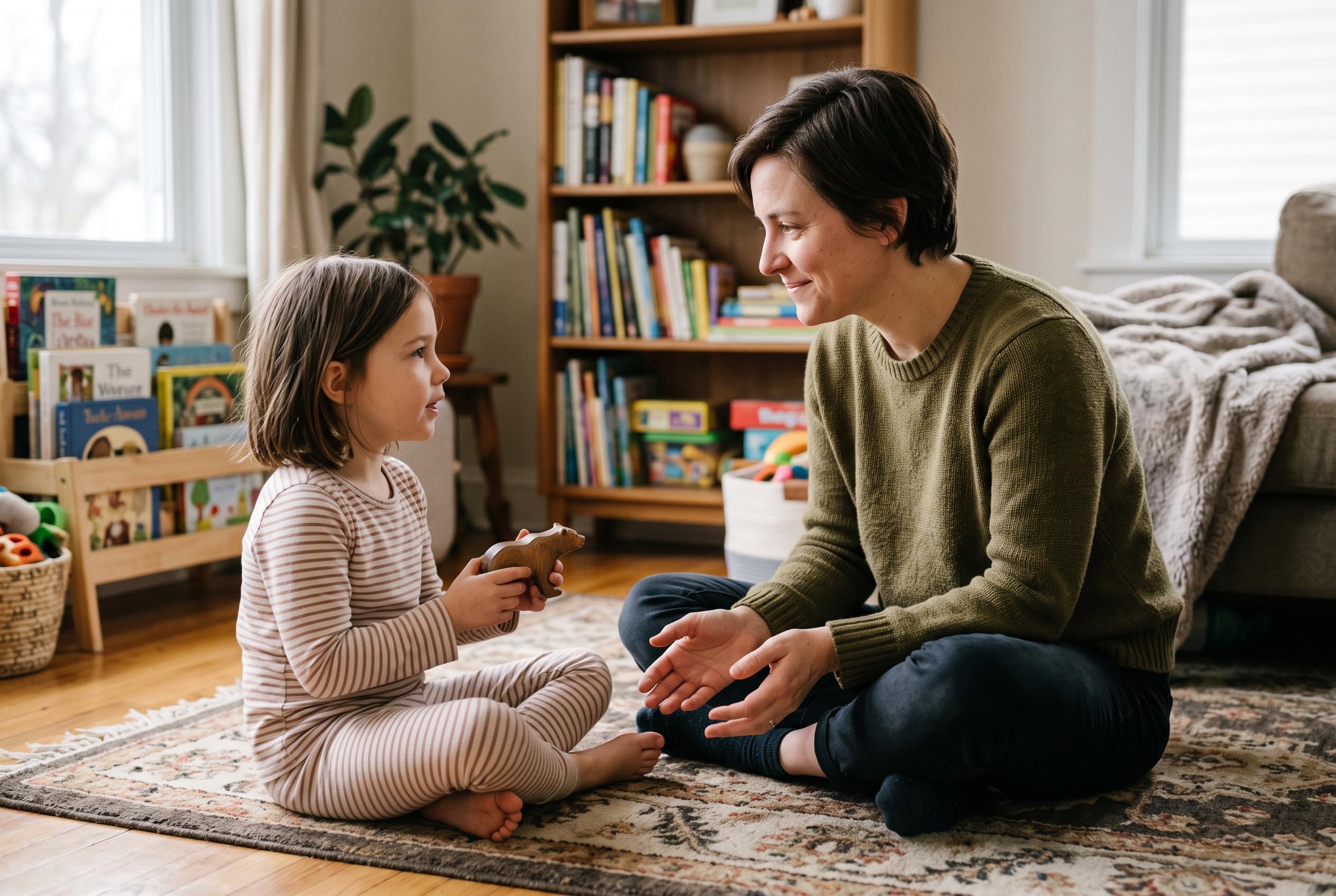
This is where active listening comes in. Rather than arguing with Dovid’s reaction to the baseball game or the lemon ice, a parent can mirror his disappointment, name the frustration and show that the feeling makes sense. The article says that this kind of response often calms a child and creates room for him to move on on his own. The parents’ role, then, is not to rush in with correction, but to help the child feel understood enough to regain perspective.
Once the child is calm, gratitude can be taught more effectively through what psychologists call descriptive praise. The CDC says specific praise works best when it identifies the exact behaviour a parent wants repeated, and the article applies that idea to gratitude by suggesting comments that spotlight thankfulness when it actually happens. That might mean noticing when a child says thank you to a neighbour or handles disappointment without complaint. Attention, in other words, tends to reinforce whatever it is directed towards.
The article also makes the larger point that modelling matters just as much as verbal teaching. That idea echoes guidance from the CDC, Mount Sinai Parenting Center and other parenting resources, which stress that children learn communication habits by watching how adults handle frustration, express appreciation and speak about others. If parents want children to become grateful, they have to be visibly grateful themselves, both in moments of ease and in moments when life does not go their way.
Seen this way, gratitude is not taught best through a single speech, but through a pattern: listen first, praise specifically when the value appears, and live the value consistently at home. The article’s message is practical as well as reassuring. Parents do not have to choose between empathy and character-building. Done well, the two work together, and often far more powerfully than a sermon ever could.
Disclaimer: This content is for informational purposes only and is not intended to be a substitute for professional medical judgment, advice, diagnosis, or treatment.



