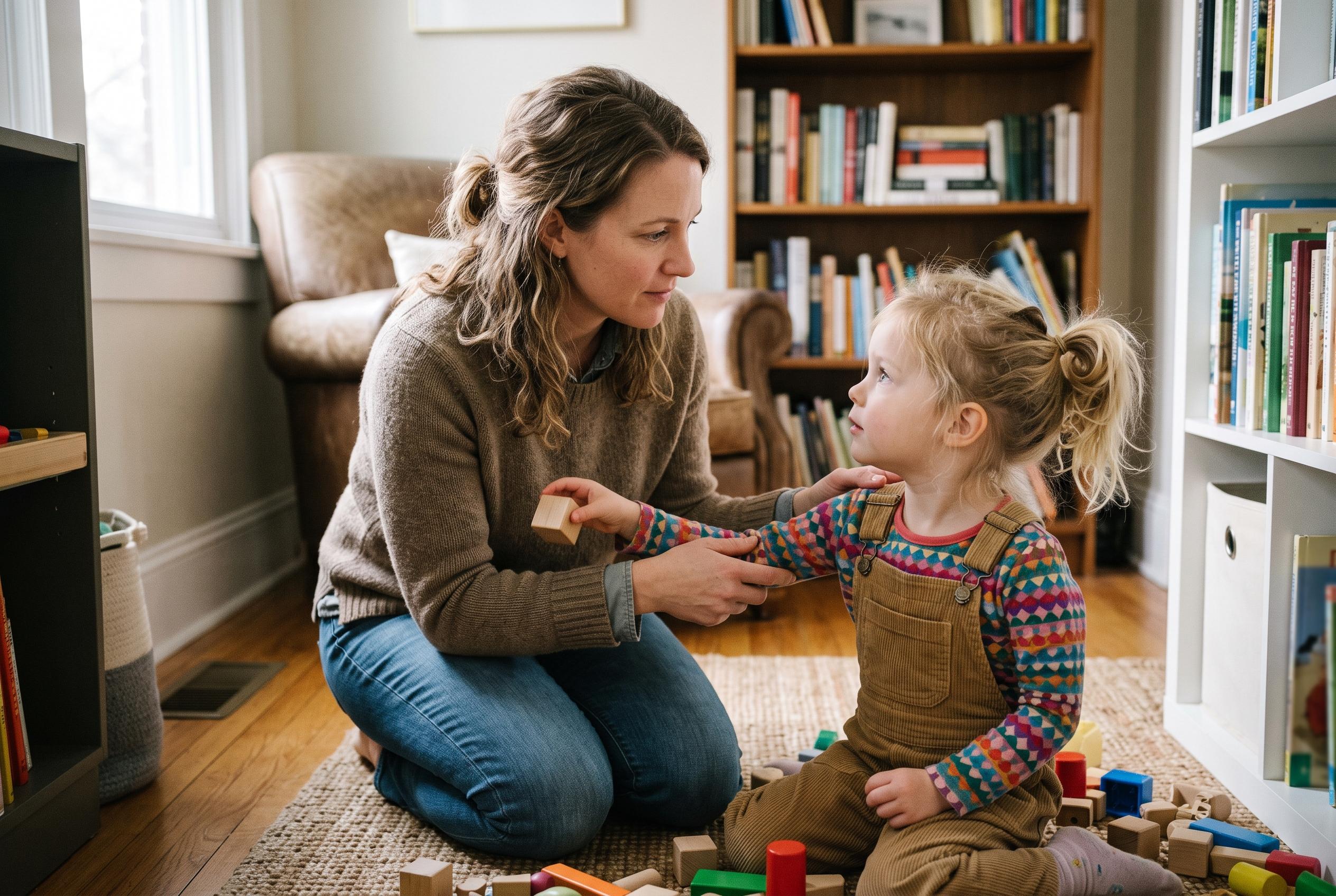

While gentle parenting is often misunderstood as permissive, evidence confirms that warmth paired with firm boundaries yields healthier behaviour in children, emphasizing clarity and consistency over softness alone.
Gentle parenting is often blamed for raising entitled or undisciplined children, but that criticism usually confuses warmth with looseness. The approach, at its best, pairs empathy with clear limits, which places it much closer to authoritative parenting than to a free-for-all. Psychology Today and other parenting writers have made that distinction plainly: gentle parenting is meant to be non-punitive, not boundary-free.
That matters because the research base supports the combination of warmth and firmness. A study published in a Sage journal found that firm, responsive parenting was linked with fewer behaviour problems at home, while reporting from ParentData and Simply Psychology notes that the broader evidence behind authoritative parenting is strong even if “gentle parenting” itself is more of a modern label than a formally studied category. In other words, the science supports kindness with structure, not kindness in place of structure.
The real problem is permissive parenting, where adults remain affectionate but allow rules to slide. That is the style most likely to create confusion, because children cannot learn from boundaries that are announced and then abandoned. Gentle parenting only works when the adult still says no, follows through and keeps expectations steady, even when the child is upset. The point is to help a child feel safe while still learning self-control.
There is also a cost to the ideal itself. Simply Psychology has warned that some parents drift towards permissiveness under the pressure of doing everything gently, while the emotional labour of always being calm can add to parental burnout. That is especially relevant for families already stretched by work, separation or single parenting, where the temptation to avoid conflict can be strong. Warmth alone does not spoil children, but exhausted adults can struggle to hold the line.
For parents trying to make it work in everyday life, the practical test is simple: does the rule still stand after the tears? If it does, the child is getting consistency as well as care. If it does not, the household is drifting away from gentle parenting and towards permissiveness, which is where the behaviour problems tend to grow.
The most useful conclusion is not that parents must be softer or stricter, but that children do best when both are present. The evidence from developmental psychology points in the same direction: clear expectations, emotional validation and calm follow-through help children learn how to behave without fear. Gentle parenting does not spoil children; boundary-free parenting does.
Disclaimer: This content is for informational purposes only and is not intended to be a substitute for professional medical judgment, advice, diagnosis, or treatment.