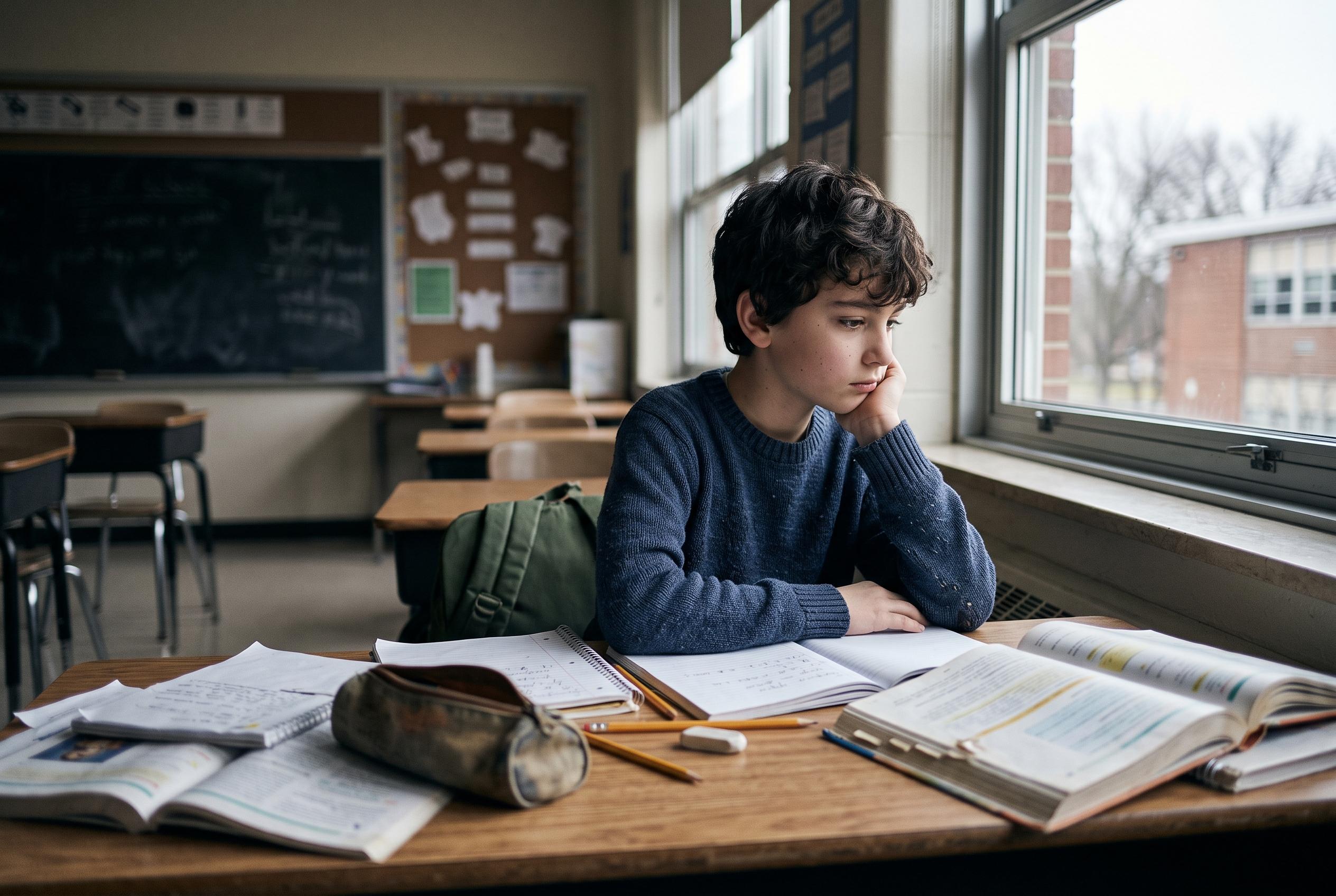

A new study from Ohio State University highlights how children involved with Child Protective Services face higher absenteeism and lower school connectedness, underscoring the need for broader support beyond attendance enforcement.
Students who miss school regularly can fall behind quickly, and new research suggests that children who have been in contact with Child Protective Services are especially at risk. A study from Ohio State University, published in Children and Youth Services Review, found that these students were absent more often than their peers, whether the absences were excused or unexcused. Teachers were also more likely to reach out to families about attendance, and the students reported feeling less connected to school.
The research was led by Arya Ansari, an associate professor of human development and family science at Ohio State. It drew on the Future of Families Child Wellbeing Study, which followed 3,334 adolescents in 20 urban cities from birth to age 15. By comparing children with CPS contact and those without, the researchers looked at attendance reports from families as well as students’ own views of how connected they felt to school.
The findings come against a wider backdrop of persistent absenteeism in American schools. Before the pandemic, 15% of K-12 students were chronically absent in the 2018-19 school year, meaning they missed at least 10% of instructional time. That figure rose to 28% in 2021-22 before easing to 24% in 2024, according to the figures cited in the study. Ansari said CPS involvement can itself be a source of stress, and families may respond in different ways, with some becoming more disengaged and others pushing harder to keep children in class.
The study also suggests that school connectedness matters, but only as part of a broader response. According to the research, feeling attached to school helped explain some of the attendance gap, but it did not eliminate it. Ansari said stronger ties with teachers, a more inclusive school climate and extracurricular activities can all help children feel safer and more valued, but they cannot by themselves offset problems such as housing instability, food insecurity, unsafe transport, abuse, neglect and other pressures linked to poverty. In that sense, the paper argues that schools should think not only about attendance enforcement, but also about the social and practical conditions that shape whether children can show up at all.
Disclaimer: This content is for informational purposes only and is not intended to be a substitute for professional medical judgment, advice, diagnosis, or treatment.