


New findings suggest that children with ADHD are more motivated by prompt rewards rather than distant incentives, offering insights into tailored parenting strategies and educational support.
Children with ADHD may respond more strongly to a reward when it arrives than to the promise of one later, according to research highlighted by the Sensory Spectrum and supported by earlier studies on reward processing in ADHD. That helps explain a familiar challenge for parents: a child may understand the rule, agree to the plan and still struggle to stay engaged when the benefit feels too far away.
The study described by the Sensory Spectrum was carried out by researchers from the Okinawa Institute of Science and Technology, the Federal University of Rio de Janeiro and the D’Or Institute for Research and Education. It used functional MRI to observe college students with and without ADHD as they completed a simple task involving the possibility of reward. The researchers focused on the striatum, a brain region linked to reward processing, and compared activity during anticipation with activity when a reward was actually delivered.
Their findings fit a pattern seen in previous research. A 2012 study indexed in PubMed reported that adolescents with ADHD showed greater striatal activity at reward delivery than during anticipation, unlike healthy controls. Another PubMed study found similar abnormal striatal blood-oxygen-level-dependent responses, again suggesting that reward receipt may generate a stronger neural signal than waiting. Together, these findings point to a difference in how the ADHD brain handles delayed gratification, even if they do not prove that all children with ADHD experience rewards in exactly the same way.
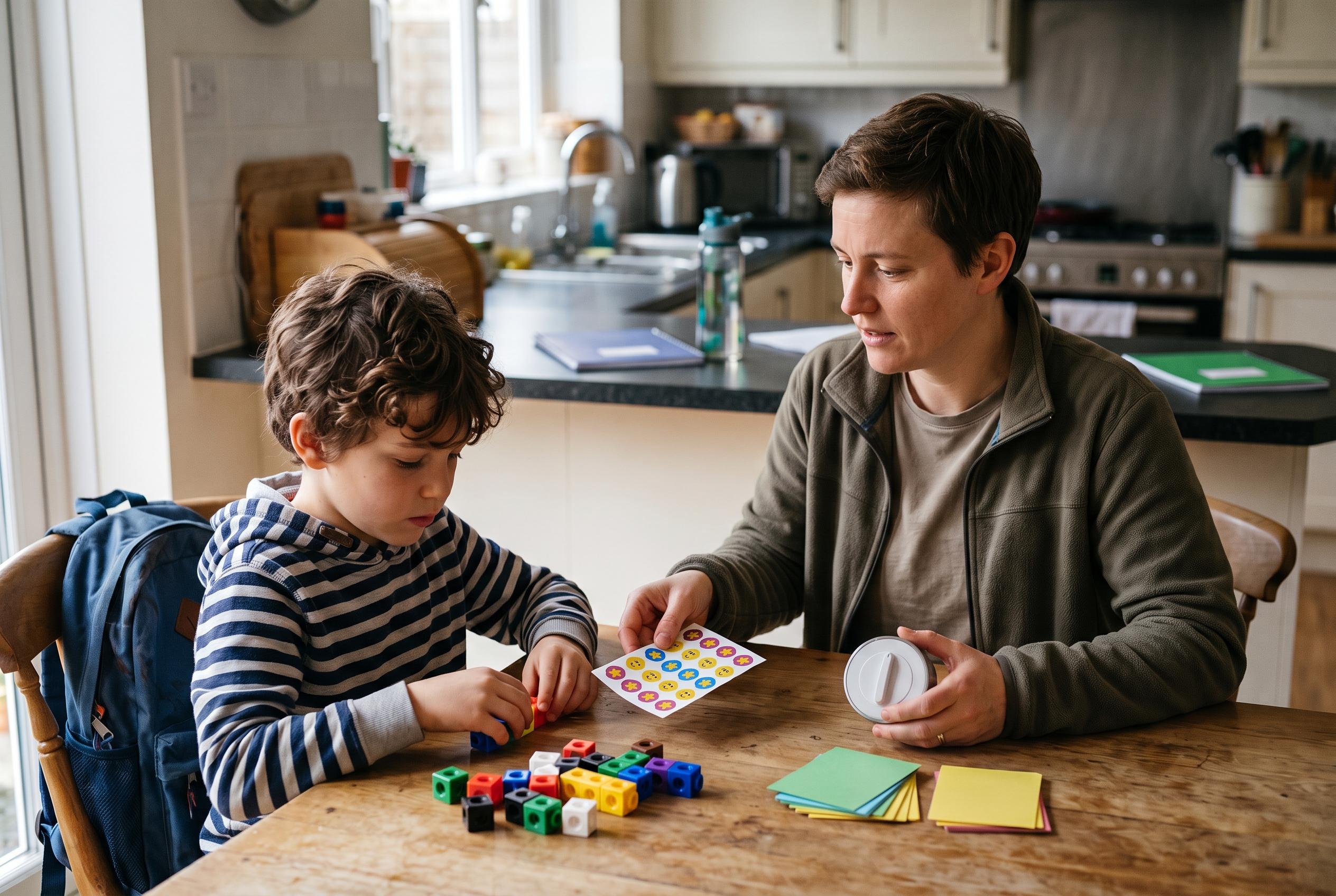
That distinction matters for everyday parenting. The point is not that children with ADHD need constant prizes or that discipline should be replaced with treats. Rather, the research suggests that motivation may improve when goals feel closer and consequences happen sooner. Breaking homework into smaller steps, offering brief breaks, or giving immediate encouragement can make progress easier to sustain than one distant payoff at the end of a long task.
Other research suggests the picture is more complex than a single reward pathway. A 2016 PubMed study found altered connectivity in several brain networks involved in attention and salience, with only the salience network showing sensitivity to reward value. A 2022 study also indicated that the kind of reward matters, with different stimuli producing different striatal responses. That means reward strategies may need to be tailored to the child, not applied as a one-size-fits-all fix.
Even so, the broader message is useful for families and teachers. ADHD is not just about inattention; it can also involve differences in how the brain responds to motivation, feedback and delay. Understanding that may help adults interpret a child’s behaviour less as defiance and more as a mismatch between the task and the child’s ability to stay engaged until the reward feels real.
Disclaimer: This content is for informational purposes only and is not intended to be a substitute for professional medical judgment, advice, diagnosis, or treatment.



