
Peter Gray challenges traditional child psychology research, arguing that the established schooling environment imposes behavioural constraints that distort understanding of children’s natural behaviour and development.
Peter Gray has spent years arguing that modern schooling does more than teach reading, writing and arithmetic. In his latest essay, he says the system also places children in a captive setting that shapes how they behave, how they relate to adults and, crucially, how psychologists end up studying them. Gray points to a recent paper by Cevin Soling and Kathryn Burrows in Educational Studies, which describes compulsory schooling as a form of captivity and likens the school day to an environment built around surveillance, restricted movement and behavioural control. Their argument builds on a broader body of work challenging the idea that school can be understood as a neutral backdrop to childhood.
That critique sits alongside a long-running historical debate over compulsory attendance laws. Research from the National Bureau of Economic Research has found that such laws significantly increased attendance in early 20th-century America, especially when paired with child labour restrictions. Another NBER paper, examining overlapping periods between 1880 and 1927, found that laws passed after 1880 had significant effects on enrolment and attendance, while later laws also affected educational outcomes. In other words, compulsory schooling clearly changed behaviour at scale, even if the broader question of what that means for children’s development remains contested.
Gray’s central complaint is that much child psychology is built around children who are already trained to comply. He argues that the experimental methods favoured by researchers often depend on captive subjects who are accustomed to doing what authority figures request, whether in schools or in laboratory settings. By his account, that makes schoolchildren unusually convenient participants, but not necessarily representative ones. The result, he suggests, is a body of research that may capture obedience and adaptation to institutions more readily than it captures children’s spontaneous behaviour.
He also says the school environment can distort what researchers come to believe about childhood itself. Gray has previously criticised modern schooling as increasingly intrusive, with longer terms, more homework and less unstructured time. That, he argues, leaves little room to observe curiosity, play or self-direction in their natural form. Similar concerns run through his writings on forced education, where he says children are biologically inclined to direct much of their own learning but are pushed into passivity by systems that reward compliance and punish resistance.
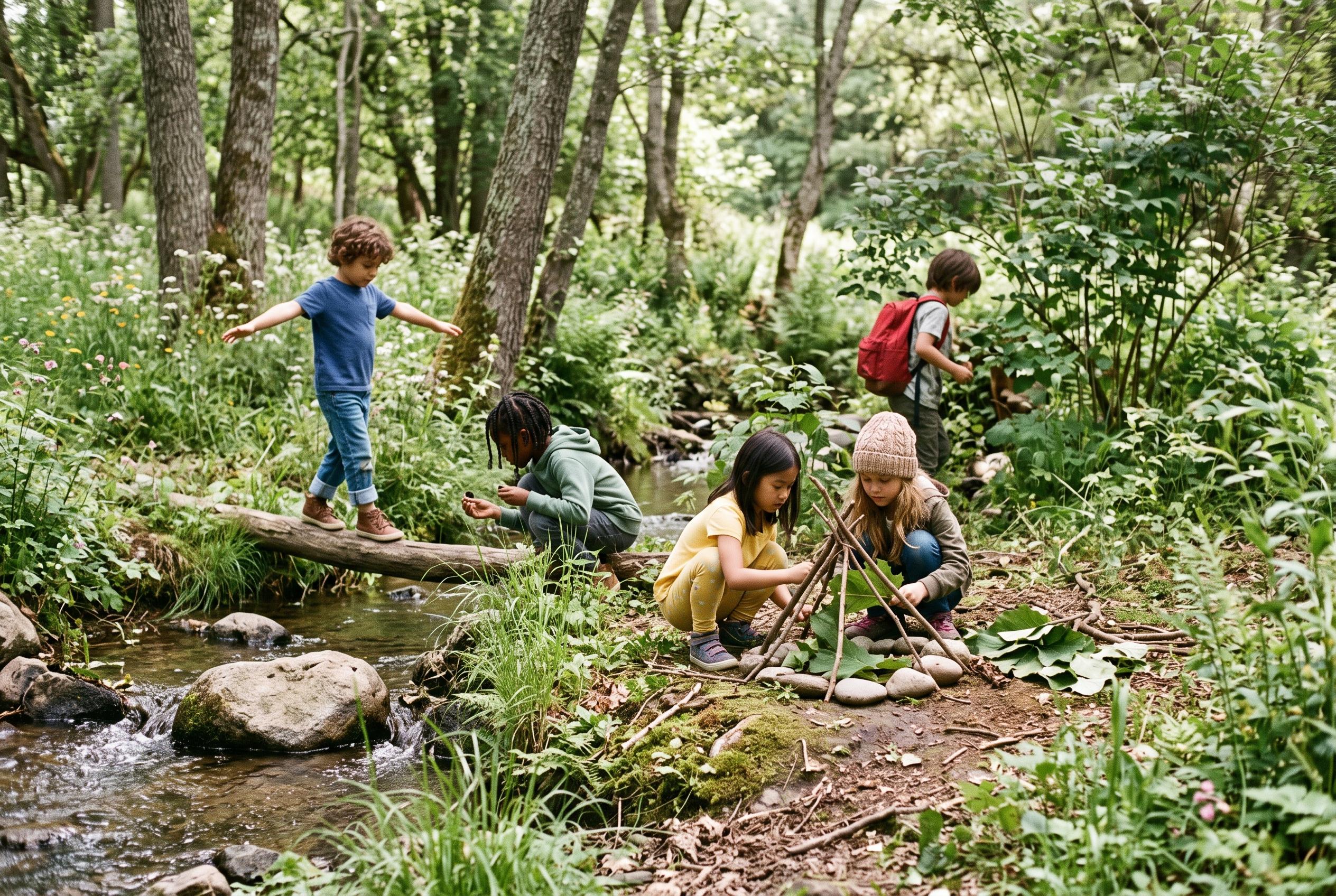
The same logic, Gray argues, applies to peer relations. Schoolchildren are usually grouped by age and placed into constant comparison with one another, whether through grades, prizes or sports teams. He contrasts that with studies of children in freer settings, including self-directed learning centres and unschooled communities, where mixed-age play and cooperation are more common. On his reading, those environments offer a closer view of childhood as it might unfold without coercion: curious, social and far less status-driven.
The broader point, then, is not just about schooling but about method. If the goal is to understand how children behave inside the system most of them inhabit, then captive settings may be unavoidable. But if the aim is to learn what children are like when they are free to choose, explore and organise themselves, Gray says researchers need to look elsewhere. That, in his view, means paying more attention to unschooled children, self-directed education and other settings where childhood is not filtered through institutional control.
Disclaimer: This content is for informational purposes only and is not intended to be a substitute for professional medical judgment, advice, diagnosis, or treatment.