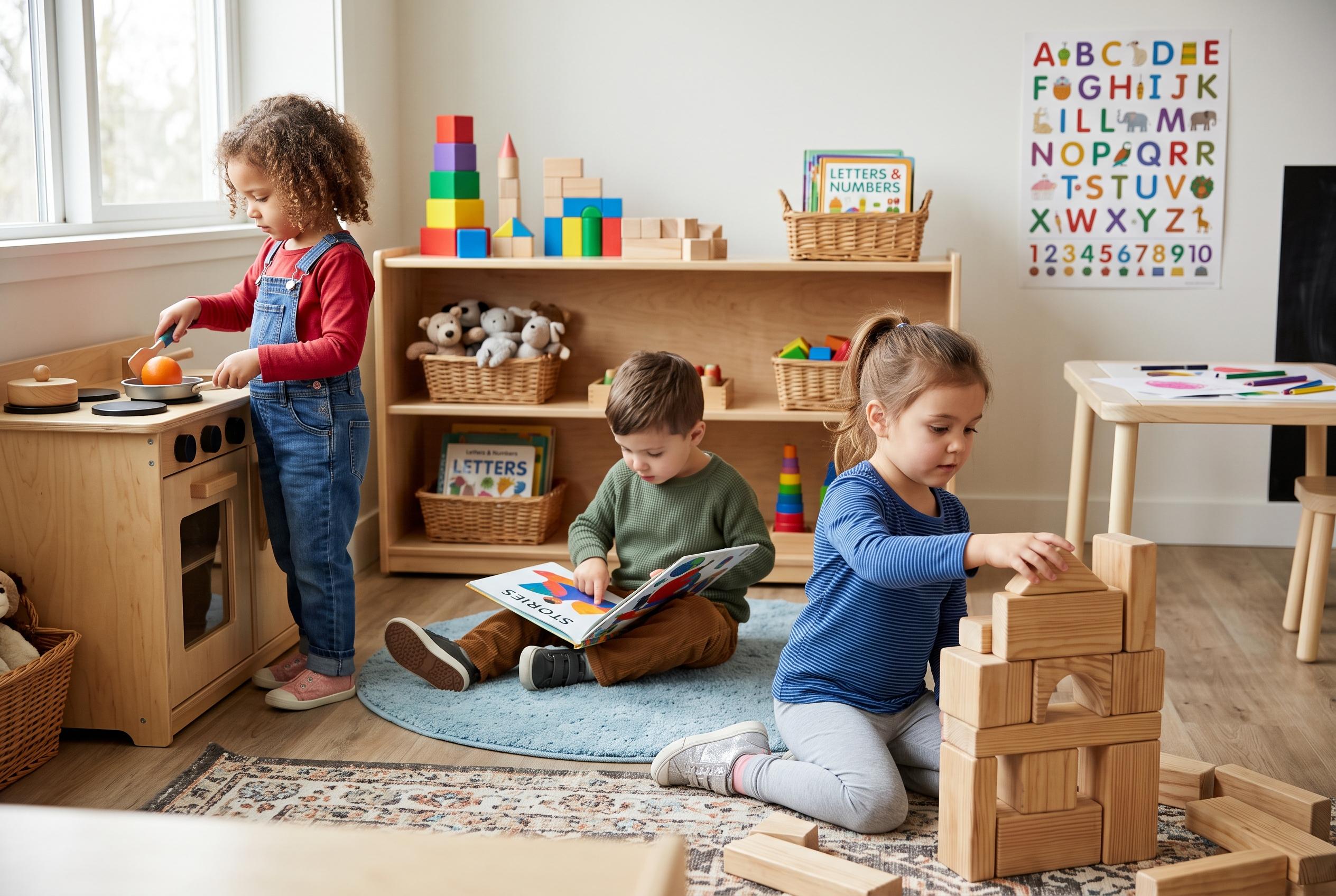

A study by Kelley Mayer White underscores the lasting advantages of play in early childhood, showing that children in play-based programmes develop stronger emotional, social, and cognitive skills that benefit them well into elementary school.
Play is more than a break from learning for young children; it is one of the ways they learn best. Kelley Mayer White, a professor at the College of Charleston, argues that play helps children build vocabulary, manage strong emotions and develop the social and cognitive skills they need in school and beyond. Her article draws on research from a play-based preschool in Charleston, South Carolina, where children were followed after moving into kindergarten or first grade.
That work found lasting benefits. White said children who spent their early years in a play-based programme went on to show stronger emotional control, better social awareness and more effective problem-solving in elementary school. Her findings fit with broader research showing that children in play-based preschool settings often do better with language, including vocabulary and grammar, and are frequently described by teachers as curious, self-directed and more skilled at handling social situations.
The case for play is stronger when different kinds of play are considered. Free play gives children room to invent, negotiate and explore on their own. Guided play, where an adult offers prompts without taking over, can deepen learning further. The American Academy of Pediatrics has said play supports healthy development, helps children practise adult roles and strengthens confidence and resilience. Other education resources, including StartingBlocks.gov.au and Childcare.gov, also point to gains in physical, social, emotional and intellectual development.
White highlights dramatic play and construction play as especially valuable. Pretend play can help children work through fear, anxiety and conflict while building language and narrative skills. Block building and other construction activities support spatial reasoning, planning and maths understanding, with long-term studies linking early block play to later achievement in maths. The lesson for parents and teachers is straightforward: play should not be treated as extra. Used well, it is central to learning.
Disclaimer: This content is for informational purposes only and is not intended to be a substitute for professional medical judgment, advice, diagnosis, or treatment.