

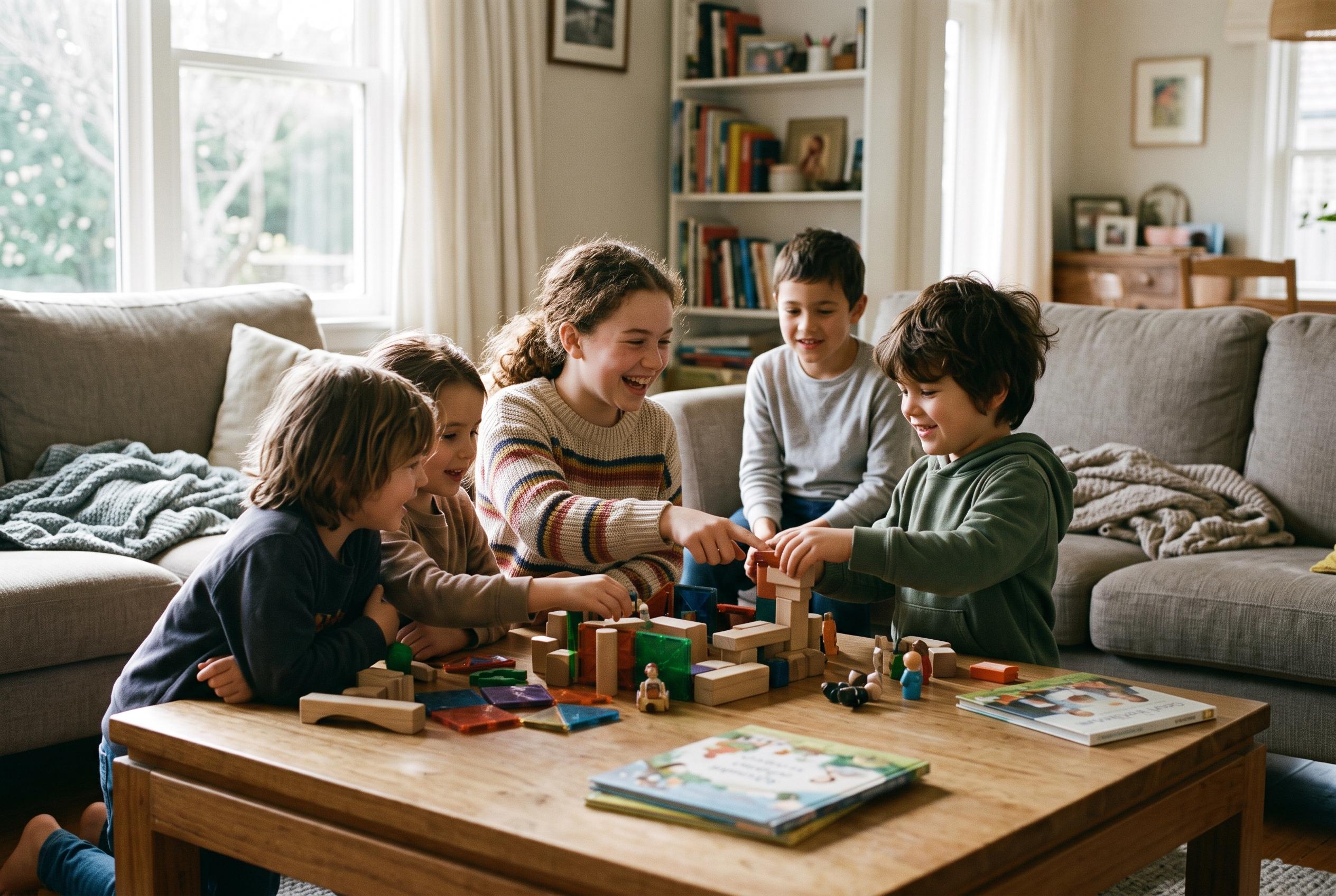

New studies challenge longstanding stereotypes about only children, showing that social skills, emotional wellbeing, and family bonds thrive in one-child households when supported by positive parenting and organised social opportunities.
Raising an only child can feel like entering unfamiliar territory, especially for parents who expected a larger family. Yet research suggests that much of the anxiety around only children is rooted in stereotype rather than evidence. Studies reviewed by Denise Polit and Toni Falbo found that only children are broadly similar to their peers on major personality measures, including friendship quality, and that the idea they are somehow socially impaired is not supported. Research on social competence points in the same direction, showing that any early gap tends to narrow as children grow older.
That does not mean sibling-free childhoods are identical to those with brothers and sisters. Research from Ohio State found that kindergartners without siblings showed a modest social skills disadvantage, but that difference faded by adolescence. Structured activities such as sport, scouts and youth groups appear to provide many of the same chances to practise cooperation, conflict and friendship that siblings might otherwise supply. In other words, the social lessons do not disappear; they are simply more likely to come from organised peer settings.
Parenting style matters more than family size. A study of only-child families in urban China found that authoritative parenting, a combination of warmth and clear expectations, was common and associated with better outcomes. That fits with broader research showing that overparenting can backfire when closeness turns into control. Children benefit when parents remain involved but still make room for independence, competence and ordinary mistakes.
The practical lesson for parents is simple: be affectionate, be consistent and avoid turning an only child into the centre of every decision. The evidence suggests that children thrive when expectations are delivered through a secure relationship rather than pressure. That approach seems especially important in a one-child household, where attention can easily slide into overprotection.
There are, of course, trade-offs that no study can fully capture. Parents of one child experience each milestone as both a first and a last, and the emotional weight of that can feel sharper because all the hopes and worries rest on one person. Some research also suggests that siblings offer a small but measurable buffer in adult life, particularly around shared responsibility and family strain. Even so, those effects are modest rather than determinative, and they do not override the quality of the family relationships that surround the child.
For many families, the biggest advantage of raising one child is also the most obvious: more time, more resources and more focused connection. Multiple studies point to especially strong parent-child bonds in only-child households, along with plenty of scope for enrichment, travel and other experiences that can be harder to manage in larger families. The overall message from the research is reassuring. Family size matters far less than the home parents build around it.
Disclaimer: This content is for informational purposes only and is not intended to be a substitute for professional medical judgment, advice, diagnosis, or treatment.



