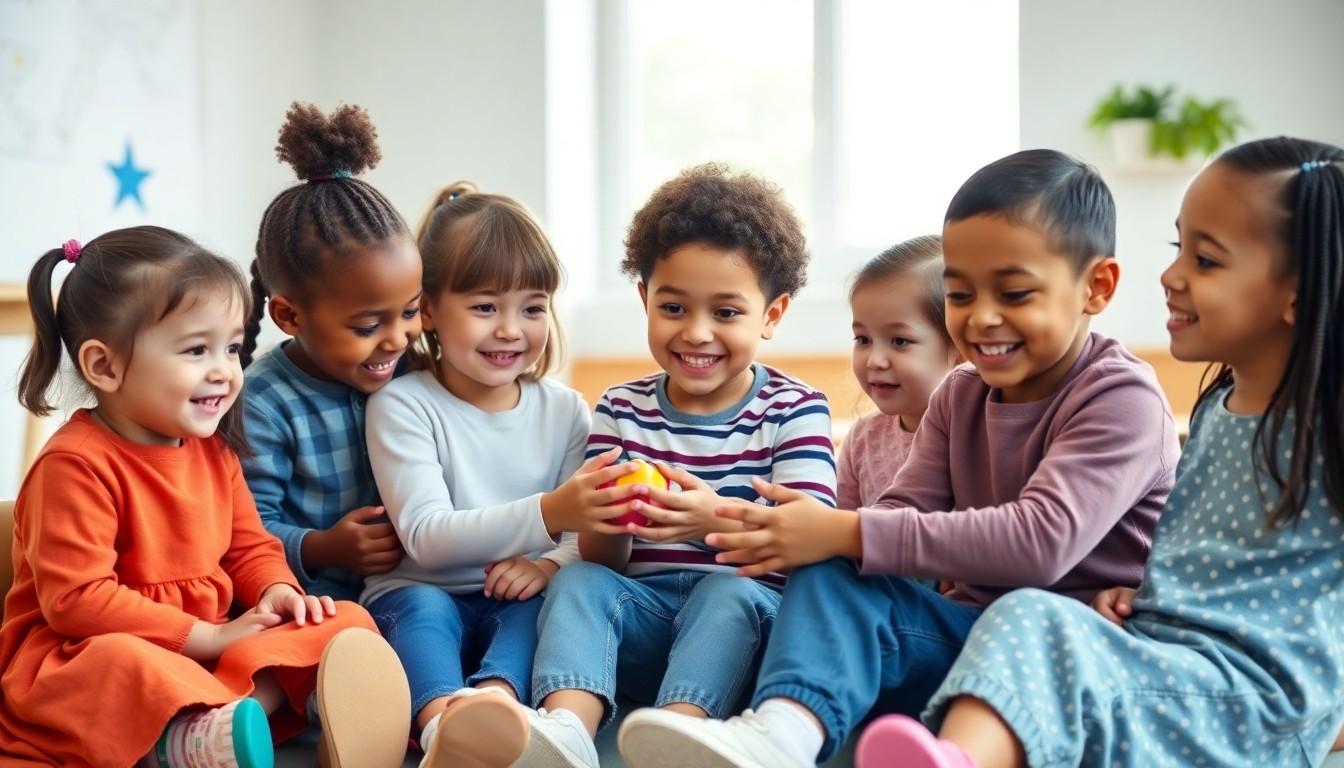

A new study suggests that asking young children to think about how a recipient might feel can significantly boost their generosity, highlighting the influence of emotional cues before they reach age six.
A study published in the International Journal of Psychology suggests that young children may share more generously when they are prompted to think about how a recipient might feel about their decision. In a series of dictator-game experiments with Korean preschoolers, researchers found that 4- and 5-year-olds gave away more stickers when they expected an emotional response from a monkey puppet than when no such cue was given. The effect did not appear in 6-year-olds, who were already inclined to split the stickers evenly.
The work builds on earlier adult research showing that anticipating feedback from a recipient can nudge people towards fairer choices. But the new study goes a step further by separating the idea of receiving any message from the idea of receiving an emotional one. In the second experiment, 5-year-olds who were told only that the puppet would send a message did not behave differently from those in the control group. That finding suggests it was not communication itself that mattered, but the prospect of an emotional reaction.
The researchers tested 65 children in the first experiment, divided into 4-, 5- and 6-year-old groups, and asked them to split 10 stickers between themselves and the puppet. Across the sample, older children tended to behave more fairly. The youngest participants were also the most sensitive to the emotional cue: when they were told the puppet would send a happy, sad or neutral picture in response to the split, they were more likely to give away half or more of the stickers and less likely to keep most of them.
The pattern fits with a broader body of developmental research linking sharing, sympathy and theory of mind, the ability to understand other people’s thoughts and feelings. It also echoes work suggesting that children’s moral decisions are shaped by anticipated emotional consequences, including the possibility of causing sadness, disapproval or praise. In the authors’ view, the results imply that even a simple prompt to consider another person’s feelings can strengthen prosocial behaviour before children reach the age at which equality norms become firmly established.
The findings were not uniform across development. By age 6, most children in the study divided the stickers equally regardless of condition, which may reflect a stronger internalised sense of fairness. The authors also note that equal sharing was common in their Korean sample compared with some earlier studies in other countries, hinting at a possible cultural influence. They caution, however, that the mechanisms are still not fully understood and that larger studies will be needed to determine whether empathy, fear of disapproval, or a desire for approval is doing most of the work.
Disclaimer: This content is for informational purposes only and is not intended to be a substitute for professional medical judgment, advice, diagnosis, or treatment.