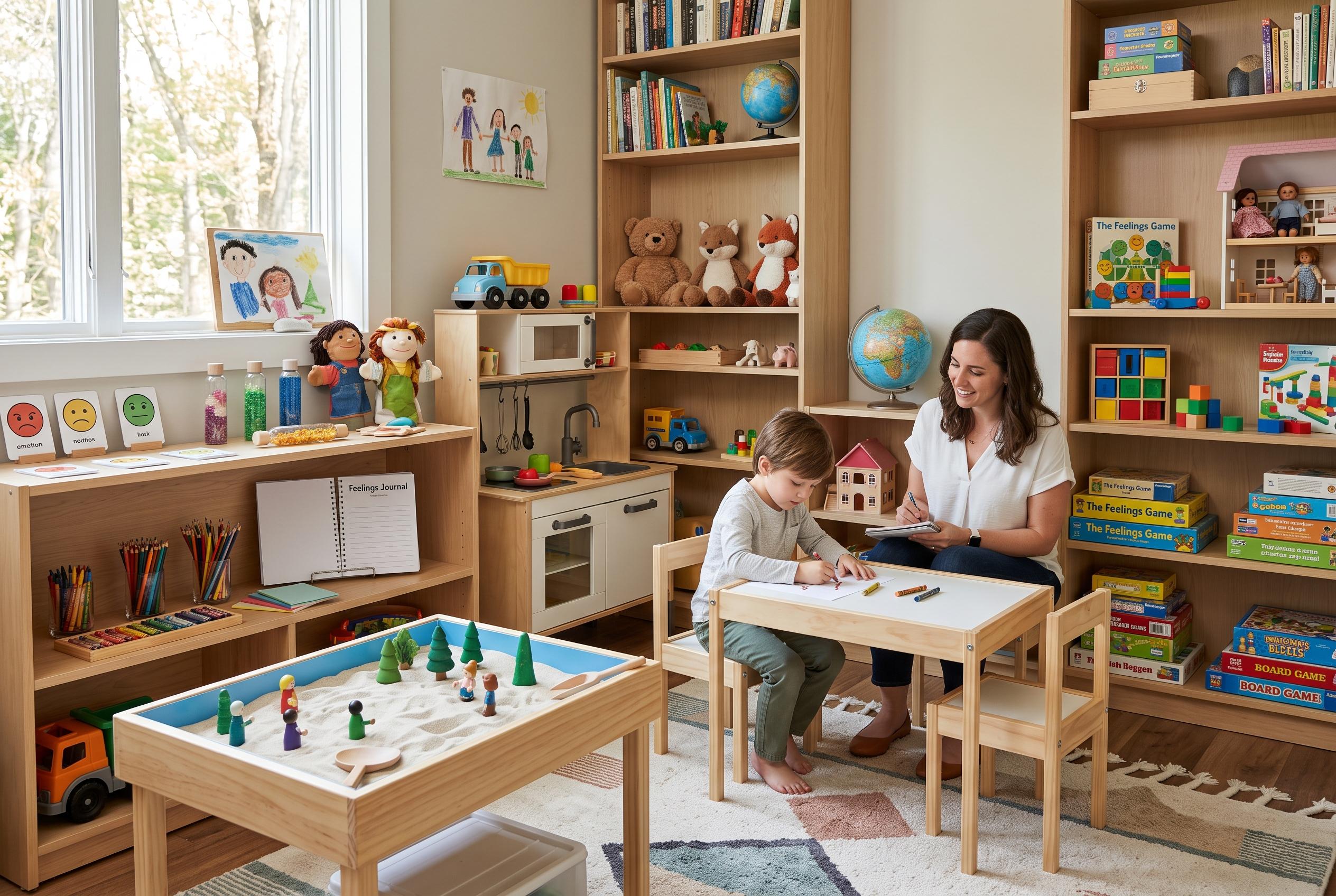

As children grow, play therapy adapts beyond young age, offering tailored emotional support through engaging activities that open a window to their inner worlds and facilitate healing at every stage of development.
Parents often think of play therapy as something reserved for very young children, but that view is too narrow. As children grow, therapy often becomes more layered: there may be more conversation, more reflection and more practical problem-solving, yet play, games, art, sand tray work and movement can still help children express feelings they cannot easily put into words. The key is not the toy itself, but the way a therapist uses it to open a door to the child’s inner world.
That matters because children do not always communicate distress in the same direct way adults do. Medical News Today explains that play therapy can help clinicians observe behaviour and emotional patterns through play, while WebMD notes that it is especially useful for children who struggle to talk about what they feel. A child might present anxiety as stomach aches, anger as acting out, sadness as withdrawal or stress as perfectionism. In that sense, play is not a distraction from therapy; it is often the medium through which therapy becomes possible.
For younger children, therapy may lean heavily on pretend play, dolls, puppets, sensory activities, storytelling and art. The aim is not entertainment, but insight: therapists watch how a child handles frustration, connection, limits and problem-solving. As children enter the primary school years, sessions often become a blend of play and discussion. A board game might accompany questions about friendship; a drawing might help a child explain panic; a sand tray might allow family dynamics to surface without pressure.
Tweens and teenagers need a different balance, but they do not outgrow the value of experiential work. Psychology Today and Healthline both describe play therapy as useful for emotional expression, behaviour, coping and relationships, and that idea remains relevant as children mature. Older children may be more able to talk directly, yet many still open up more easily while doing something with their hands, whether that is drawing, writing, building, moving or playing a simple game. For some adolescents, the activity lowers the sense of scrutiny and makes difficult conversations feel less exposing.
What matters most is a therapist who understands child development and can match the approach to the child in front of them. Child Therapy Institute says play therapy can support children dealing with anxiety, attention difficulties, autism, grief, divorce and trauma, while children’s hospital guidance on play shows that playful activity can also build resilience, creativity, confidence and social skills. The best child therapy does not force a young person into an adult format. It meets them where they are, then gradually helps them find the words, skills and confidence to move forward.
Disclaimer: This content is for informational purposes only and is not intended to be a substitute for professional medical judgment, advice, diagnosis, or treatment.