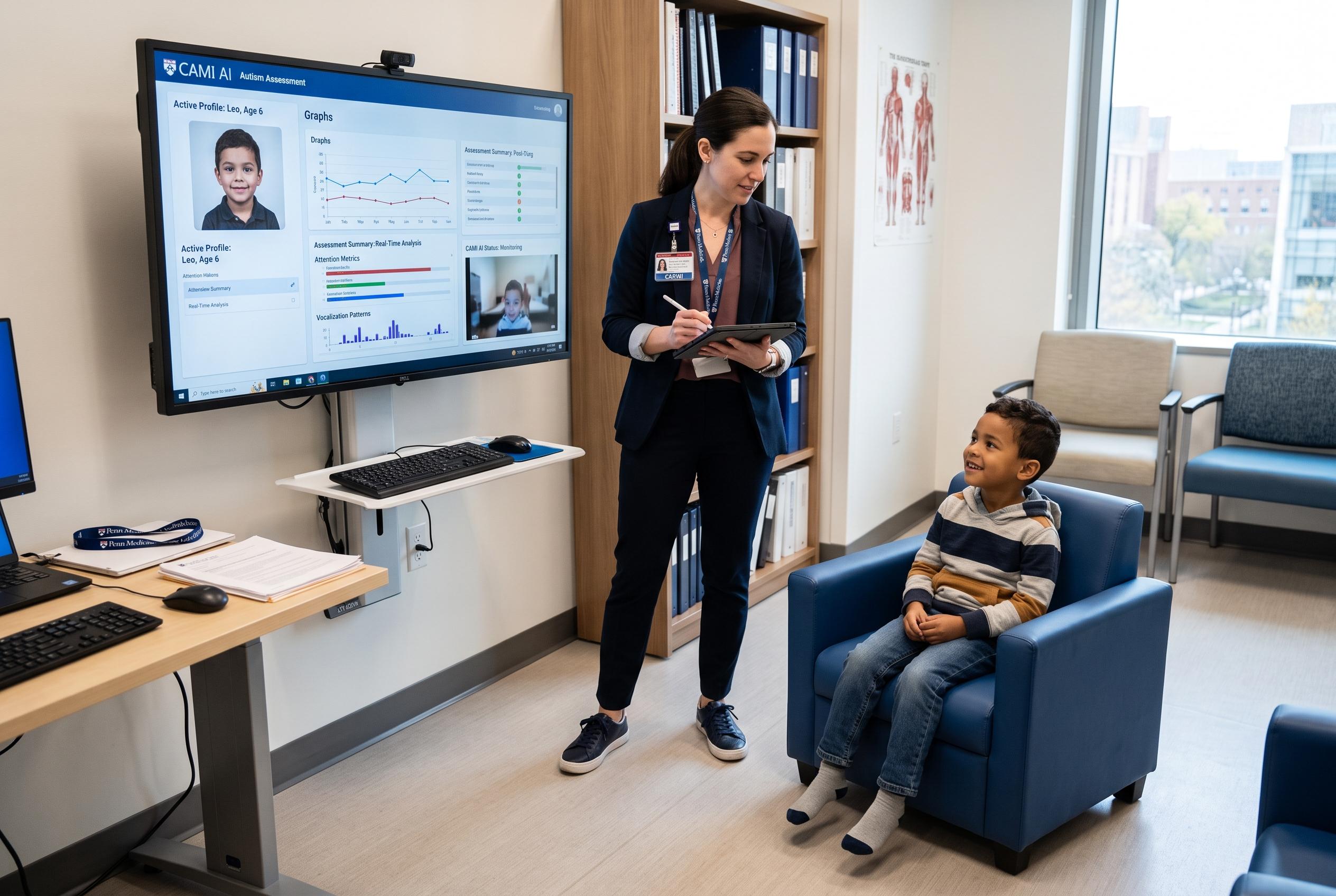

University of Pennsylvania researchers are testing CAMI, an AI-based system designed to streamline autism evaluations, offering quicker initial screenings while keeping clinicians in control of final diagnoses.
Researchers at the University of Pennsylvania are testing an artificial intelligence system that could make autism assessments quicker and more consistent, while still leaving final clinical judgement in human hands. The tool, called CAMI, short for Computerised Assessment of Motor Imitation, asks a child to copy movements shown in a standard video and then scores how well those actions are reproduced. In a clinical study of 183 children aged 6 to 13, the team said the system identified autism with accuracy of about 80% to 85%. According to the researchers, the aim is not to replace doctors but to give clinics, schools and families a faster first-pass measure.
Kaleab Kinfu, a PhD candidate involved in the project, said the system is designed to ignore distractions such as camera angle and lighting and to concentrate instead on imitation quality. Rene Vidal, a professor on the team, said the method offers a more detailed look at motor behaviour than many standard tests. He said the long-term idea is for the software to become one part of a broader diagnostic process rather than a standalone answer.
The work sits alongside a wider push at Penn to use artificial intelligence in healthcare, including efforts to tailor speech therapy for stroke survivors with aphasia. At the same time, university researchers have warned elsewhere that medical advice produced by large language models can vary sharply from one system to another, underlining the need for caution and human oversight when AI is used in clinical settings. That tension helps explain why Penn’s autism tool is being presented as an aid to assessment, not a substitute for trained professionals.
The next stage for CAMI is to be tested in larger groups, including adults, while the team works to improve its accuracy. For families facing long waits for autism evaluation, the promise of a quicker and more objective screening tool could be significant. But as with other medical uses of AI, the practical challenge will be proving that speed does not come at the expense of reliability or expert judgement.
Disclaimer: This content is for informational purposes only and is not intended to be a substitute for professional medical judgment, advice, diagnosis, or treatment.