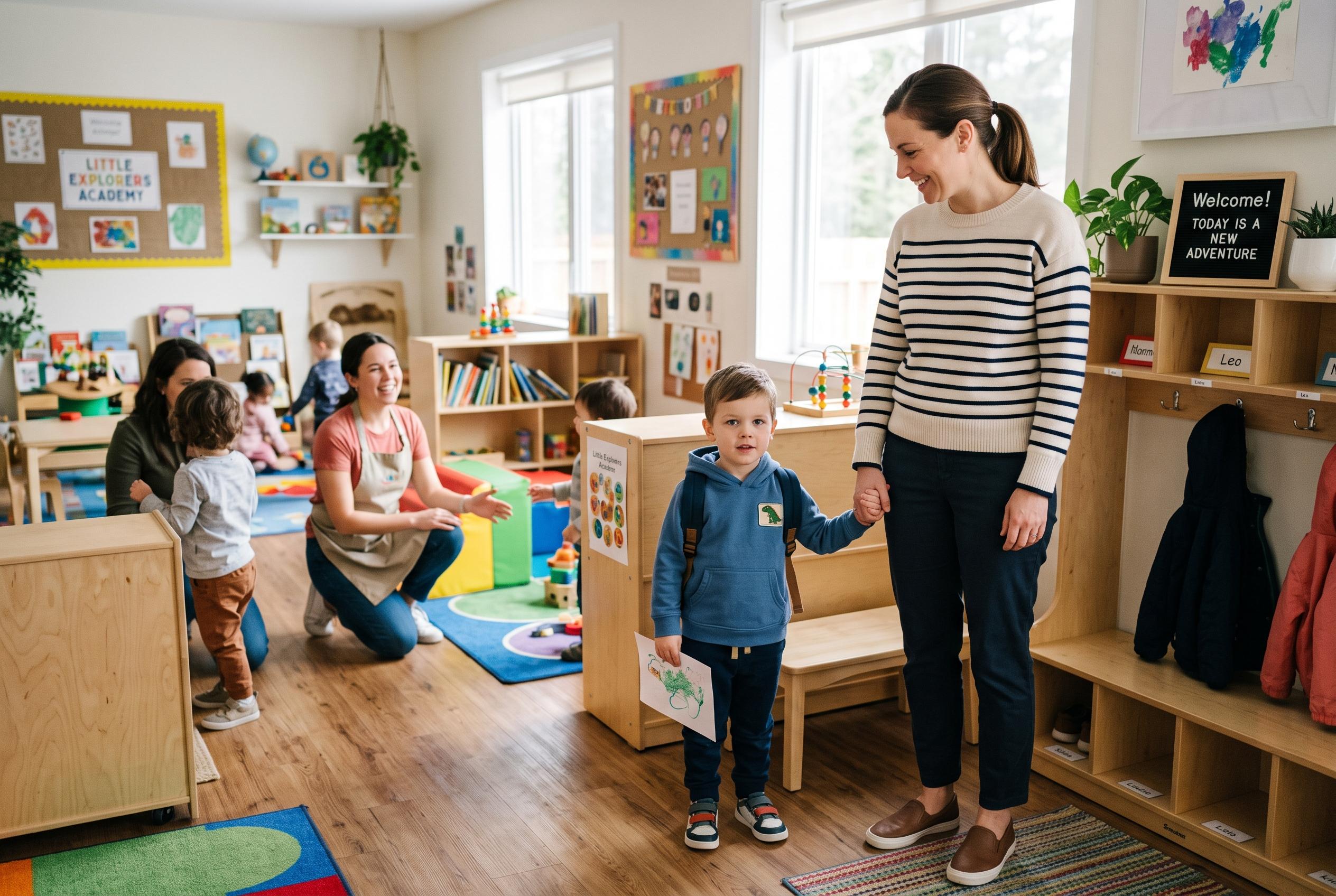

While children often adapt quickly to new childcare routines, parents grapple with emotional challenges that can be mitigated through preparation, open communication, and understanding the resilience children demonstrate during the transition.
Parents often spend weeks rehearsing the first day of childcare as if they are preparing for an exam: packing tiny bags, labelling clothes and talking up the friends a child will make. Yet the harder adjustment is often their own. The handover to early education can feel less like a routine milestone than a test of trust, control and identity, especially when families have spent months searching for a place that fits their budget, values and location.
The anxiety can begin long before drop-off day. In growing communities, where demand for places is strong, securing a preferred nursery or family day care spot can become a source of pressure in itself. As Care for Kids notes, many parents feel a mix of guilt, sadness and worry when childcare starts, and those reactions are a normal part of the change rather than a sign that something is going wrong.
Children, meanwhile, are often more adaptable than their parents fear. Research cited by the University of Georgia Extension suggests that preparation helps: talking about childcare in advance, visiting the setting and establishing routines can all ease the move. A separate study published in Taylor & Francis found that while young children do show elevated stress during the transition, those levels generally return to baseline within a few weeks, pointing to the resilience built into early development.
That does not make the goodbye easy. Separation anxiety is common at the door, and specialists at Explorer’s School say a calm, brief and positive farewell usually works better than a long, drawn-out exit. Educators also play a central role. The International Journal of Education has highlighted that parents’ emotions and behaviour can shape how quickly children settle, which is why open communication between families and carers matters so much.
For parents, the real task is often to manage their own distress well enough to let their child adapt. That can mean leaning on a partner, sharing the drop-off routine, asking for regular updates and resisting the urge to read every tear as a crisis. The long view helps too: early education is designed not just for supervision but for social confidence, independence and learning. The first weeks may feel raw and disorientating, but for most families, the adjustment becomes easier as new routines take hold.
Disclaimer: This content is for informational purposes only and is not intended to be a substitute for professional medical judgment, advice, diagnosis, or treatment.