

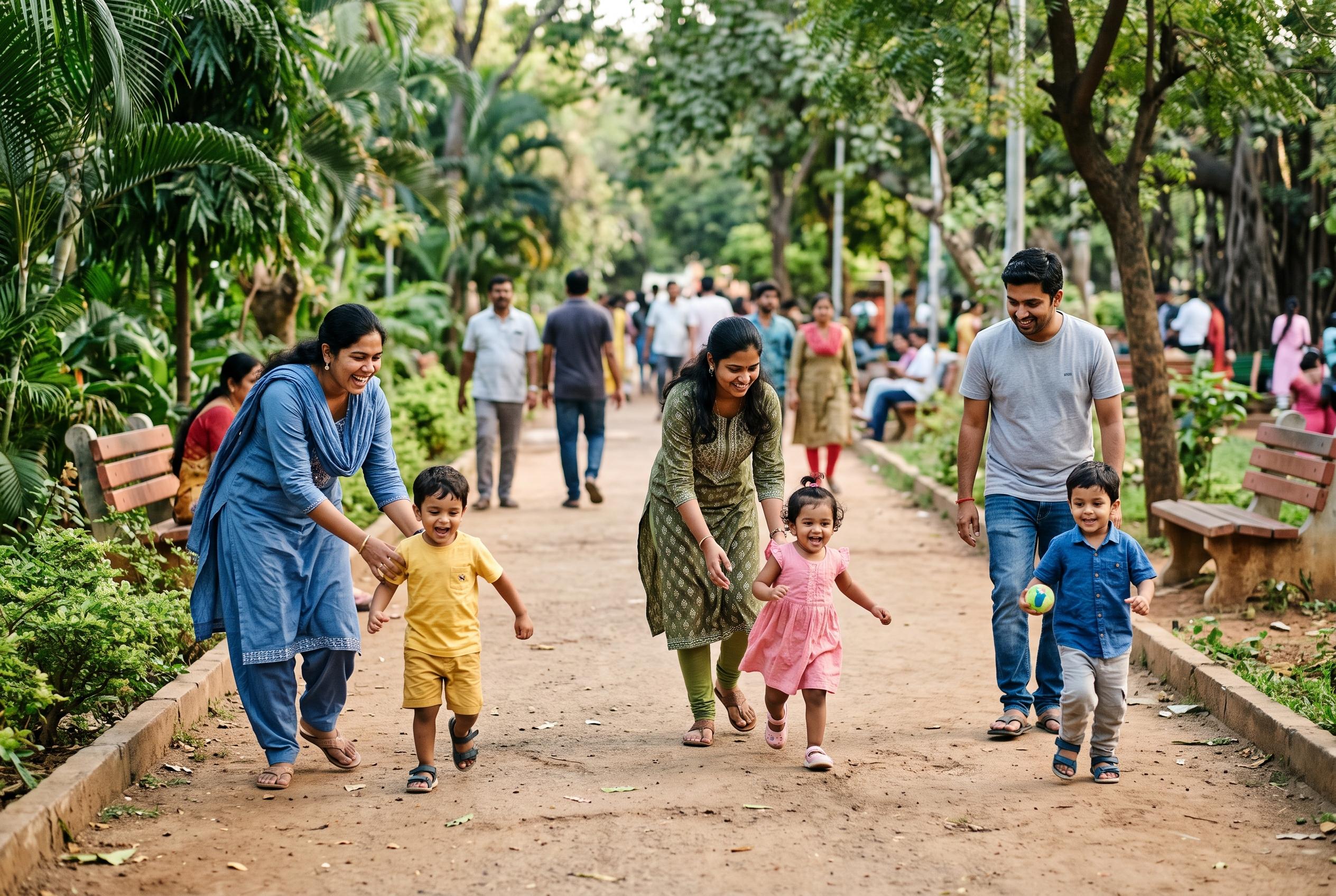

In Hyderabad, young families advocate for a more tolerant view of children’s natural behaviour, confronting the traditional expectation of silent, well-behaved children in public settings amid shifting parenting approaches and societal attitudes.
Parents are pushing back against the idea that children should be silent, still and perfectly composed in public, arguing that many noisy or messy moments are simply part of early childhood. In Hyderabad, young families say a crying toddler on a flight, a child wandering in a restaurant or a meltdown in a shopping mall can quickly attract disapproval from strangers, even when the behaviour is driven by hunger, fatigue or overstimulation.
Several parents say the pressure is not just to soothe a child, but to apologise for normal developmental behaviour. One young parent said a hungry toddler cannot be expected to wait calmly for a meal that will not arrive for another 45 minutes, while others questioned why screens are criticised when they are used briefly to keep a child settled. Rabab Hararwala, a homemaker, said children are often expected to behave like adults in settings that require them to sit still for long periods, including sermons and prayers, even though they are naturally built for movement and stimulation.
Hararwala also pointed to what she sees as a contradiction in adult attitudes: people who encourage families to have children can become intolerant once those children are noisy or active. She said the tension reflects a wider change in parenting, with younger families more likely to favour child-led approaches rather than the older view that parents always know best. That shift can be difficult for older generations to accept, she said.
Not everyone sees the issue the same way. S. Karthika, a private employee who has helped raise her sister’s children, said parents still have a duty to limit disruption for other people. She said children should be taught not to disturb others in public and that if their behaviour is likely to spark arguments, parents need to step in and manage the situation.
Child and adolescent psychiatrist Dr. Hrishikesh Giriprasad, of Government General Hospital in Nalgonda, said tantrums, crying and loud behaviour are common in children under five. He said toddlers are naturally curious and can be overwhelmed by bright lights, sounds and unfamiliar surroundings, especially if they have spent much of their early life at home. Child-development guidance from parenting organisations and children’s hospitals also suggests that parents can help by preparing children before outings, practising expectations at home, keeping them fed and rested, and staying calm when problems arise. In other words, the question is not whether children should ever make noise in public, but how families and communities can respond with more realism and less judgement.
Disclaimer: This content is for informational purposes only and is not intended to be a substitute for professional medical judgment, advice, diagnosis, or treatment.



