

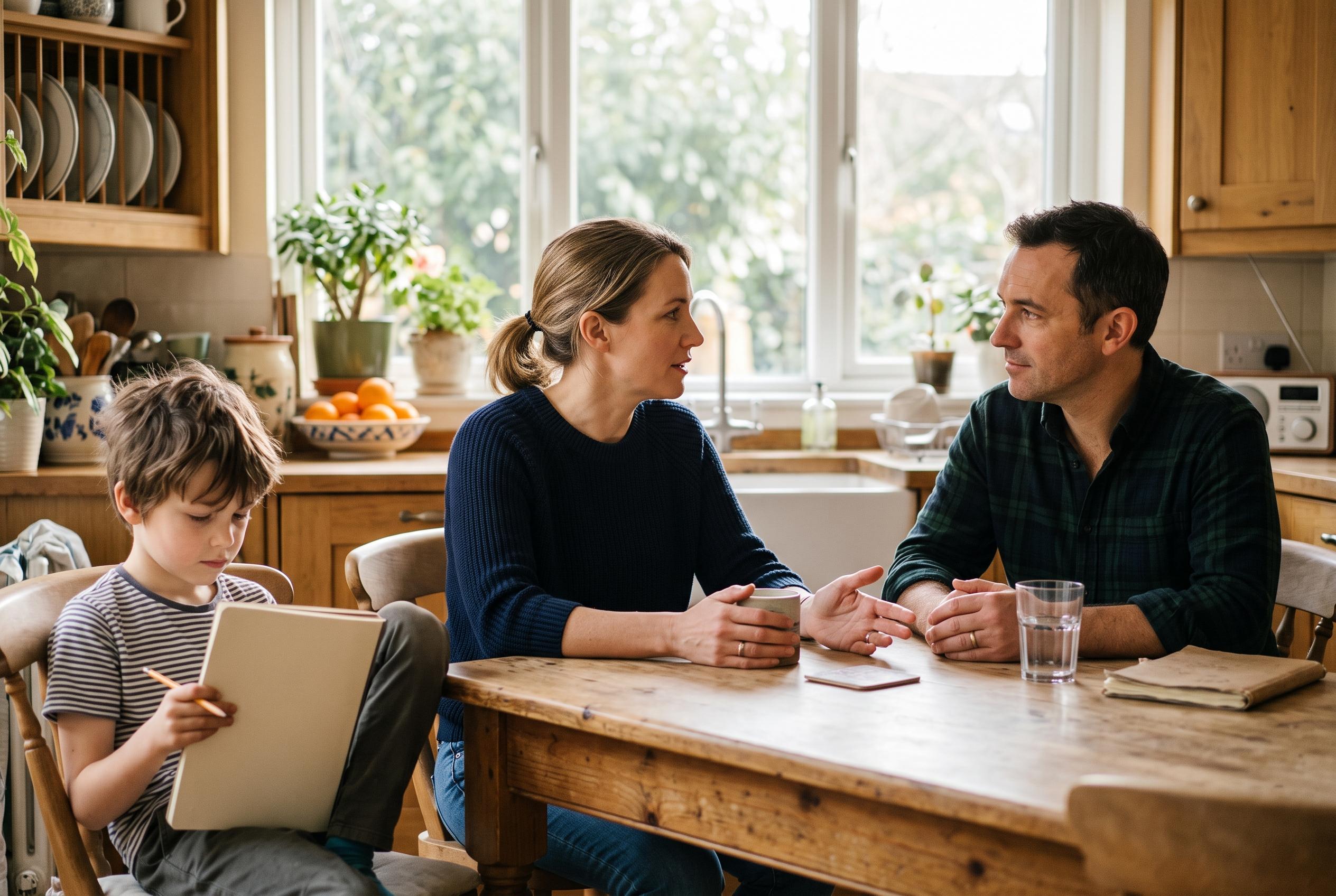

Research indicates that children benefit more from observing respectful and constructive parental disputes than from complete conflict avoidance, with positive modelling fostering emotional regulation and social competence.
Children may learn more about handling disagreement from watching their parents argue than from being shielded from conflict altogether, provided the clashes are calm, respectful and aimed at resolution. Developmental psychologists have long found that it is not simply exposure to parental conflict that matters, but how that conflict is handled and how children interpret it. When adults model restraint, listening and repair, children are more likely to develop better emotional regulation and stronger social skills.
That is the central idea behind research on interparental conflict, which suggests that children do not respond to every disagreement in the same way. A study indexed in PubMed found that exposure to parental conflict on its own is only a weak predictor of later psychological difficulties, but that a child’s emotional reaction to those disputes plays a much larger role. In other words, the stress children feel when conflict turns threatening or chaotic can shape their development more than the fact of disagreement itself.
Other work has pointed to the concept of emotional security, the sense that a child feels safe in the family even when parents do not agree. Research published in PubMed and on Penn State’s institutional repository found that children’s perceptions of threat, blame and triangulation , being pulled into a parental dispute , help explain how conflict affects adjustment. A meta-analysis published in the Journal of Child Psychology and Psychiatry likewise linked children’s cognitive, emotional, behavioural and physical responses to interparental conflict with a range of adjustment outcomes.
The pattern is consistent: hostile conflict can teach children the wrong lesson. Studies collected in the public health literature have shown that when parents shout, insult one another or use aggressive body language, children are more likely to copy those destructive habits later or avoid necessary confrontation altogether. By contrast, constructive disagreement, in which adults stay composed and work towards a solution, can support prosocial behaviour and reduce the risk of internalising and externalising problems, such as anxiety, withdrawal, aggression and defiance.
For parents and caregivers, the practical takeaway is not to stage arguments in front of children, but to recognise that ordinary disagreement can be useful when handled well. Calm tone, clear language, active listening and an emphasis on repairing the relationship all show children that conflict is not the same as rejection. That lesson may matter at home, and elsewhere too: research has suggested that people in positions of authority can also shape behaviour by modelling how to disagree without humiliation or escalation.
Disclaimer: This content is for informational purposes only and is not intended to be a substitute for professional medical judgment, advice, diagnosis, or treatment.



