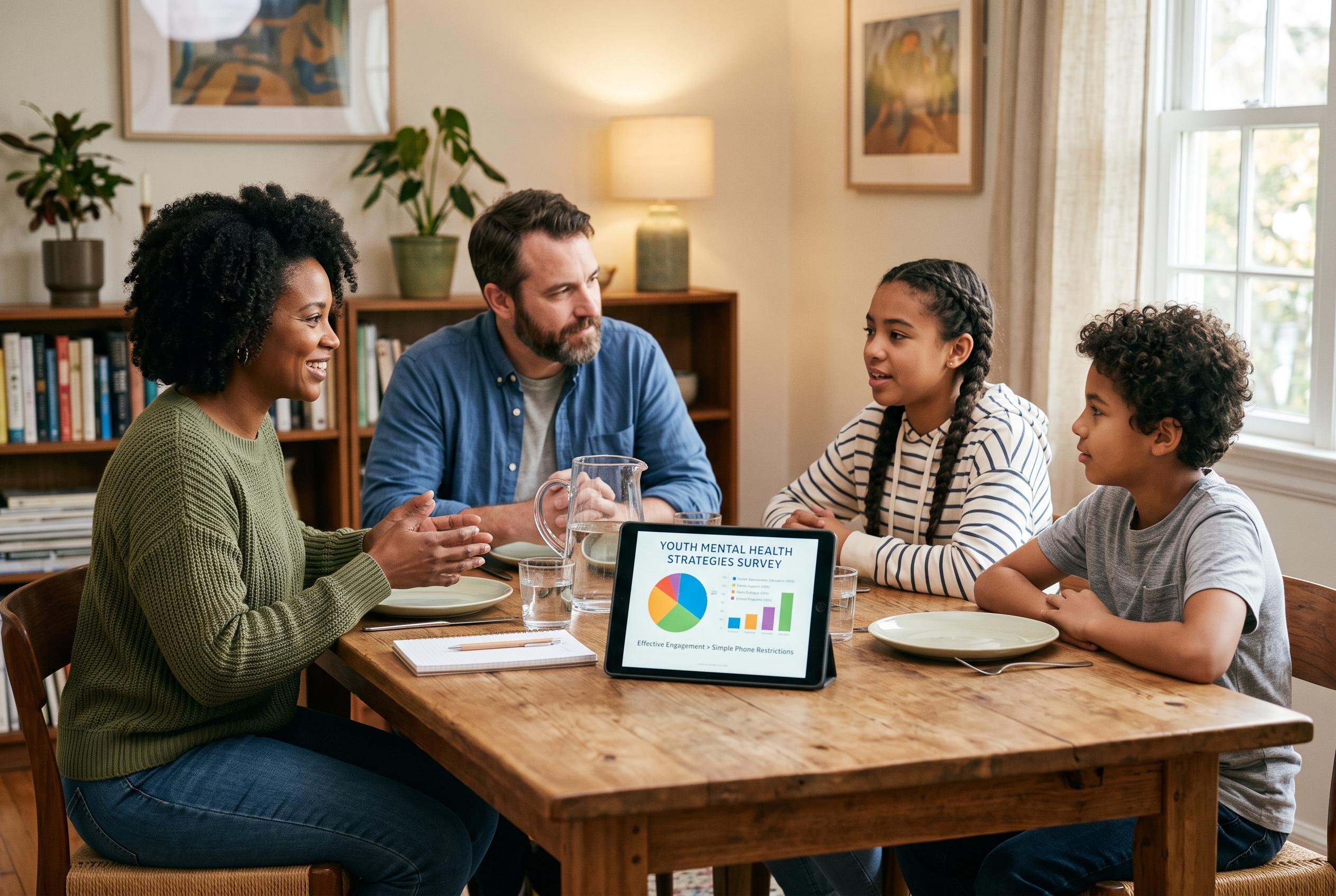

A nationwide survey suggests that parents and voters favour a holistic strategy involving family engagement, education, and support systems over simple phone restrictions to address youth mental health concerns.
Parents and voters are unlikely to accept phone bans alone as a cure for youth mental health concerns, according to a new nationwide survey released by the Coalition to Empower our Future. The group said the findings point instead to a wider mix of supports, including family engagement, digital literacy, school resources and access to mental health help.
The organisation said three-quarters of parents and voters wanted a broader response to youth wellbeing than restrictions on phones and other devices. It also said 75% of parents feared unintended consequences from heavy limits on young people’s access to technology. The survey findings suggest many families want children to learn how to use digital tools well, rather than being cut off from them altogether.
That view tracks with other recent research. A working paper from the National Bureau of Economic Research found no clear evidence that school smartphone bans reduce screen time or improve psychological wellbeing, while an Axios report on the same research said the rules do cut phone use in class but do not appear to lift grades or attendance. Separate commentary from EuroHealthNet and a perspective article in Frontiers in Developmental Psychology also argue that bans by themselves are unlikely to solve a problem shaped by social isolation, pressure at school and the wider digital environment.
The coalition said parents want practical help such as digital wellness guides, online safety lessons and AI education for students, teachers and families. It also said most parents do not feel fully comfortable with technology themselves, a gap it argues should be addressed through better resources and training. The group’s executive director, Glen Weiner, said in a media tour last month that children need balanced habits and adults need tools to guide them through online life.
Disclaimer: This content is for informational purposes only and is not intended to be a substitute for professional medical judgment, advice, diagnosis, or treatment.