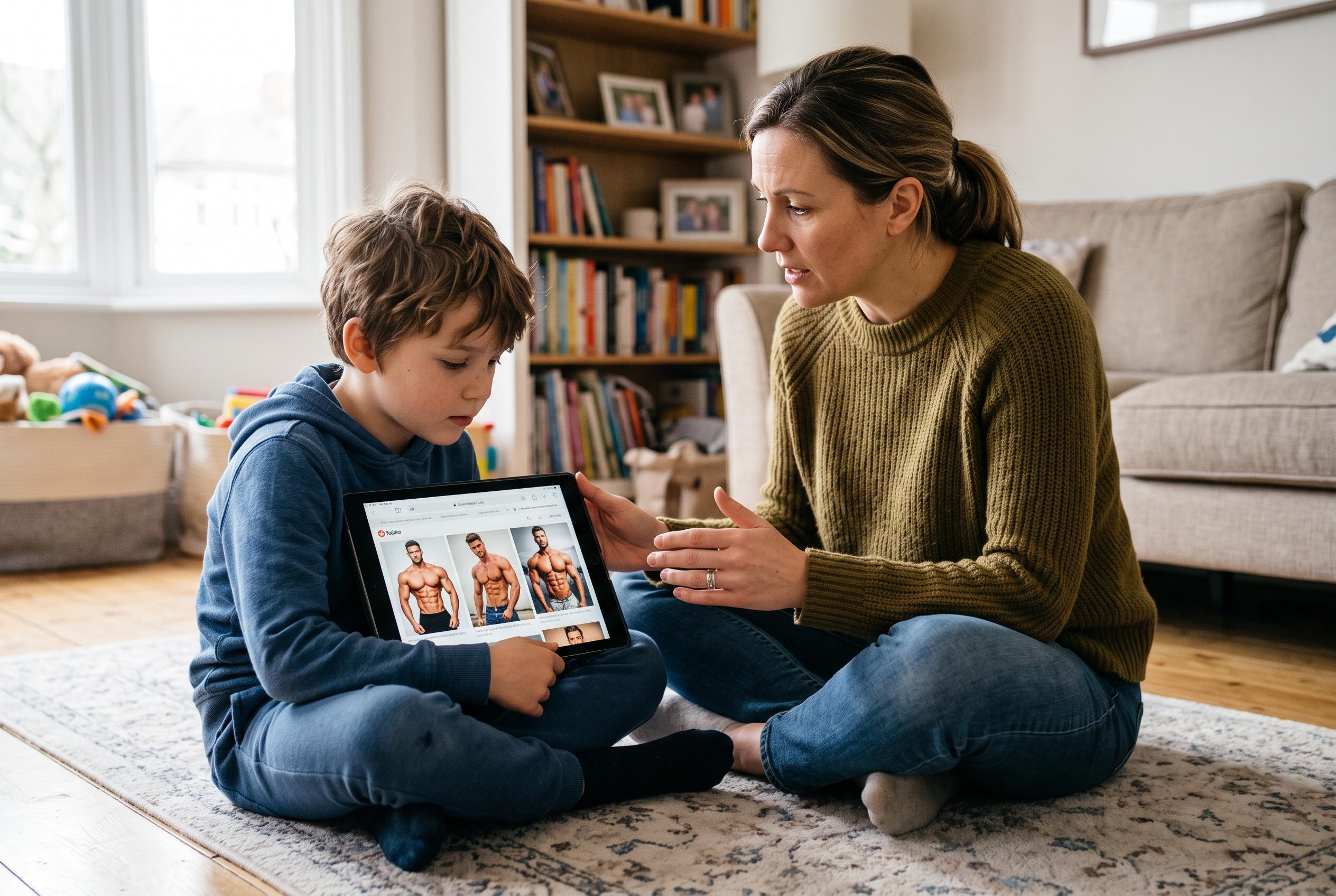

The online obsession with looksmaxxing risks encouraging harmful behaviours in young boys, with parents urged to recognise warning signs and promote healthier self-esteem strategies amidst growing concerns over extreme appearance practices.
The latest online fixation on “looksmaxxing” is presenting parents with a familiar but sharper problem: when ordinary grooming and fitness tips slide into a belief that a boy’s value depends on his face, body or perceived ranking, the line between self-care and self-harm can disappear. A recent “60 Minutes Australia” segment highlighted how the subculture can run from skincare and style advice to extreme measures, including hormonal use and deliberate injury, while commentary in The Atlantic has described the wider “maxxing” trend as a product of internet culture that turns moderation into extremity.
At its simplest, looksmaxxing is slang for trying to maximise physical attractiveness. In practice, that can mean sleep, exercise, dental care and better clothes. But the darker end of the spectrum can include severe dieting, compulsive training, unprescribed substances, cosmetic procedures and even bodily harm. Research on looksmaxxing forums suggests that what begins as “self-improvement” can harden into a competitive hierarchy, with users scrutinising flaws and escalating towards riskier interventions.
Part of the movement’s appeal is that it gives hard numbers to painful feelings. Body-fat percentages, jawlines, hairlines and height can seem easier to measure than loneliness, rejection or low self-esteem. That logic is amplified by platforms that reward intensity and identity-building, according to The Atlantic’s reporting on the broader “maxxing” phenomenon. The result can be a worldview in which appearance becomes destiny and cruelty is reframed as discipline.
Parents who dismiss appearance concerns outright risk losing credibility. Research shows that looks can affect first impressions in online dating, trigger a “halo effect” in which attractive people are assumed to be more capable or trustworthy and even influence wage offers. Those are real social pressures, but they are averages, not verdicts. Warmth and trustworthiness also matter in attraction and in long-term relationships, which is why a more useful message is that appearance can open a door without deciding a life.
The pressure can be especially acute for boys of colour, for whom appearance standards are not race-neutral. Research has found racial preferences in dating, bias in how Black boys are perceived and colourism within and across communities. That does not mean giving up on fairness; it means naming bias plainly, strengthening cultural pride and helping young people build support outside the mirror.
Warning signs that a boy is moving from healthy self-care into something more troubling include constant checking, rapid weight loss, severe restriction, compulsive exercise, risky substances, deliberate injury, social withdrawal and hopeless statements about being unwanted. Concerns rise further if the content he consumes becomes contemptuous, misogynistic or linked to broader extremist attitudes. In those cases, the issue is no longer vanity. It may be body dysmorphia, an eating disorder, self-harm or a wider mental health problem that deserves proper clinical attention.
The safest parental response is curiosity rather than ridicule. It helps to acknowledge that appearance does shape first impressions while rejecting the idea that statistics determine a child’s future. Support the changes that are safe, such as better sleep, exercise, grooming and dental care, and set firm limits around drugs, self-injury and DIY procedures. Most importantly, help boys develop the wider skills that photos cannot capture: conversation, humour, resilience, rejection tolerance and genuine confidence.
Disclaimer: This content is for informational purposes only and is not intended to be a substitute for professional medical judgment, advice, diagnosis, or treatment.